Leaf Removal
What Happens to Your Lawn If You Leave the Leaves? A Tulsa Fall Cleanup Guide
Complete Lawn Care • November 2026 • Tulsa, OK • 7 min read
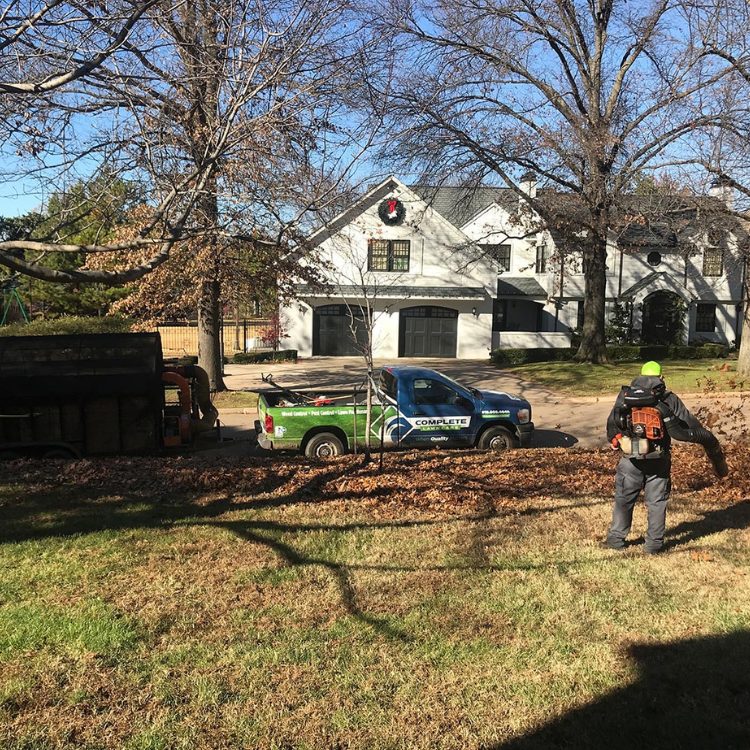
Short Answer: A light scattering of leaves will not hurt a Tulsa lawn, and mulching small amounts with the mower can even help the soil. But a thick, matted layer left through winter blocks sunlight, traps moisture, and can smother patches of Bermuda, fescue, and zoysia. It also encourages disease, gives pests a place to overwinter, and makes spring cleanup harder. Here is what we have found works best: mulch light leaf cover as it falls, remove heavy layers before they mat down, and keep leaves out of beds where they hold moisture against plants.
If you have ever seen advice to simply leave the leaves, you may be wondering whether all that raking and blowing is really necessary. It is a fair question. Leaves are natural, they break down eventually, and there is real value in returning organic matter to the soil.
The honest answer is that it depends on how many leaves you have and where they are. Most homeowners we talk to in Tulsa and Broken Arrow have more leaves than a lawn can absorb, especially under mature oaks and pecans. Here is what actually happens to a lawn when leaves are left in place, and how to decide what to do.
Light Leaf Cover Is Fine
A light scattering of leaves on the lawn is not a problem. Running the mower over light leaf cover chops the leaves into small pieces that fall between the grass blades, break down over winter, and add organic matter to the soil. Tulsa's clay soils benefit from that organic matter.
A simple test: after mowing, look down. If you can still see plenty of grass between the chopped leaves, the lawn can handle it.
Heavy Leaf Layers Are a Different Story
When leaves pile up thick enough to hide the grass, problems start.
Problem One: Blocking Sunlight
Grass needs sunlight to make energy. Tall fescue, common in shaded Tulsa yards, is still actively storing energy in late fall, and a leaf layer cuts that off at exactly the wrong time. Bermuda and zoysia are heading toward dormancy, but even dormant grass benefits from not being buried.
Problem Two: Trapping Moisture
A thick layer of leaves holds moisture against the grass and soil. Combined with cool fall temperatures, that creates ideal conditions for fungal diseases, including large patch in zoysia and brown patch in fescue. When the leaves finally come off in spring, the grass underneath is often yellow, thin, or matted.
Problem Three: Smothering Turf
Leaves pressed down by rain, snow, and ice form a dense mat. Underneath, grass can die in patches. Those bare spots become the first places weeds move in when spring arrives.
Problem Four: Pests
Leaf piles along fences, foundations, and beds give insects, rodents, and other pests a sheltered place to spend the winter, close to your house. Ticks and fleas in particular survive the cold in deep leaf litter, especially along wooded edges.
Problem Five: A Harder Spring
Leaves left through winter become wet, compacted, and heavy. Removing them in March is more work than removing them in November, and the lawn underneath has already suffered.
Leaves in Beds
Leaves in landscape beds are a little different. A light layer can insulate plant roots and add organic matter. But heavy drifts of wet oak leaves against shrubs and along the foundation can hold moisture against stems and invite rot and pests. Most beds do better with leaves cleared out and replaced with a fresh layer of mulch, or with shredded leaves used as a thin mulch.
Leaves on Hard Surfaces
Leaves on driveways, sidewalks, and patios become slippery when wet, a real hazard for older family members and guests, stain concrete, and blow back onto the lawn. They also wash into storm drains, where they clog drainage and break down in local creeks.
The Wind Factor
Oklahoma wind moves leaves constantly. Leaves left in one part of the yard rarely stay there. They pile against fences, in corners, along beds, and against the house, often creating the thickest layers exactly where they cause the most problems.
Oaks Make It Harder
Tulsa's post oaks, blackjack oaks, red oaks, and pin oaks drop large, tough leaves that break down slowly. Oak leaves take longer to mulch, and they mat down more than smaller leaves from elms or maples. Lawns under big oaks almost always need leaves removed rather than left.
Pecans Add Debris
Pecan trees drop leaves along with hulls, nuts, and twigs. That debris does not mulch well and can damage mowers. Properties with pecans usually need cleanups that pick up more than just leaves.
Bermuda Lawns and Leaves
Most Tulsa lawns are Bermuda, which goes dormant after the first hard freeze. It might seem like leaves on a dormant lawn do not matter, but they do. Wet leaf mats on dormant Bermuda can encourage disease and leave thin, weak patches in spring, right when weeds are looking for room. Bermuda also needs full sun to recover quickly in spring, and leaves left into March delay that.
Fescue in the Shade
Shaded Tulsa yards often have tall fescue, which stays green through much of winter and is still making energy in November. Leaves block the light fescue needs right when it is storing reserves for spring. Fescue under oaks is often the part of the lawn that suffers most from leaves left in place.
Zoysia and Disease
Zoysia lawns are especially prone to large patch, a fungal disease that thrives in cool, wet conditions. A wet leaf layer on zoysia in November creates exactly those conditions.
Leaves Can Be Useful
Removed leaves do not have to go to waste. Shredded leaves make a good mulch for beds and a valuable addition to a compost pile. The goal is not to get rid of leaves entirely, but to get them off the turf where they cause problems.
Snow and Ice on Top of Leaves
When snow or ice falls on a leaf-covered lawn, the leaves are pressed into a dense, frozen mat that can sit for weeks. Areas under those mats often come out of winter in the worst shape.
A Simple Rule of Thumb
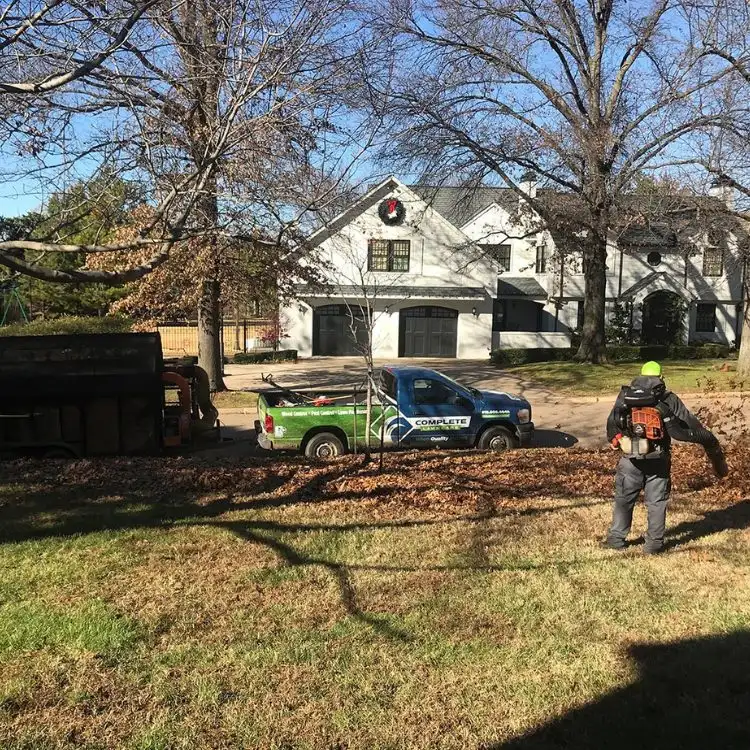
Here is what we have found works best for most Tulsa properties. Mulch light leaf cover with the mower as it falls. When the leaves outpace the mower, remove them. Clear beds, hard surfaces, and areas along the house. And keep leaves out of the street.
Mulching Versus Bagging
Mulching is a great option when leaves are light and dry. When leaves are wet, heavy, or deep, mulching leaves clumps that smother grass. In those cases, collecting and removing the leaves is better for the lawn.
Timing Matters
Leaf removal timed too early gets undone by the next drop. Timed too late, the leaves have already matted down. Most properties do best with a visit in mid to late November and another in December after the oaks are mostly bare.
What a Clean Winter Lawn Looks Like
Imagine this. It is early March. The neighbor's lawn is emerging from winter with matted, yellow patches where leaves sat for months. Yours is clean, the beds are tidy, and the grass is ready to green up as soon as the weather warms. Spring cleanup takes an hour instead of a weekend.
What to Do Next
Mow over light leaf cover regularly and look down afterward to make sure you can still see grass. When leaves pile up faster than the mower can handle, remove them, especially under oaks and pecans. Clear beds, walkways, and areas along the foundation, and keep leaves out of the street and storm drains.
If you would rather have someone else handle the leaves, we are here for that. Complete Lawn Care serves Tulsa, Broken Arrow, and the surrounding area. Call 918-605-4646 or visit completelawncaretulsa.com to request a free quote.
Here is what to expect. We will look at your property, the trees on and around it, and how much leaf volume you are dealing with, then explain what a cleanup would include and how many visits make sense. If your yard only needs one late visit, we will tell you that.