Leaf Removal
What a Professional Leaf Removal Visit Includes in Tulsa and Broken Arrow
Complete Lawn Care • November 2026 • Tulsa, OK • 7 min read
Short Answer: A professional leaf removal visit in Tulsa and Broken Arrow usually follows the same order: clearing leaves out of beds and tight corners, moving leaves off the lawn with blowers, collecting them with vacuums or loaders, cleaning driveways, walkways, and patios, and hauling everything away. Good crews also pick up pecan hulls and fallen limbs and leave edges and beds clean. The equipment makes the difference, moving in an hour what might take a homeowner a full weekend. Before hiring, ask what is included, especially haul-off, beds, and the number of visits.
If you have never had a professional leaf removal service before, you might picture a couple of people with rakes and a stack of paper bags. Or maybe you had a cleanup done in the past and were not sure whether you got the full job. Either way, it is hard to compare quotes or know what to ask for when the process is a bit of a mystery.
Most homeowners we talk to in Tulsa and Broken Arrow just want to know what they are paying for and how the yard will look when the crew drives away. Here is how a typical visit works, step by step.
Step One: A Quick Walk-Through
A good cleanup starts before any equipment is turned on. The crew walks the property to see where leaves have collected, which beds need attention, where fallen limbs and pecan hulls are, and whether there is anything fragile to work around, like outdoor decor, holiday decorations, or delicate plants.
This is also when the crew confirms what is included. Are beds part of the job, or just the lawn? Are driveways and patios included? Are there areas you want left alone?
Step Two: Clearing Beds and Corners
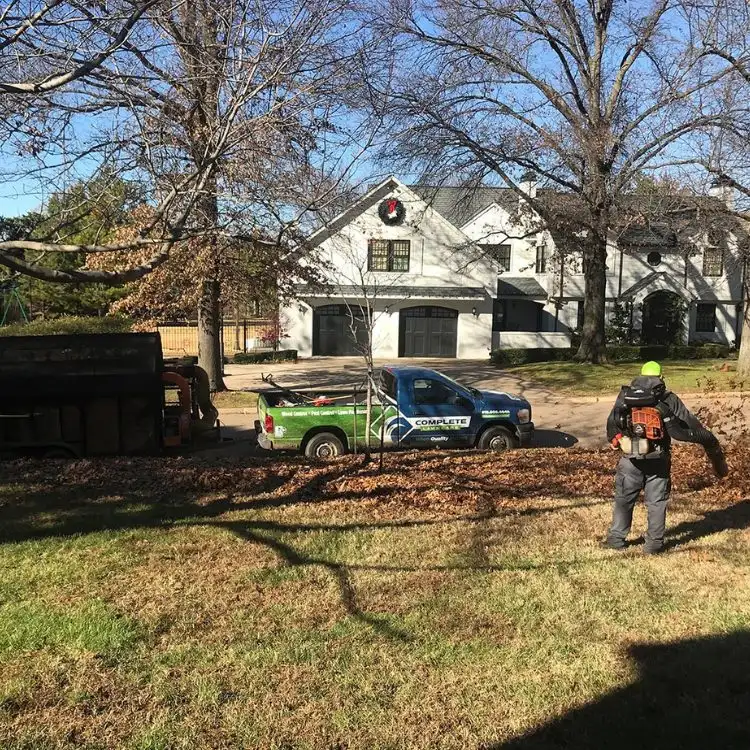
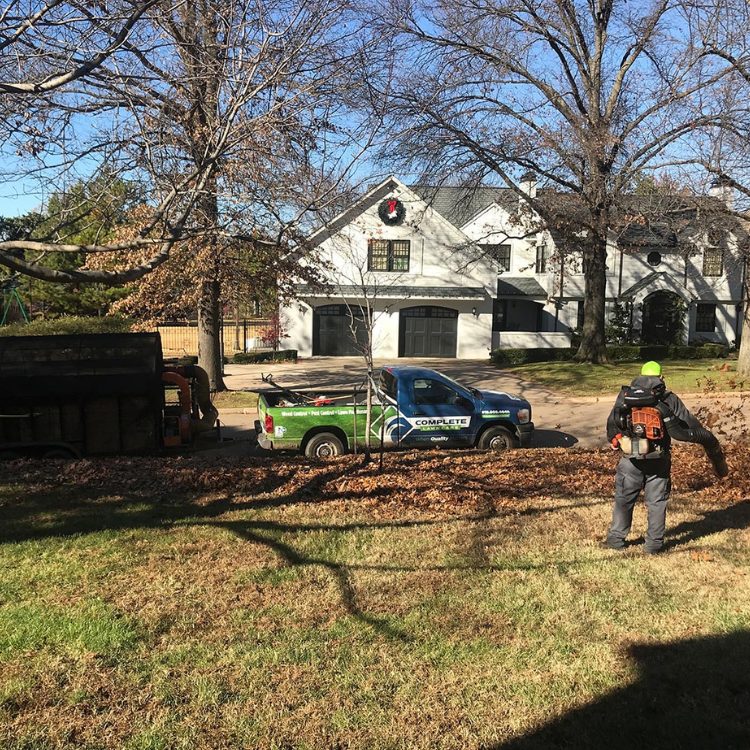
Leaves collect in the hardest places to reach: flower beds, along fences, behind shrubs, around air conditioning units, and in the corners of patios. Crews usually start there, using backpack blowers to move leaves out of tight spaces and onto the open lawn where they can be gathered efficiently.
Step Three: Moving Leaves Off the Lawn
Next, blowers push leaves into long rows or piles. On large lots, crews often work in a pattern, moving leaves toward the street side or toward a collection point near the truck. Done well, this gets leaves off the turf without tearing up the grass.
Step Four: Collecting the Leaves
This is where professional equipment changes everything. Truck-mounted leaf vacuums and loaders pull leaves straight from a pile into an enclosed trailer or truck bed, often shredding them on the way in, which shrinks the volume dramatically. A pile the size of a small car can disappear in a few minutes.
For smaller areas, crews may use tarps, bags, or walk-behind equipment.
Step Five: Hard Surfaces
Once the lawn and beds are clear, crews blow driveways, walkways, patios, and the curb line clean. Leaves should never be blown into the street and left there. They clog storm drains, and in Tulsa, those drains lead to local creeks and the Arkansas River.
Step Six: Pecans, Limbs, and Debris
Many Tulsa properties have pecan trees, which drop hulls, nuts, and twigs along with leaves. Storms and wind also bring down small limbs. A thorough cleanup picks up that debris along with the leaves, since it does not mulch well and can damage mowers.
Step Seven: Haul-Off
This is the step homeowners underestimate most. A cleanup on a property with several mature oaks can produce an enormous volume of leaves. Bagging that much by hand is slow, and leaving dozens of bags at the curb is not much of a solution. When the job is done, the leaves should leave with the crew.
Step Eight: A Final Look
A good crew takes a final walk around before leaving, checking beds, corners, and hard surfaces, and making sure gates are closed. If anything was missed, that is the moment to catch it, not after the truck has left.
How Long Does It Take?
This is one of the most common questions we hear. It depends on leaf volume, the number of beds, and how open the property is. A typical suburban lot with a few mature trees might take a crew an hour or two. A heavily wooded lot or a large property can take a half day or more. Second visits in the same season usually go faster.
Most homeowners do not need to be home. If gates need to be unlocked or pets kept inside, mention that when scheduling.
How Many Visits Do You Need?
Tulsa's oaks often hold their leaves into December, and some keep a few all winter. Most properties with mature trees do best with two visits: one in mid to late November and one in December. Heavily wooded lots may need a third.
What It Costs Depends On
The biggest factors are leaf volume, property size and layout, the number of beds, haul-off volume, and the number of visits. Rather than comparing totals alone, compare what each quote includes.
Wet Leaves Take Longer
Rain changes the job. Wet leaves are heavier, stick to the turf, and do not blow as easily. Crews may need more time, or may reschedule after a soaking rain so the cleanup does not tear up soft ground. If your cleanup is moved for weather, that is usually why.
Gutters, Roofs, and Window Wells
Leaves also collect in gutters, on low roofs, and in window wells. Those areas are not always part of a standard leaf cleanup, so if you want them addressed, ask whether they can be included.
Questions Worth Asking Before You Hire
When comparing quotes, ask every company the same questions. Are beds included, or only the lawn? Is haul-off included, or will leaves be bagged at the curb? Are driveways, walkways, and the curb line cleaned? Are pecan hulls and fallen limbs picked up? How many visits does the quote cover? What happens if weather delays the schedule?
Equipment Matters
Professional equipment is a big part of the value. Commercial backpack blowers move leaves faster and farther than consumer models. Leaf vacuums and loaders handle volumes that would take dozens of bags. Trailers keep leaves contained on the way out. That equipment is why a professional crew can finish in an hour what might take a homeowner a weekend.
Safety Around the Property
Crews should work carefully around cars, windows, outdoor furniture, and holiday decorations, directing debris away from them. Blowers can throw small rocks and sticks, so a careful crew pays attention to where debris is headed.
Pets and Kids
Leaf blowers and vacuums are loud. If you have pets that get anxious or kids playing outside, letting the crew know ahead of time helps everyone plan around it.
Pair It With Fall Lawn Care
Leaf cleanup is a good time to look at the rest of the lawn. Fall is when winter weeds start growing in dormant Bermuda lawns, and clearing leaves helps any weed control or fertilization applications reach the soil.
What a Finished Cleanup Should Look Like
Imagine pulling into your driveway after the crew leaves. The lawn is clear from the street to the back fence. Beds are clean. The driveway and walkways are swept. There are no bags at the curb and no leaves blown into the street. The yard looks ready for holiday guests.
What to Do Next
Before booking, walk your property and note where leaves pile up, which beds need attention, and any areas you want left alone. Decide whether you want one late cleanup or a plan that follows the leaf drop, and ask every company what is included, especially haul-off and beds.
If you would rather have someone else handle the leaves, we are here for that. Complete Lawn Care serves Tulsa, Broken Arrow, and the surrounding area. Call 918-605-4646 or visit completelawncaretulsa.com to request a free quote.
Here is what to expect. We will look at your property, the trees on and around it, and how much leaf volume you are dealing with, then explain what a cleanup would include and how many visits make sense. If your yard only needs one late visit, we will tell you that.