Irrigation
How to Winterize Your Tulsa Lawn and Landscape Before the First Freeze
Complete Lawn Care • October 2026 • Tulsa, OK • 9 min read

Short Answer: The first hard freeze in the Tulsa area usually arrives in the first two weeks of November, which means October is the window for everything you still need to do. The priority list: apply winterizer fertilizer (warm-season) or a final fall feeding (Fescue), blow out your irrigation system before overnight lows hit the 20s, protect vulnerable plants and trees, clear leaves before they mat down, and wrap up any last-mile jobs like pre-emergent for winter weeds. Doing this well is the difference between a lawn that greens up quickly next spring and one that spends April catching up. Here is the full checklist and the timing that actually matters in Oklahoma.
If you have lived in Tulsa for even a few years, you know how fall behaves here. One week it is still 78 degrees and your grass is growing like it is mid-September. The next week the weather app shows a 27-degree overnight low and everyone is scrambling to drag hoses inside and cover the plants they meant to bring in last weekend.
The transition is always sudden. Which is exactly why October matters so much. The homeowners who get caught off guard are almost always the ones who waited to see what the weather would do. The ones who coast through the freeze easily got their winterization done when the weather was still pleasant.
Here is the full playbook.
Understand the Timing You Are Working With
The first hard freeze (a sustained overnight low below 28 degrees F) typically arrives in the Tulsa area between late October and mid-November. Some years it is earlier, some later. The first light frost (overnight lows in the low 30s) usually comes a few weeks before that, often in mid to late October.
Most winterization tasks need to be complete before the first hard freeze, not before the first frost. That gives you a window of roughly 3 to 5 weeks from the first cool nights to get things done.
Waiting for the weather forecast to confirm a freeze is coming is usually too late. Lines freeze in the first 24 hours of sustained cold. Plants that should have been protected take damage overnight. The window closes fast.
Lawn Fertilization: Not Done Yet
One of the most common mistakes we see is homeowners assuming fertilization season ended in September. For both warm-season and cool-season grasses, October is actually one of the most valuable feeding windows of the year.
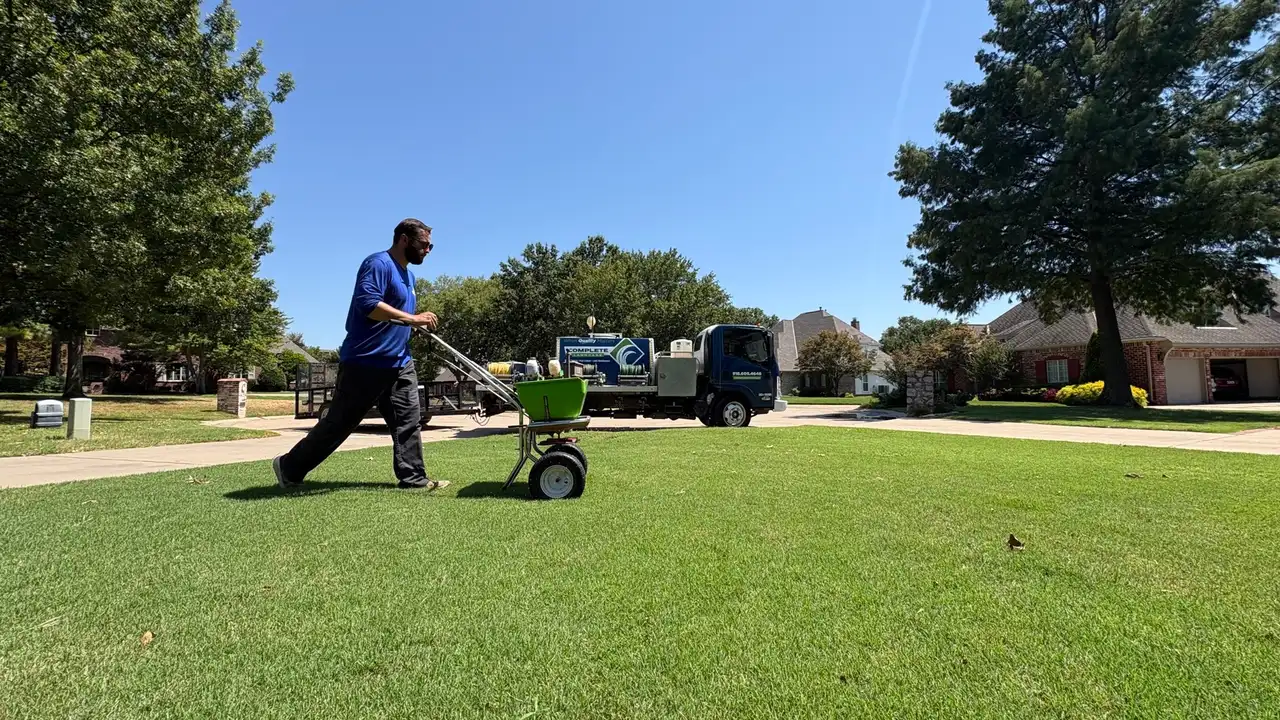
For Bermuda and Zoysia, apply a winterizer fertilizer (higher potassium, lower nitrogen) in mid to late October. Potassium improves winter hardiness and sets the grass up for stronger spring green-up. A lawn that got winterizer fertilization often greens up 10 to 14 days earlier next spring than one that did not.
For Fescue, continue standard fall feeding through October. Fescue is still actively growing and building root mass during this window. A well-timed October application supports the root development that carries the lawn through next summer's heat.
Skip winterizer if the lawn was already fertilized in late September. Stacking applications too close together wastes product and can burn the turf. One well-timed fall feeding is the goal.
Irrigation Winterization: The Non-Negotiable
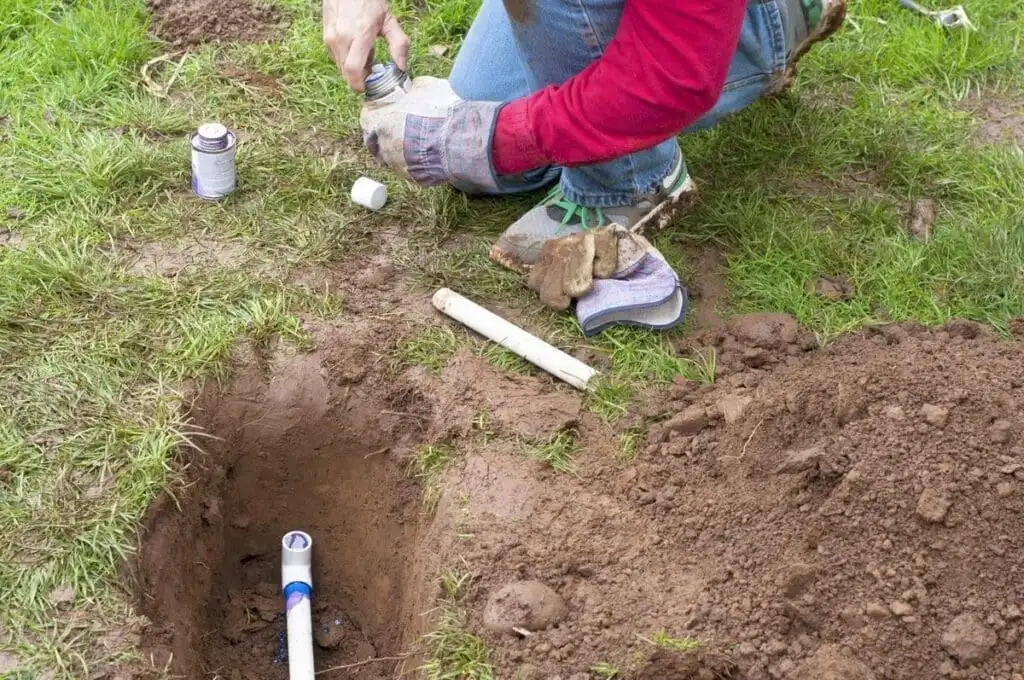
If you have an in-ground irrigation system, blowing it out before the first hard freeze is the single most important winterization task. A freeze that catches water in the lines can burst fittings, crack manifolds, damage valves, and blow backflow preventers. Repair costs run from a few hundred dollars for minor damage to several thousand for extensive line replacement.
We had a homeowner in Owasso last November who was planning to schedule his blow-out the following weekend and got surprised by an early freeze on a Thursday night. By Saturday morning he had three cracked backflow fittings and two broken valves. The repair came to more than three years of professional winterization service.
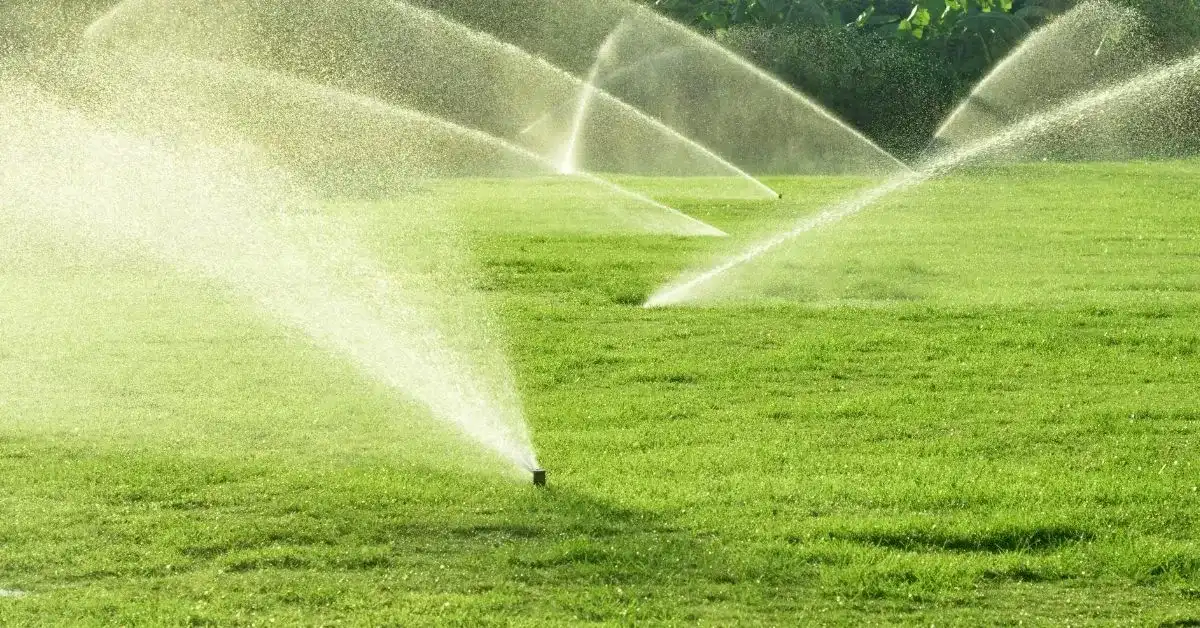
The blow-out itself is simple for a technician with a commercial compressor: zone by zone, each line is purged with high-volume air until all water is pushed out the heads. Typical residential winterization runs $75 to $125 and takes 30 to 60 minutes.
DIY blow-out is possible but requires a compressor with enough volume (not just pressure) to fully purge lines. Small shop compressors often lack the airflow to push water all the way through laterals, which means some water stays in the system. If you do not have a large compressor (20+ CFM), hiring the service is cheaper than the repair risk.
Last Mow of the Season
The final mow matters more than most homeowners realize.
For Bermuda and Zoysia, the last mow should leave the lawn at standard summer height (2 to 3 inches). Cutting very low for the winter ("scalping") is not recommended here because it exposes the crown and stolons to cold damage.
For Fescue, the last mow should leave the lawn at 3.5 to 4 inches. Fescue maintains some active growth through winter and needs the leaf tissue to photosynthesize on warm days. Cutting too short stresses the grass unnecessarily.
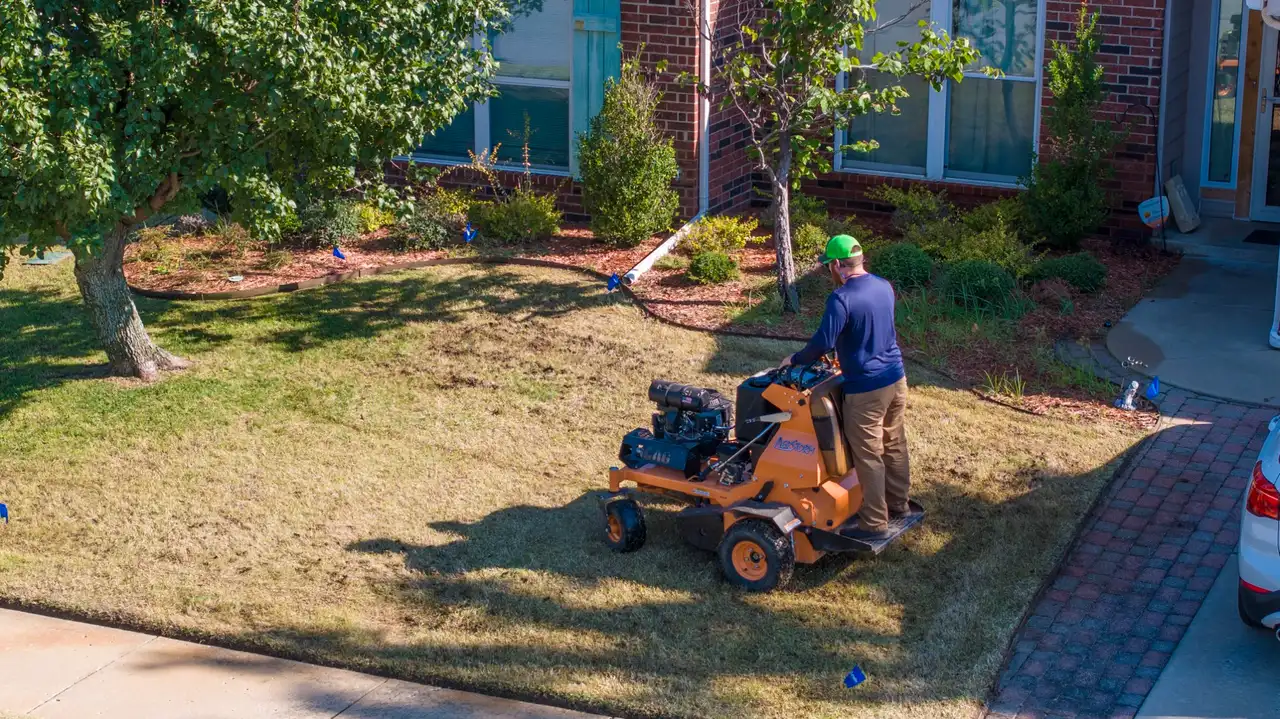
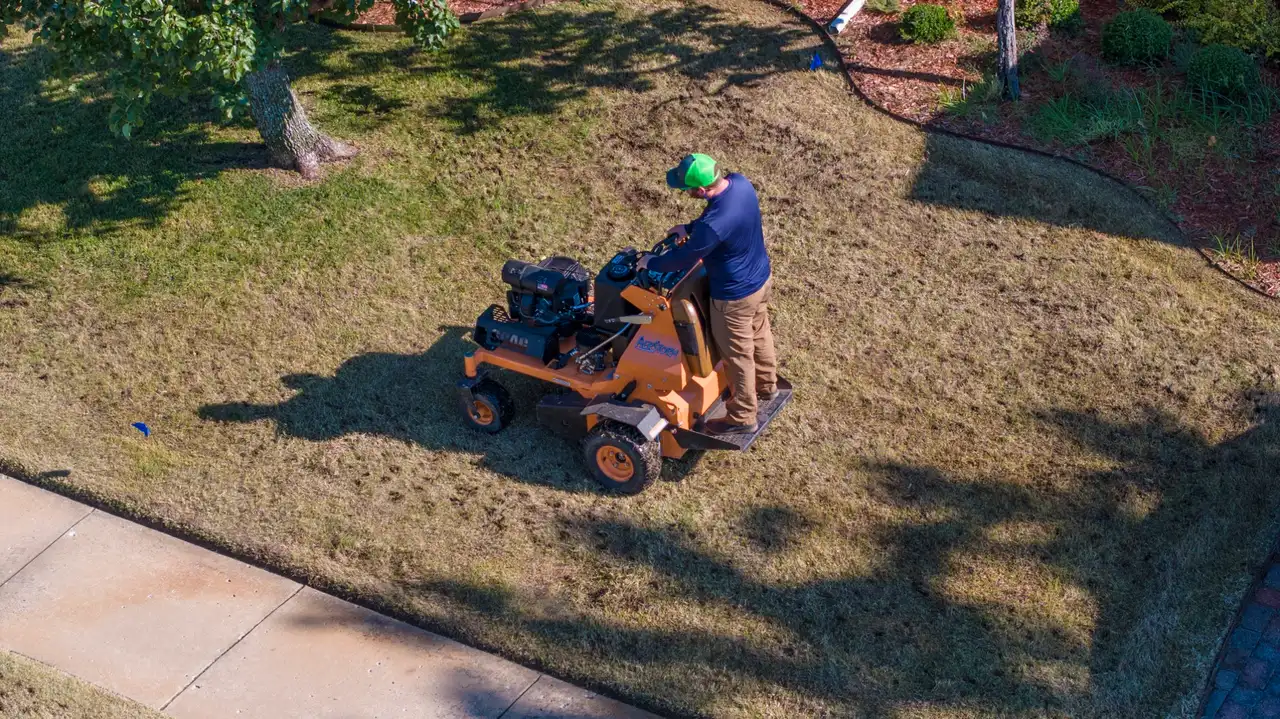
The final mow also matters because it disposes of or mulches any remaining leaves on the lawn before winter. Leaves matted over grass all winter cause disease issues and spring dieback. Running the mower with the mulch blade right before the last mow of the season is a practical way to handle both tasks.
Leaf Management Through November
Leaves keep falling long after most homeowners stop paying attention. Even after your last mow, leaves will continue coming down into November in the Tulsa area. Periodic rake or mow passes through early November protect the lawn from matting.
The goal is to not let heavy leaf cover sit for more than a week or so. A thin layer of mulched leaves (from running a mower over them) actually feeds the lawn. A thick mat of wet whole leaves smothers the grass underneath.
Hiring a one-time leaf cleanup service for very heavy weeks is often worth it. Expect $150 to $400 for most residential properties depending on volume and lot size.
Pre-Emergent for Winter Weeds
If you did not apply fall pre-emergent in late September, early October is a last viable window for some products. By mid October, winter weed germination is already well underway in most Tulsa lawns, which means pre-emergent applications after mid-October miss much of the target.
For lawns where pre-emergent is already missed, post-emergent applications in late fall and winter can control established weeds during warm stretches. This is a reactive approach rather than preventive, but it works.
Coordinate pre-emergent with any overseeding projects. Pre-emergent applied where Fescue seed is germinating will kill the desired grass too. If you overseeded in September, skip pre-emergent in those areas and rely on dense turf plus spring post-emergent to manage winter weeds.
Landscape Plants and Trees
The lawn is not the only thing that needs attention before freeze.
Water landscape plants deeply in the week before the first hard freeze. Well-hydrated plants tolerate cold better than dry ones. This applies particularly to evergreens (magnolias, hollies, boxwood) which continue to lose moisture through leaves during winter.
Mulch thickly around the base of shrubs, trees, and perennials. A 2 to 3 inch mulch layer insulates roots and helps maintain stable soil temperatures through the freeze cycles that stress roots.
Protect tender plants. Tropicals, hibiscus, ferns, and other plants that cannot handle a freeze either need to come inside or be replaced next spring. Bringing them in before the first frost (not the first freeze) gives them the best survival odds.
Wrap young or thin-barked trees. Sunscald on the southwest side of young trees is a real winter issue in Oklahoma. White tree wrap or light-colored trunk paint prevents the bark damage that otherwise appears in late winter.
Prune selectively. Most pruning is best done in late winter before spring growth resumes, but any dead, diseased, or hazardous branches should be removed before winter winds make the problem worse.
Hoses, Spigots, and Exterior Plumbing
Beyond the irrigation system, other outdoor water needs attention.
Drain and store garden hoses. Water left in hoses freezes, expands, and splits the hose. A hose that looks fine in October often fails the first time you try to use it in March.
Shut off and drain exterior spigots. If you have frost-free spigots (they have a long stem that shuts water off inside the house), disconnecting the hose is sufficient. If you have old-style spigots, shutting off the interior valve and draining the line prevents burst pipes.
Insulate exposed water lines. Foam pipe insulation on any exterior-adjacent water lines is cheap insurance against the hardest freezes.
Store pressure washers, sprayers, and other water-containing equipment indoors or drain fully.
Equipment Storage
A quick checklist on the equipment side:
Mower fuel treatment. Either run the tank dry or add fuel stabilizer for winter storage. Fuel left untreated for months causes hard starts in spring.
Battery maintenance. For equipment with batteries, disconnect them or use a trickle charger through winter.
Sharpen and clean before storage. Blades, pruners, and shovels stored dirty through winter pit and corrode. A quick clean and light oil coat makes spring startup much easier.
Store equipment covered and dry. Protected storage dramatically extends equipment life compared to leaving things out through winter.
What Happens If You Skip Winterization
Lawns and landscapes that do not get properly winterized usually survive the winter. They just come out of it in rougher shape.
Skipped winterizer on Bermuda shows up as slower, patchier green-up in April and May. The difference between properly fed and unfed lawns is sometimes 3 to 4 weeks of visible spring recovery.
Skipped irrigation blow-out shows up as broken fittings, leaking valves, and non-working zones the first time you try to run the system in spring. The repairs often cost 10 to 20 times what the preventive blow-out would have cost.
Skipped leaf management shows up as disease patches, winter kill, and bare spots that have to be repaired in spring.
Skipped plant protection shows up as dead or badly damaged landscape plants that have to be replaced.
None of these outcomes is a disaster on its own, but they compound. Homeowners who skip winterization one year often face a frustrating spring trying to catch up on damage that was preventable.
What to Do Next
If you want us to handle winterization (irrigation blow-out, winterizer fertilization, final pre-emergent, landscape protection), give us a call at (918) 605-4646 or request a quote online. Here is what to expect: we respond the same day, use satellite imaging to measure and assess your property (no walkthrough required, though if you want us on site we can usually be there same day or next), and send you a customized quote within a few days. If it is a fit, your first service is typically within a week. No contracts. Cancel anytime. Winterization schedules fill up fast in late October. Starting the conversation now locks in your slot before the first freeze forces everyone onto the same short timeline.