Commercial Snow Removal
Is Your Tulsa Business Ready for Snow and Ice? Planning Commercial Snow Removal Before Winter
Complete Lawn Care • November 2026 • Tulsa, OK • 7 min read
Short Answer: Tulsa does not see heavy snow every year, but when snow or ice does arrive, businesses that planned ahead stay open and safe while others scramble. The best time to set up commercial snow removal is in November, before the first storm. A good plan starts with a site walk to identify entrances, sidewalks, parking lots, drive lanes, and loading areas, sets clear service triggers and priorities, decides where plowed snow will go, and includes ice management such as pre-treatment and de-icing. Clear communication and documentation round it out.
If you manage a business, office, church, medical facility, apartment community, or retail center in Tulsa or Broken Arrow, you may not think much about snow until it is already falling. Green Country winters are mild in many years. Some winters bring only a dusting. Others bring a major ice storm or a week of snow and bitter cold that shuts down the city.
That unpredictability is exactly why planning ahead matters. When winter weather does hit, every snow removal provider in town gets busy at once. Businesses with a plan in place get served. Businesses without one wait. Here is how to get ready before the first storm.
Why Tulsa Winters Catch Businesses Off Guard
Tulsa's winters are unpredictable. A warm, dry December can be followed by an ice storm in January or a heavy snow in February. Freezing rain and sleet are as much of a concern as snow, and sometimes more, since they create slick surfaces that are hard to see and dangerous to walk on.
Because major events do not happen every year, many businesses do not have a standing plan. When a storm is forecast, they start calling around, often to find that providers are already committed to existing clients.
Start With a Site Walk
A good snow removal plan starts with walking the property, ideally with your provider, before winter. The goal is to identify everything that needs attention and anything that could cause problems.
Key areas to note include main entrances and exits, sidewalks and walkways, accessible parking and ramps, parking lots and drive lanes, fire lanes and emergency access, loading docks and service areas, dumpster areas, and stairs.
Hazards to note include curbs, islands, speed bumps, parking blocks, drains, light poles, landscaping, and anything a plow could hit when it is hidden under snow. Many providers mark these with tall stakes before winter.
Set Priorities
Not every area needs to be cleared at the same time. A clear priority list tells the crew what to do first. For most businesses, entrances, accessible routes, and main walkways come first, since they affect safety and access most directly. Fire lanes and emergency access come next. Then main drive lanes and parking. Secondary lots and overflow areas come last.
Decide on Service Triggers
A service trigger defines when the provider comes out. Common triggers include a set accumulation of snow, any freezing rain or ice, or a call from the property manager. Clear triggers avoid confusion about whether a visit should happen and help with budgeting.
Ice Management Matters as Much as Plowing
In Tulsa, ice is often the bigger risk. Ice management can include pre-treating surfaces before a storm, applying de-icing products during and after an event, and returning to re-treat areas that refreeze overnight. Sidewalks and entrances that look clear in the afternoon can turn to sheet ice by morning as meltwater refreezes.
Where Will the Snow Go?
On parking lots, plowed snow has to go somewhere. Piling it in the wrong place can block drains, cover parking spaces, obstruct sight lines at exits, or create meltwater that refreezes across walkways. Choosing snow storage areas in advance, away from entrances, drains, and drive lanes, avoids those problems.
Contract Options
Commercial snow removal is commonly priced in a few ways. Per-push or per-visit pricing charges for each service. Per-event pricing covers a storm from start to finish. Seasonal contracts set a fixed price for the winter regardless of how many storms occur. Each has trade-offs depending on your budget and how much predictability you want. In a region with variable winters like Tulsa, it is worth discussing which structure makes the most sense.
Communication During a Storm
When a storm hits, you want to know what is happening. Ask how your provider communicates: when crews are dispatched, when service is complete, and how you can reach someone during an event. Clear communication helps you make decisions about opening, staffing, and notifying customers or tenants.
Documentation
Records of when service was performed, what was done, and what conditions were like can be valuable, especially if a slip-and-fall claim arises later. Ask whether your provider keeps service logs and whether you can access them.
Accessibility
Accessible parking spaces, curb ramps, and accessible routes to entrances need to be cleared and treated so everyone can safely reach your building. Make sure those areas are on the priority list.
Your Own Team's Role
Some businesses handle part of the work themselves, such as keeping entry mats dry, spreading ice melt at doorways during the day, or monitoring for refreeze. Clarifying who does what avoids gaps.
Plan for Extended Events
Tulsa has seen ice storms that left roads and parking lots dangerous for days. Ask how your provider handles multi-day events, including return visits for refreezing and keeping walkways safe while temperatures stay below freezing.
Equipment Matched to the Property
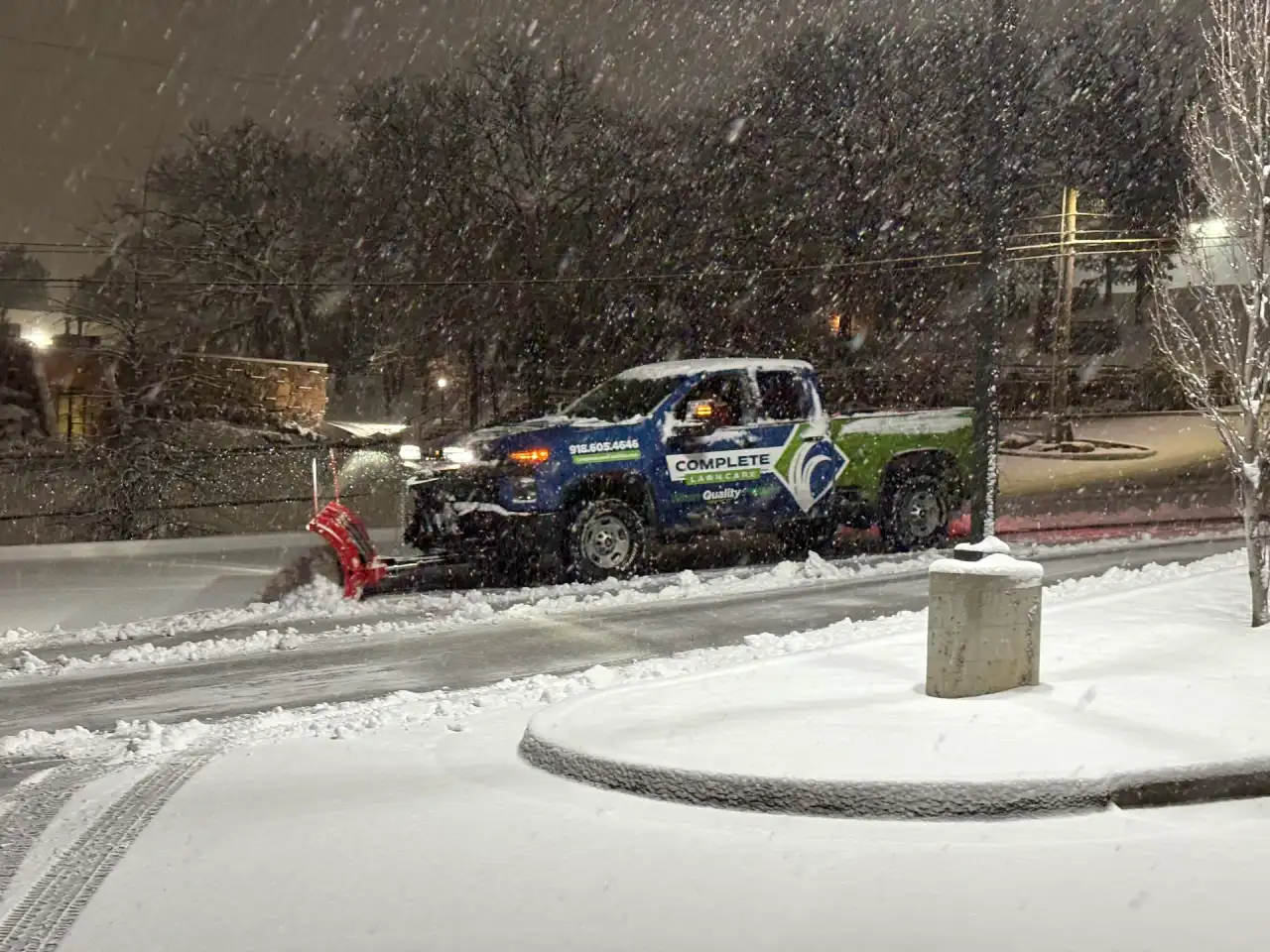
Different properties need different equipment. Large parking lots call for trucks with plows and spreaders. Sidewalks, entrances, and tight areas call for smaller equipment, shovels, and walk-behind spreaders. A provider who walks your site can match the equipment and crew size to what your property actually needs.
Retail, Medical, and Multifamily Needs
Different types of properties have different priorities. Retail centers need lots and entrances clear before opening hours. Medical offices and clinics need safe, accessible routes for patients who may have limited mobility. Apartment communities need walkways, stairs, and parking areas treated early in the morning, when residents leave for work. Churches and event venues need clear access before services and events. Building those timing needs into the plan helps the crew prioritize.
Budgeting for an Unpredictable Winter
Because Tulsa winters vary so much, budgeting can be tricky. A seasonal contract offers predictable costs but may cost more in a mild year. Per-event pricing costs less in a mild winter but can add up quickly in a harsh one. Talking through past winters and your budget helps choose a structure that fits.
Liability and Insurance
Snow and ice create slip-and-fall risks. Many property owners and managers review their insurance and make sure their snow removal provider carries appropriate coverage. It is reasonable to ask for proof of insurance before signing.
Book in November
The best time to set up commercial snow removal in Tulsa is in the fall, before the first forecast. Providers can plan routes, staffing, equipment, and materials around committed clients. Waiting until a storm is on the way often means limited availability.
What Being Ready Looks Like
Imagine this. An ice storm rolls in overnight. By the time your first employees arrive, the entrance is treated, the accessible spaces are clear, the main walkways have traction, and the drive lanes are passable. Your phone shows a message confirming service was completed. The business down the street is still trying to find someone to come out.
What to Do Next
This month, walk your property and list the entrances, walkways, accessible routes, parking areas, and hazards that matter most in snow and ice. Decide on priorities and service triggers, choose snow storage areas, and set up a plan with a provider before the first forecast.
If you would rather have a plan in place before the first storm, we are here for that. Complete Lawn Care offers commercial snow removal in Tulsa, Broken Arrow, and the surrounding area. Call 918-605-4646 or visit completelawncaretulsa.com to request a free quote.
Here is what to expect. We will walk your property with you, note the areas that matter most for access and safety, and talk through how service would be triggered and what it would include. You will know exactly what to expect when the first storm hits.