Leaf Removal
When Do Leaves Fall in Tulsa? Planning Leaf Removal Around Oaks, Maples, and Pecans
Complete Lawn Care • November 2026 • Tulsa, OK • 7 min read
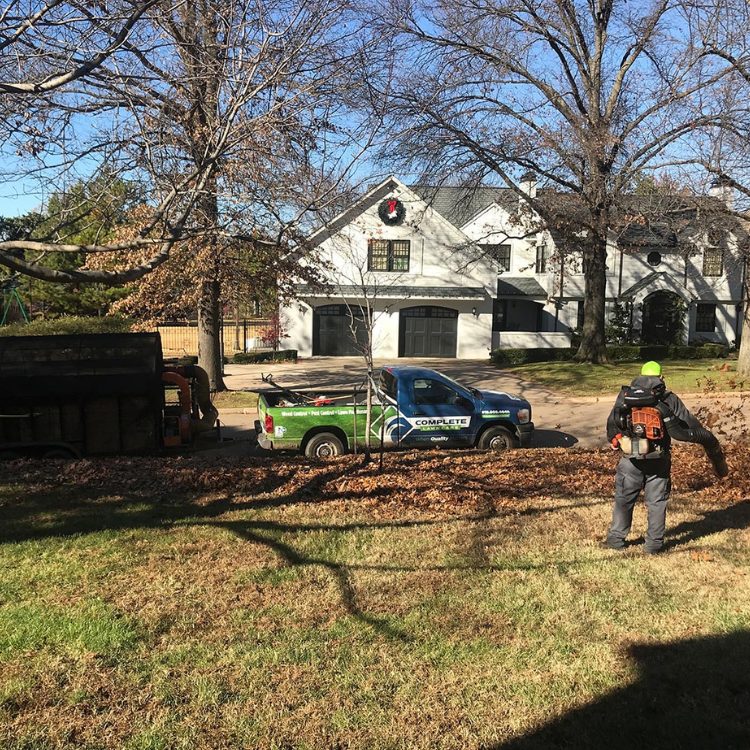
Short Answer: In Tulsa and Broken Arrow, leaf drop usually runs from late October through December, and some oaks hold onto dead leaves well into winter. Maples, Bradford pears, and sweetgums tend to drop first, pecans drop leaves along with hulls and twigs over several weeks, and post oaks, blackjack oaks, red oaks, and pin oaks often hang on the longest. Here is what we have found works best for most properties: one leaf removal visit in mid to late November and a second in December once the oaks are mostly bare, with a third for heavily wooded lots.
If you have lived in Tulsa for a few years, you know the pattern. You clear the leaves in early November, the yard looks great for a week, and then the oaks let go and the lawn is buried again. By Christmas, some trees are still shedding, and a few stubborn oaks seem to hang onto brown leaves all winter.
That pattern frustrates a lot of homeowners we talk to in Tulsa, Broken Arrow, Bixby, and Jenks. Nobody wants to pay for a leaf cleanup that gets undone a week later, and nobody wants the lawn buried for six weeks either. The answer is planning cleanups around the trees you actually have.
Tulsa's Leaf Calendar
Green Country has a wide mix of trees, and they do not all drop at once.
Maples, Bradford pears, sweetgums, and ash trees tend to color and drop first, often from late October into mid November.
Pecans shed leaves along with hulls and twigs over several weeks, usually in November.
Oaks are the big ones. Post oaks and blackjack oaks, native to the Cross Timbers that run through much of the area, along with red oaks, Shumard oaks, and pin oaks planted in many neighborhoods, often hold their leaves into late November and December.
Some oaks, especially pin oaks and young red oaks, hold onto dead brown leaves all winter, dropping the last of them in early spring when new growth pushes them off.
Why Oaks Hang On So Long
Many oaks hold dead leaves through winter, a trait called marcescence. Instead of forming a clean break at the base of each leaf in fall, the tree keeps some leaves attached until spring. That is why some Tulsa yards seem to get a steady trickle of oak leaves from November to March.
Why One Early Cleanup Usually Disappoints
Here is what we see most often when a single cleanup is scheduled too early. The yard looks great for a week or two. Then the oaks and pecans drop their main crop, and the lawn, beds, and driveway are covered again. By the time the homeowner deals with it, the leaves have been sitting on the grass for weeks.
That matters for more than appearance. A thick, wet leaf layer blocks sunlight, traps moisture, and can smother patches of turf. On Bermuda lawns heading into dormancy, matted leaves invite disease. On fescue in shaded yards, they block the light the grass still needs in late fall.
The Two-Visit Approach
For most Tulsa properties with a handful of mature trees, here is what we have found works best.
The first visit happens in mid to late November. It clears the first wave of leaves from maples, pears, sweetgums, and pecans, and it tidies beds and hard surfaces before the holidays.
The second visit happens in December, once most of the oaks are bare. This is often the heaviest cleanup by volume, and it leaves the yard clean for the rest of winter.
When a Third Visit Makes Sense
Heavily wooded lots, properties with large pin oaks or several big red oaks, and homes backing up to wooded areas in places like south Tulsa, Bixby, and the edges of Broken Arrow often need more than two visits. A third cleanup in January or early spring catches the late droppers and anything the wind has blown in.
When One Visit Is Enough
Not every yard needs multiple visits. A property with a couple of young trees, or with trees that drop mostly onto areas where leaves can stay, may be fine with a single cleanup. The key is scheduling it late, usually in December, after most of the trees on and around the property are bare.
Bradford Pears and Early Droppers
Bradford pears are common in many Tulsa neighborhoods and often hold their leaves late too, turning deep red and purple in November before dropping. They are also prone to splitting in wind and ice, so it is worth keeping an eye on them for fallen limbs during leaf season.
Do Not Forget the Neighbors' Trees
Leaves do not respect fence lines. A neighbor's big oak can drop as much into your yard as your own trees do, and Oklahoma wind pushes leaves into the same corners every year. When planning cleanups, count every tree that drops onto the property, not just the ones on your side of the fence.
Mulching Between Visits
Homeowners who mow regularly through the fall can stretch the time between cleanups. Mulching light leaf cover with the mower chops leaves into small pieces that break down and add organic matter to the soil. Once the leaves are too thick for the mower to handle, it is time for removal.
Wind Changes Everything
Oklahoma's fall winds can move leaves from one end of the yard to the other overnight and pile them against fences, beds, and the house. A cleanup timed right after a big wind event often moves a lot more leaves than one done on a calm week.
Leaves and Gutters
Leaf season is also gutter season. Clogged gutters overflow during fall rain and winter ice, dumping water along the foundation. Clearing gutters once the oaks are mostly bare saves headaches later in winter.
Keep Leaves Out of the Street
Leaves blown into the street clog storm drains and break down in the gutter. Tulsa's storm drains lead to local creeks and eventually the Arkansas River. Keeping leaves on your property, bagged, mulched, or hauled away, keeps drains flowing.
Ice Storms and Late Leaves
Tulsa winters often bring ice. Leaves left on the lawn when an ice storm hits get frozen into a solid mat, and limbs brought down by ice add to the debris. Getting the bulk of the leaves cleared before the first winter weather makes post-storm cleanup much easier.
Leaves and Holiday Plans
Many homeowners want the yard clean before Thanksgiving guests arrive and again before Christmas. Planning visits around those dates, while still matching the trees' schedule, keeps the property looking its best when it matters most.
Book Early
Leaf removal season in Tulsa is compressed into a few busy weeks. Homeowners who wait until the yard is buried often find schedules full. Booking in early November lets you lock in dates that line up with your trees.
What a Well-Timed Leaf Season Looks Like
Imagine this. It is the week before Christmas. Your neighbors are out with rakes trying to catch up on a lawn buried for a month. Your yard was cleared in November, and the crew is back for the final drop. The lawn underneath is healthy, the beds are tidy, and the driveway is clear for holiday guests.
What to Do Next
Walk your property and note which trees drop leaves into your yard, including the neighbors'. If you have mostly maples and pears, one late cleanup may do. If you have mature oaks or pecans, plan on two visits, one in November and one in December, and consider a third for wooded lots. Mulch light leaf cover with the mower between visits.
If you would rather have someone else handle the leaves, we are here for that. Complete Lawn Care serves Tulsa, Broken Arrow, and the surrounding area. Call 918-605-4646 or visit completelawncaretulsa.com to request a free quote.
Here is what to expect. We will look at your property, the trees on and around it, and how much leaf volume you are dealing with, then explain what a cleanup would include and how many visits make sense. If your yard only needs one late visit, we will tell you that.