Lawn Care
Dog Spots and Pet Damage on Tulsa Lawns: Why They Worsen in Late Summer and How to Repair Them
Complete Lawn Care • August 2026 • Tulsa, OK • 7 min read
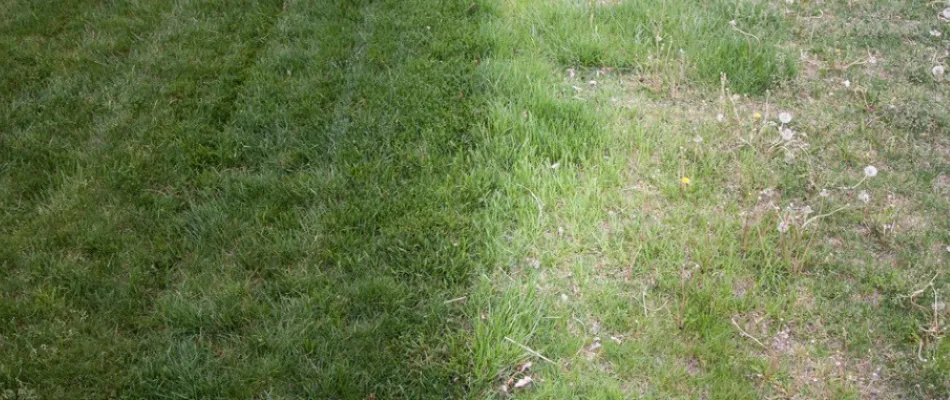
Short Answer: Dog urine spots and pet wear tend to look their worst in late summer, because an already heat-stressed Tulsa lawn cannot absorb the concentrated nitrogen and salts in urine the way a vigorous spring lawn can. The classic sign is a dead or brown center ringed by lush, dark green growth. Repair starts with deeply flushing fresh spots with water, then reseeding or plugging dead areas during the fall window, and prevention focuses on dilution, hydration, and designating pet areas. Telling urine burn apart from disease or grubs matters too. Here is how to handle pet damage on a Tulsa lawn.
If you have a dog and a lawn, you know the spots: round patches of dead or discolored grass, often with a suspiciously green ring around the edge, scattered across the yard. In late summer those spots seem to multiply and look worse than they did in spring, and many Tulsa homeowners assume their lawn has developed a disease.
Usually it is not disease at all; it is the combination of pet damage and a heat-stressed lawn, and the timing is not a coincidence. Understanding why dog spots peak in late summer, and how to tell them apart from other problems, is the key to repairing them and keeping them from taking over. Here is the full picture on pet damage and how to handle it.
Why Dog Urine Damages Grass
The culprit is mostly nitrogen. Dog urine is high in nitrogen and various salts, and while nitrogen is the same nutrient in lawn fertilizer, it is all about concentration. A small amount feeds grass, but a concentrated dose dumped in one spot is the equivalent of a massive over-application of fertilizer in a tiny area, which burns and kills the grass at the center.
This is exactly why you often see the signature pattern: a dead or brown center where the urine was most concentrated, surrounded by a ring of unusually lush, dark green grass where the nitrogen was diluted enough to act as a feed rather than a burn. That green halo is actually the giveaway that you are looking at urine damage and not something else. Female dogs and dogs that tend to urinate in the same spots often produce the most noticeable damage simply because of volume and concentration in one place.
Why It Gets Worse in Late Summer
Dog spots are a year-round reality, but they look their worst in late summer for a clear reason: the lawn is already under heat and drought stress and has far less capacity to absorb and recover from the insult. A vigorous, well-watered spring lawn dilutes and grows through minor urine damage relatively quickly. A tired August lawn, with slower growth and dry soil, cannot flush or outgrow the damage, so the spots linger, widen, and stand out.
Dry soil compounds the problem because there is less moisture to dilute the urine when it lands, leaving it more concentrated right at the roots. So the same dog doing the same thing produces worse-looking results in late summer than in spring, which is why this is the season homeowners notice it most and start looking for answers.
Telling Urine Damage Apart From Other Problems
Before treating, it is worth confirming that pet damage is actually what you are seeing, since late-summer lawns can have several issues at once. The green ring around a dead center is the strongest sign of urine burn; disease and insect damage do not typically produce that halo. Urine spots also tend to be scattered and roughly round, concentrated wherever the dog frequents, rather than spreading in a pattern across the lawn.
Disease usually shows different signatures, circular patches with distinct edges, lesions on the blades, or a spreading shape, while grub or armyworm damage tends to come in larger areas, and grub-damaged turf pulls up loose like carpet because the roots are gone. If the damage is concentrated where your dog goes and shows the green halo, it is almost certainly urine. If it is spreading, pulling up loose, or showing leaf lesions, look further before assuming it is the dog.
How to Repair Pet Damage
Flush Fresh Spots
For spots that are fresh, the single most effective thing you can do is soak the area deeply with water as soon as possible to dilute and flush the nitrogen and salts down past the root zone before they burn. A thorough flushing can prevent a spot from forming at all or limit how bad it gets. Keeping a hose or watering can handy for the dog's favorite areas turns this into a quick habit.
Reseed or Plug Dead Areas
Spots where the grass is fully dead will not recover on their own and need to be replanted. The approach depends on your grass: spreading grasses like Bermuda and Zoysia will often fill small spots back in on their own over time or can be plugged to speed it up, while fescue areas need reseeding. Either way, fall is the ideal window in our area to repair these spots, which is part of why late summer is the time to take stock and plan the repairs. Before replanting, it helps to flush the area well and lightly work the soil so the new grass establishes in clean ground.
How to Prevent Dog Spots
Prevention is more realistic than elimination, but several things genuinely help. The most effective is dilution: training yourself to flush the spot with water shortly after the dog goes, or keeping the lawn well hydrated so urine is naturally diluted, dramatically reduces burn. Designating a specific pet-relief area, such as a mulched or gravel spot, concentrates the damage where it does not matter and spares the rest of the lawn.
Keeping the dog well hydrated can help dilute their urine, and a thick, healthy, well-watered lawn simply tolerates and recovers from pet traffic far better than a thin, stressed one. Be cautious with the various supplements and home remedies marketed to neutralize dog urine, as results are inconsistent and some can affect a pet's health, so those are worth discussing with a veterinarian rather than assuming they work. The reliable levers are dilution, hydration, a designated area, and a healthy lawn.
Frequently Asked Questions About Dog Spots on Tulsa Lawns
Why do my dog spots have a green ring around them?
Because urine nitrogen is concentrated enough to burn the grass at the center but diluted at the edges, where it acts as a fertilizer and produces lush, dark green growth. That green halo is the classic sign of urine damage and helps distinguish it from disease or insect problems, which do not create the ring.
Why are the spots worse now than in spring?
Because a heat-stressed late-summer lawn cannot dilute or grow through the damage the way a vigorous spring lawn can, and dry soil leaves the urine more concentrated at the roots. The same pet behavior produces worse results when the lawn is already under stress.
Can I fix the spots myself?
Often yes. Flush fresh spots promptly with water, and reseed or plug the dead areas during the fall window. Spreading grasses may fill in on their own over time. The main thing is repairing during the right season and addressing the cause through dilution and a designated area so the spots do not simply return.
Will a healthier lawn really resist dog damage better?
Yes. A thick, well-watered, vigorously growing lawn dilutes urine better, outgrows minor damage faster, and recovers more quickly than a thin, stressed one. Overall lawn health is one of the most underrated defenses against pet wear and urine spots.
Living With Dogs and a Good Lawn
Having a dog and a great-looking lawn are not mutually exclusive, but late summer is when the tension shows most, on a stressed lawn that cannot hide the damage. The path forward is straightforward: confirm the spots are urine by the telltale green ring, flush fresh ones, repair the dead areas during the fall window, and prevent new damage through dilution, hydration, a designated pet area, and a healthy, well-watered lawn. Handle it that way and you can keep both the dog and the yard you want.
What to Do Next
If pet damage has taken over your lawn, we are glad to assess it, confirm it is urine rather than disease or insects, and put together a repair and prevention plan timed for the fall window. We will tell you honestly what will make the biggest difference.
Call us at 918-605-4646 or visit completelawncaretulsa.com to schedule. We serve homeowners across Tulsa, Broken Arrow, Bixby, Owasso, Jenks, and surrounding communities.