
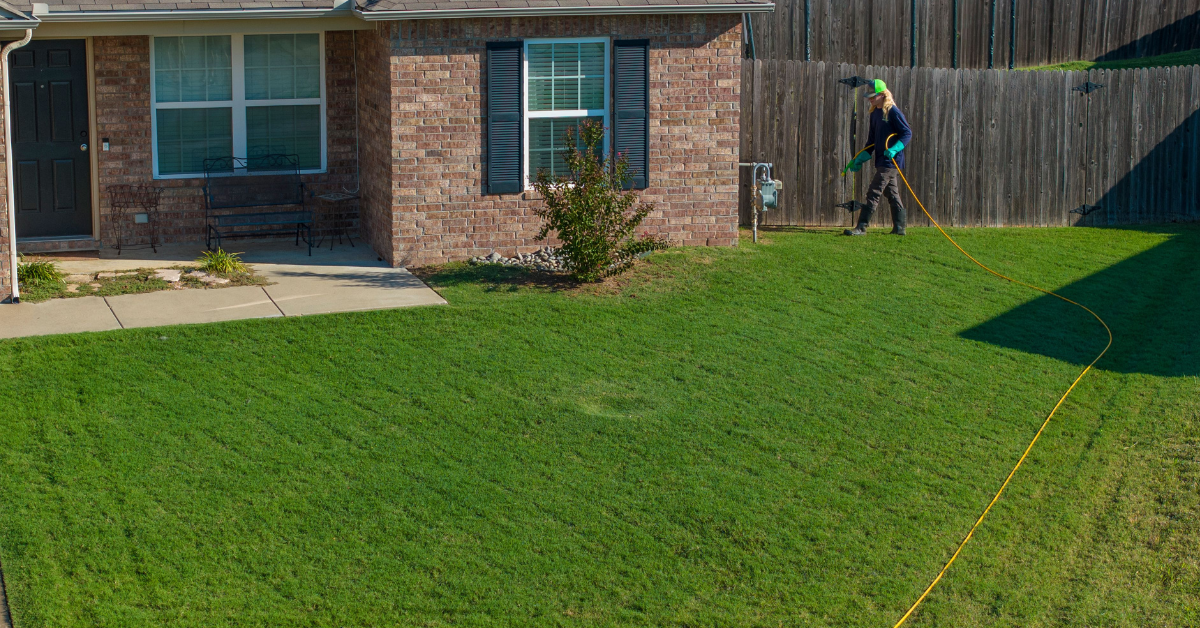
Short Answer: If crabgrass has taken over significant parts of your Tulsa lawn, your June options are spot post-emergent treatment on young plants, blanket post-emergent on widespread infestations (with cost and lawn stress tradeoffs), or accepting this season and setting up a more aggressive pre-emergent program for next spring. The long-term fix is always a thicker lawn that crowds out crabgrass at the seedling stage. Most lawns we work on are crabgrass-free by year two when we combine spot treatment now, fall overseeding, and earlier next spring pre-emergent.
If you are looking at your Tulsa lawn right now and seeing more crabgrass than turf, you are in one of two camps. Either your pre-emergent went down too late or too light in February and March, or you have been running without a pre-emergent program at all. Either way, by June the crabgrass is established, growing fast, and starting to seed for next year.
The honest answer is that crabgrass control in June is partial damage control rather than a clean fix. The lawns we get cleanest by August are the ones where the homeowner accepts that reality, takes the right steps now, and commits to the long-game changes that prevent recurrence. Here is what works and what does not.
What Crabgrass Looks Like Right Now
Crabgrass in mid June across the Tulsa metro is usually at 3 to 6 tillers per plant. The plants are still actively growing, beginning to send out seed heads at the tips, and spreading laterally from the original germination point. Light green color, coarser texture than Bermuda, and a clumping growth habit make it easy to identify against your turf.
The size of the plants matters for treatment. Crabgrass at 1 to 3 tillers responds well to post-emergent herbicide. Crabgrass at 5 or more tillers is significantly harder to kill and may need two applications spaced two to three weeks apart. By August crabgrass is mature, has likely already dropped seeds, and post-emergent control becomes much less effective.
June is the last decent treatment window. July is harder. August is mostly cleanup.
Option One: Spot Post-Emergent Treatment
For lawns with crabgrass in defined patches (less than 20 percent of the lawn affected), spot treatment with a selective post-emergent herbicide is the best approach. The active ingredients we use kill crabgrass selectively without damaging desirable Bermuda or Zoysia.
The visual progression is predictable. Treated crabgrass turns a reddish-purple within 5 to 7 days. The plants look dead within 14 days. The surrounding turf fills back in over the next month if conditions are right.
Spot treatment is the right choice when you can clearly identify the crabgrass plants and target them. It minimizes herbicide use, reduces stress on the rest of the lawn, and produces clean results.
Option Two: Blanket Post-Emergent Application
For lawns where crabgrass is widespread (more than 20 percent of the lawn or scattered everywhere), spot treatment becomes impractical. The next step is a blanket application of post-emergent herbicide across the entire lawn.
We are honest about the tradeoffs. Blanket application costs more than spot treatment, exposes more of the lawn to herbicide, and stresses the desirable grass species more, especially in June heat. We recommend it only when the alternative (letting the crabgrass run wild for the rest of the season and dropping millions of seeds) is worse.
If we go this route, we typically time it for an early morning when temperatures will not exceed 85 that day, water lightly before to break surface tension, and follow with watering after to drive the product down. Recovery of the lawn takes 4 to 8 weeks.
Option Three: Accept This Season, Win Next Year
For some lawns, the right move is to manage the visible damage cosmetically (frequent mowing to keep crabgrass low, prevention of seed maturation) and focus the real effort on setting up next year’s program. This is the option we recommend most often for lawns where the crabgrass took over because of a fundamental problem like extremely thin turf or significant compaction.
The plan for this approach involves three big moves. Mow the lawn at the upper end of its height range to shade crabgrass below. Schedule a fall aeration and overseeding to thicken the turf. Lock in next spring’s pre-emergent at a slightly earlier date with a split application to extend the protective window.
Lawns that follow this plan are typically 70 to 90 percent crabgrass-free by next June and continue improving from there.
The Long Game That Wins
Whatever you choose for this June, the long-term fix for crabgrass is a thick, dense, properly managed lawn. Crabgrass is a weak competitor. It germinates and establishes best in thin areas where sunlight reaches the soil. Dense turf with proper mowing, watering, and fertility crowds out crabgrass at the seedling stage before you ever see it.
Mowing height. 2.5 to 3 inches for Bermuda in summer. Most homeowners cut too short, exposing the soil to sunlight that crabgrass needs to germinate.
Watering depth. Deep infrequent cycles train the turf to deep roots while drying the surface between cycles, which is exactly what crabgrass does not want.
Fall overseeding. Late August through mid September is when you can pack new Bermuda or Zoysia into your lawn to fill thin spots before they become next year’s crabgrass spots.
Soil health. Compacted soil and low organic matter favor crabgrass over your turf. Core aeration plus light topdressing shifts the competition over time.
Mowing and Bagging Strategy
For the rest of the summer, with crabgrass present, change two things about how you mow.
Mow more frequently to remove seed heads before they mature. Crabgrass that has dropped seeds will return next year regardless of pre-emergent. Cutting before seed head matures reduces next year’s seed bank.
Bag clippings during peak crabgrass seed season (mid July through September) to remove seeds from the lawn rather than returning them. This is one of those small practices that compounds over multiple seasons.
What Does Not Work
Pulling crabgrass by hand. It can work on tiny patches but the plants are deeply anchored at this point and you will rarely get clean removal. The disturbed soil is also ideal for the next generation of crabgrass seed.
Vinegar, salt, boiling water, and other home remedies. They damage the surrounding turf as much as the crabgrass and are not selective. You end up with bare spots that are even worse than the crabgrass.
Generic weed and feed in summer. The herbicide is usually too aggressive for warm-season grass in heat, and the timing is wrong for crabgrass anyway. Wait for a properly formulated post-emergent labeled for crabgrass.
When to Call a Professional
If more than 25 to 30 percent of your lawn is crabgrass, or if you have tried two or more rounds of homeowner treatment without significant results, that is the moment for a professional walk-through. We will assess what you are dealing with, recommend the right combination of treatment now and program changes for next year, and tell you straight what is realistic to achieve this season versus next.
What to Do Next
The window for effective crabgrass control narrows every week through June. If you are going to act on this, the next 7 to 14 days is the right time. After that, options shrink and costs go up.
Call us at 918-605-4646 or visit completelawncaretulsa.com to request a quote. We serve Tulsa, Broken Arrow, Bixby, Owasso, Jenks, and surrounding communities, and we will be straight with you about what your lawn needs and what it is going to take.
One More Tactic: Resetting Bare Areas
For larger bare areas where crabgrass had been thick and you have now killed it, those bare spots will refill from your existing Bermuda or Zoysia over the rest of summer if surrounding turf is healthy. To speed it up, lightly rake the surface, apply a thin layer of compost or topsoil, and keep the area moist for 2 weeks. Bermuda runners can fill a 2-foot bare area in about 4 to 6 weeks during peak summer growth. For larger bare areas or where surrounding turf is also thin, plan to sod or plug those areas in late June and July so the lawn enters next spring with no crabgrass-friendly bare spots.
Frequently Asked Questions
Will pulling crabgrass by hand work for small patches?
For very small patches with young plants, yes. The catch is that crabgrass roots can break off and regrow, and the disturbed soil is ideal for the next round of seed to germinate. Spot treatment is usually more effective even on small patches.
Does corn gluten meal work as an organic pre-emergent?
The science on corn gluten is inconsistent. It can play a small supporting role but is not a substitute for properly timed conventional pre-emergent in our climate. The rates required are also high enough that it doubles as a nitrogen fertilizer.
Should I overseed in spring to thicken the lawn?
For warm-season grasses in our area, fall is the much better overseeding window. Spring overseeding is harder because pre-emergent and new seed are incompatible, and crabgrass pressure is highest in spring.
How long does it take to get a lawn truly crabgrass-free?
Usually 2 seasons of consistent prevention. Year 1 cuts the population dramatically. Year 2 finishes the job. Year 3 is maintenance against incoming seed from neighbors and wind.