
Short Answer: Armyworm outbreaks hit Tulsa metro lawns most years between mid-July and early September. A heavy infestation can defoliate a Bermuda lawn in 48 hours. Early signs include spotty browning that spreads quickly, increased bird activity, frass at the soil surface, and visible larvae when you part the grass. Treatment with a contact insecticide labeled for armyworms produces rapid results when applied in early morning or evening. The 24 hours between detection and action decide how much lawn you save.
If you have ever seen what armyworms do to a Tulsa Bermuda lawn in 48 hours, you remember it. A perfectly healthy yard can look like a chewed carpet by Friday morning if the right conditions hit on Wednesday. Properties that catch armyworms early lose a few patches. Properties that catch them late often need full sod replacement.
What Armyworms Are and Why They Hit Oklahoma
Armyworms are the larval stage of moths that fly into our area from southern regions in summer. The fall armyworm is the most common in the Tulsa metro. Adults lay eggs in lawn turf. Larvae hatch within days and begin feeding aggressively.
What makes armyworms uniquely damaging is their behavior. They feed in groups, can produce 50 to 100 larvae per square foot in heavy outbreaks, and consume grass faster than the plant can regrow. The “army” part of the name comes from their habit of advancing in a wave across a lawn.
Oklahoma typically sees the first armyworm wave between mid-July and early August. A second wave often follows in September. Wet conditions after dry stretches create ideal outbreak conditions.
The Early Warning Signs
Spotty Browning That Spreads Quickly
Drought patches grow slowly. Armyworm patches double overnight. If you see brown areas that were not there yesterday and are expanding visibly today, armyworms are likely involved.
Bird Activity
Robins, mockingbirds, and starlings know exactly where armyworms are. Unusual bird concentration on specific lawn areas is a strong indicator.
Visible Larvae
Part the grass in a suspicious area. Armyworm larvae are tan to dark green with a light stripe down each side. They are about an inch long at maturity. Small infestations require close looking. Large infestations are unmistakable.
Frass at the Soil Surface
Small dark green or brown pellets at the base of grass plants indicate active feeding. Look at the thatch level in damaged areas.
The Soap Drench Test
Mix one tablespoon of dish soap into a gallon of water. Pour over a square yard of suspicious turf. Wait two to three minutes. Armyworms surface to escape the soap. Counting what comes up tells you the population density.
Treatment Options
Contact Insecticides
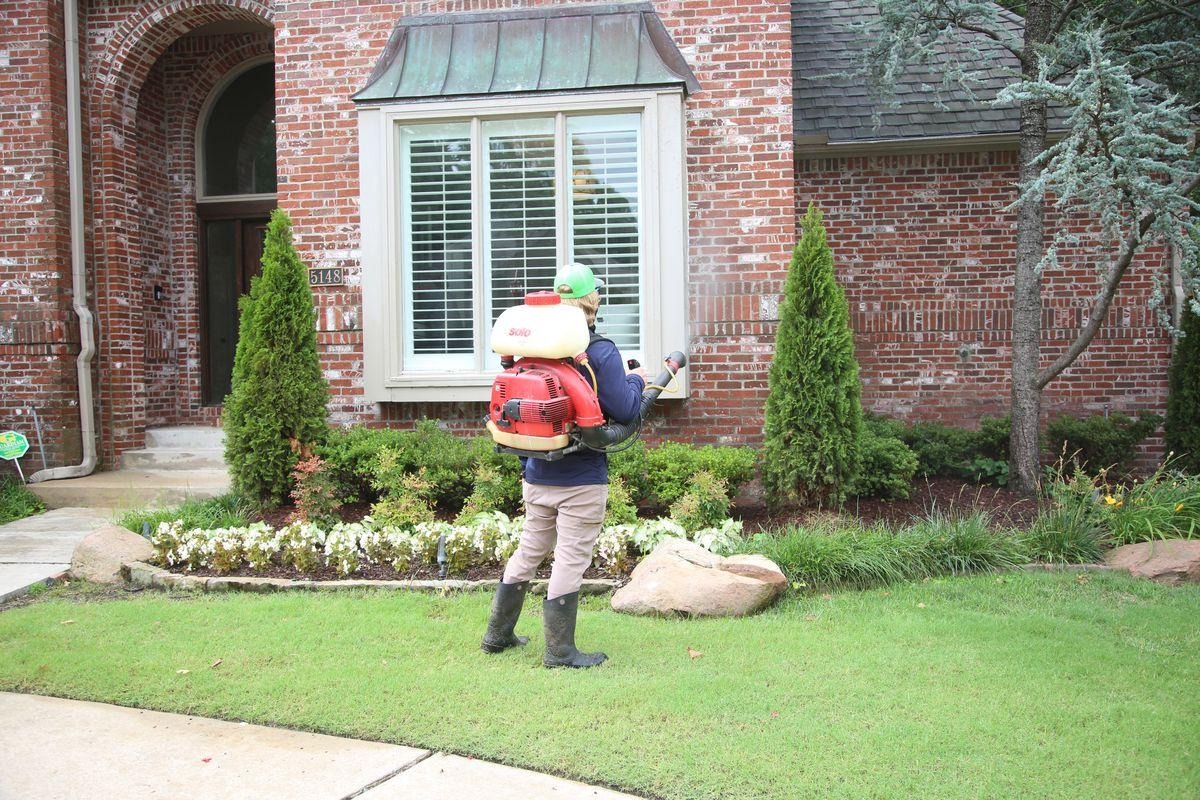
Several products labeled for armyworms work quickly. Active ingredients including bifenthrin and lambda-cyhalothrin produce knock-down within hours. Apply in early morning or evening when armyworms are active and temperatures are below 85 degrees. Water in lightly to reach the soil surface.
Bt Products
Bacillus thuringiensis products labeled for caterpillars work against armyworm larvae. Apply at dusk when armyworms feed. Bt is pollinator-safe and selective to caterpillar-stage insects.
Beneficial Nematodes
Some nematode species parasitize armyworm larvae. Slower-acting but useful as part of a longer-term strategy on repeat-pressure properties.
Timing Matters More Than Product
Speed is the single most important factor in armyworm response. The same treatment on day one of an outbreak produces dramatically better results than the same treatment on day three. Grass that has not been chewed yet is grass you can save.
Walk your lawn every two to three days during outbreak season. The soap drench test once a week in suspicious areas catches early infestations.
What Happens After Treatment
Effective treatment stops feeding within hours. The lawn looks worse for several days as already-damaged grass dies back. Then the surviving grass and crowns begin recovery.
Bermuda usually recovers from moderate armyworm damage within four to six weeks with consistent watering. Severe damage where crowns were destroyed needs fall renovation. Patience after treatment is important. Aggressive intervention beyond pest control typically makes recovery slower.
What Increases Armyworm Pressure
Properties next to wooded areas, fields, or untreated landscape face higher pressure. Heavy nitrogen during summer attracts egg-laying moths. Wet conditions following dry stretches create ideal egg-laying conditions. Properties with chronic outbreak history often see repeat pressure year over year.
How Different Tulsa Properties Handle Outbreaks
Properties on regular professional lawn care catch outbreaks earlier because someone is walking the lawn regularly. Properties without regular care often miss early signs and discover damage when it is already serious.
Properties with established Bermuda recover better than properties with thin or struggling Bermuda. The reserves matter for recovery.
Frequently Asked Questions About Armyworms
How fast can armyworms damage a lawn?
Severe infestations show visible defoliation within 24 hours. Full lawn damage in 48 to 72 hours is common.
Will the lawn come back?
Bermuda usually recovers from moderate damage. Severe damage requires renovation.
Can I prevent armyworms?
Prevention is difficult because the moths fly in from elsewhere. Vigilance and rapid response are the most effective strategy.
Are armyworms harmful to pets?
The worms themselves are not directly dangerous. Follow treatment product labels for re-entry intervals.
How often should I check during outbreak season?
Every two to three days for visual inspection. Weekly soap drench in suspicious areas.
What to Do This Week
Walk your lawn looking carefully for the signs above. Do the soap drench test in any suspicious area. If you find armyworms, treat immediately. The 24 hours between detection and action are the difference between saving the lawn and losing it.
The Tulsa Outbreak Pattern
We typically see the first significant armyworm pressure in the Tulsa metro between July 15 and early August. Wet weather in mid-July often signals heavier outbreaks two to three weeks later. We watch radar and adjust scouting frequency on customer properties accordingly.
What Customers Get Wrong
The most common armyworm mistake is waiting “to see what happens” after seeing initial damage. By the time it is clearly armyworms and clearly serious, half the lawn may be gone. The 24-hour decision window is real. If you suspect armyworms, treat now, not next week.
Coordinating Treatment With Heat
Armyworm treatment in Oklahoma summer needs to time around heat. Apply early morning before 9 a.m. or evening after 7 p.m. Midday applications during peak heat damage the lawn more than the armyworms would have. The timing matters as much as the product choice.
Long-Term Strategy for Repeat-Pressure Properties
Properties that get hit by armyworms multiple years in a row benefit from a preventive insecticide application in early July before the typical outbreak window. The cost of one preventive application is far less than the cost of full sod replacement after a severe outbreak. We discuss preventive timing with customers who have history.
What to Watch For Through Late Summer
Armyworm pressure can extend into early September. After the first July outbreak, a second wave often follows three to four weeks later. Maintaining vigilance through late summer pays off because the lawn that survived the first outbreak still needs protection from the second.
How Our Crews Approach Pest Walks
Our crews walking properties during outbreak season specifically look for early signs. The 30 minutes of attention per visit is what catches issues before they become crisis-level. Customers on regular service often have problems identified before they are even aware anything is wrong.
The Decision Tree When You See Damage
First question: is it spreading? If yes, treat now. Second question: are there visible larvae or fresh frass? If yes, treat now. Third question: do you have an alternative explanation like a watering coverage gap? If yes, address that first. Speed beats certainty when armyworms are involved.
What Recovery Looks Like
Effective treatment stops feeding within hours. The damaged grass continues to die back for a few days, making the lawn look worse. Then surviving Bermuda begins recovery via rhizome and stolon spread. Light damage often recovers within four weeks. Moderate damage takes six to eight weeks. Severe damage needs fall renovation.
How Pests Interact With Heat Stress
Lawns under heat stress are more vulnerable to armyworm damage because they have less reserves for recovery. The combination of stress factors compounds. This is why we recommend addressing watering, mowing, and other cultural practices alongside any pest treatment. Treating the worm without fixing the stress conditions sets up the same problem the next month.
What to Do Next
If you want help with any of this, we are glad to walk your property. We will look at your specific lawn, identify what is doing well and what needs attention, and tell you honestly what we recommend.
Call us at 918-605-4646 or visit completelawncaretulsa.com to schedule. We serve homeowners across Tulsa, Broken Arrow, Bixby, Owasso, Jenks, and surrounding communities.