

What Is a Smart Irrigation Controller and Is It Worth Upgrading?
By the irrigation experts at Complete Lawn Care | Serving Tulsa, Broken Arrow, Bixby, Jenks, Owasso, and Sand Springs
A smart irrigation controller is a Wi-Fi connected timer that automatically adjusts your watering schedule based on real-time weather data, local evapotranspiration rates, and your specific yard’s soil and plant settings — instead of running on a fixed schedule you set once and forget. And yes, for most Tulsa-area homeowners, upgrading to one is absolutely worth it. The technology has matured significantly over the past several years, the cost has come down to a range that makes the investment easy to justify, and the practical benefits go well beyond saving water. For homeowners who partner with a professional irrigation service, a smart controller adds another layer of value: your irrigation provider can monitor your system, adjust your schedule seasonally, and in many cases detect potential leaks — all without needing to schedule a visit.
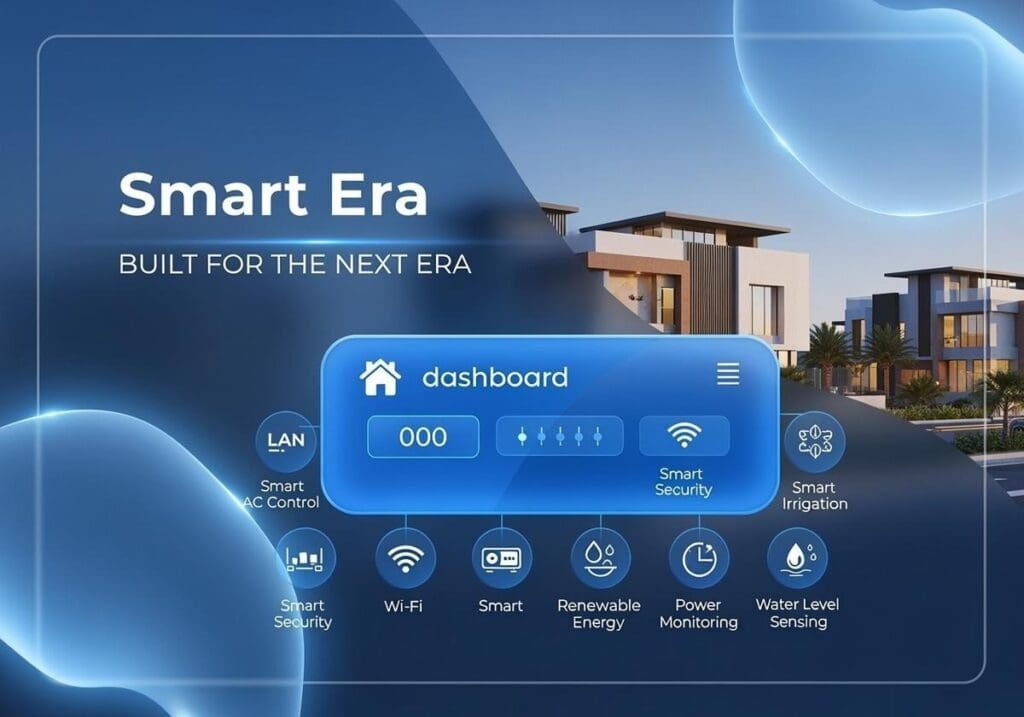
Smart irrigation technology integrates Wi-Fi connectivity, weather data, and remote monitoring into a single system — taking the guesswork out of when and how long to water your lawn.
How a Smart Controller Is Different From a Standard Timer
A traditional irrigation controller is essentially a programmable clock. You tell it which zones to run, how long to run them, and which days to water. Once programmed, it runs exactly as instructed whether the ground is already saturated from three days of rain or bone dry after two weeks of Oklahoma heat. It has no awareness of conditions outside its own settings.
A smart controller connects to your home Wi-Fi and pulls in local weather data continuously. Using that data — current temperature, forecast precipitation, humidity, wind speed, and calculated evapotranspiration (the amount of water your lawn is losing to heat and wind) — it determines whether your lawn actually needs water on any given day and adjusts or skips runs accordingly. Most smart controllers also allow you to enter information about your specific yard: soil type, sun exposure, slope, and plant type. That profile helps the controller calculate water needs more accurately than weather data alone.
The result is a system that responds to your lawn’s actual conditions rather than a calendar you created months ago. In a climate like Tulsa’s — where summer temperatures routinely exceed 100 degrees, rainfall is unpredictable, and fall transitions happen quickly — that responsiveness makes a real, measurable difference in both turf health and water usage.
The Real-World Benefits That Make Smart Controllers Worth It
Automatic weather-based skips. This alone justifies the upgrade for many homeowners. A smart controller will automatically skip scheduled runs when rain is in the forecast or when recent rainfall has already met your lawn’s needs. In a Tulsa spring where it rains several times a week, a traditional timer will run anyway unless you manually turn it off every time. A smart controller handles that entirely on its own.
Remote access and scheduling from your phone. Every leading smart controller comes with a smartphone app that lets you view your schedule, manually run zones, skip upcoming cycles, and adjust run times from anywhere. You are at the office and realize you left the system running too long? Open the app and turn it off. You are out of town and Oklahoma gets a surprise heat wave? Increase your run times remotely without driving home to touch the controller box.
Remote monitoring and service by your irrigation provider. This is one of the most valuable and least talked about benefits of smart irrigation technology. At Complete Lawn Care, when a customer has a compatible smart controller, we can log into their system remotely, review their zone schedules, make seasonal adjustments, and in many cases identify anomalies that suggest a possible leak or valve problem — without scheduling a service visit first. That means issues get caught and addressed faster, and seasonal transitions happen on time without the homeowner having to remember to call us.
Flow monitoring and leak detection (on systems with a flow sensor). Many smart controllers support an add-on flow sensor installed on your main irrigation line. When active, it monitors water flow through the system in real time and alerts you — and your service provider — if flow readings are abnormal. A broken head, a cracked lateral line, or a valve that won’t close fully will all show up as unusual flow patterns. Catching a leak early can prevent hundreds of dollars in water waste and turf damage. For homeowners who have dealt with unexplained wet spots or high summer water bills, this feature alone can pay for the entire upgrade.
Water usage reporting. Most smart controllers track exactly how much water each zone uses over time and present it in a clear dashboard. This is genuinely useful for understanding whether your system is balanced — whether some zones are running far longer than others for no good reason, or whether total usage has crept up gradually in ways that would not be obvious on a single water bill.
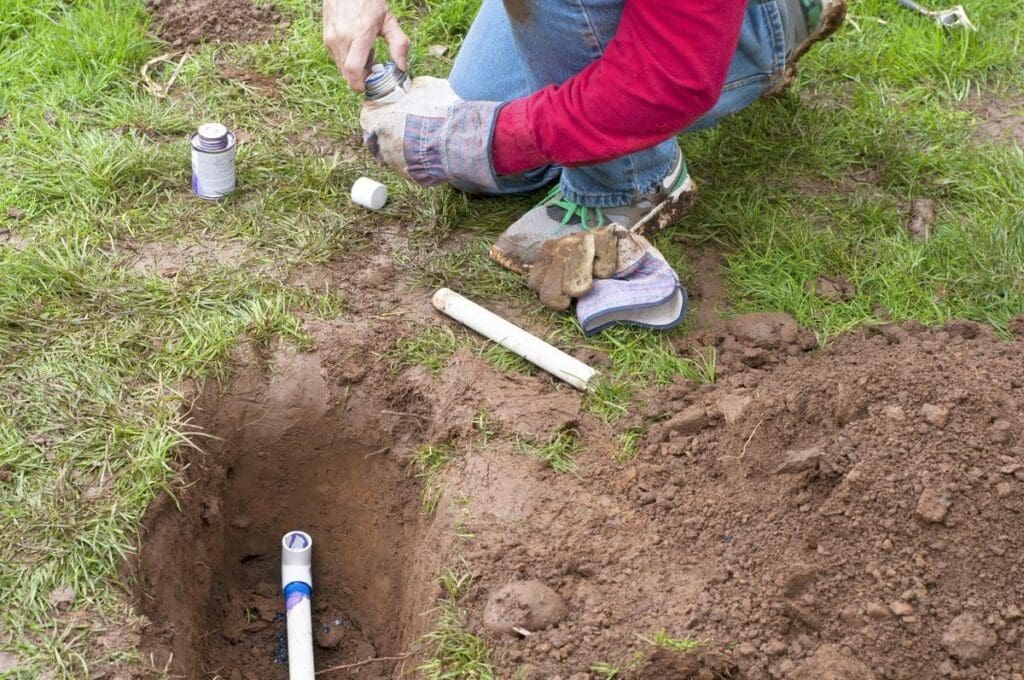
Irrigation repair work on a residential system in the Tulsa metro — pairing a professionally maintained system with smart controller technology gives homeowners the best of both worlds: automatic scheduling and expert oversight.
What Smart Controllers Cost and How Quickly They Pay for Themselves
Entry-level smart controllers from reputable brands like Rachio, Rain Bird, Hunter, and Orbit B-hyve typically range from $100 to $200 for residential systems. Mid-range models with flow monitoring support, more zones, or advanced features run $200 to $350. Installation by a professional irrigation technician usually adds $75 to $150 depending on the complexity of the swap.
On the savings side, studies from water utility agencies consistently show that smart controllers reduce outdoor water use by 20 to 50 percent compared to traditional timers. For a Tulsa-area homeowner running an irrigation system through a full Oklahoma summer, the water savings alone often recover the cost of the hardware within one to two seasons. Add in the avoided service calls from early leak detection and the extended life of turf that is watered correctly rather than overwatered, and the payback period shortens further.
Some Tulsa area water utilities have offered rebate programs for smart controller upgrades in past years — it is worth checking with your provider before purchasing, as incentives change seasonally.
Which Smart Controller Should You Choose?
The honest answer is that the major brands are all solid, and the right choice depends more on compatibility with your existing system and your service provider’s familiarity than on the specific feature lists in the marketing materials.
Rachio is one of the most widely used residential smart controllers and has a strong reputation for ease of setup, a clean app interface, and reliable weather integration. The Rachio 3 supports flow monitoring with an add-on sensor and has solid professional service integration. It is a reasonable default choice for most homeowners upgrading from a standard timer.
Rain Bird and Hunter both offer smart controller lines that appeal to homeowners who are already in their ecosystem or who prefer brands with deep professional irrigation roots. Their smart controllers integrate well with existing Rain Bird and Hunter zone hardware, which is common in Tulsa-area installations.
Orbit B-hyve is a more budget-friendly option that covers the essential smart features at a lower price point. For a simple residential system that does not need flow monitoring, it is a functional entry point.
Before choosing, check with your irrigation service provider. At Complete Lawn Care, we work with multiple smart controller platforms and can recommend the best fit for your specific system and help with installation. We want the technology working for you — not creating new complications.
What to Expect During a Smart Controller Installation
For most residential systems, swapping out a traditional timer for a smart controller is a straightforward job. The wiring configuration is typically the same — each zone wire connects to the same numbered terminal on the new controller as it did on the old one. A photo of the existing wiring before removal makes the transition clean and confusion-free.
After the hardware is installed, setup involves connecting the controller to your Wi-Fi network and entering your yard’s profile in the app: zip code, soil type, sun exposure for each zone, sprinkler head type, and vegetation type. Most apps walk you through this with a simple setup wizard. The more accurate the profile, the better the controller’s automatic scheduling will perform.
Plan for about 30 to 60 minutes for the full installation and setup if you are doing it yourself, or a similar window for a professional visit. After setup, run each zone manually through the app to confirm everything is connected correctly before relying on automatic scheduling.
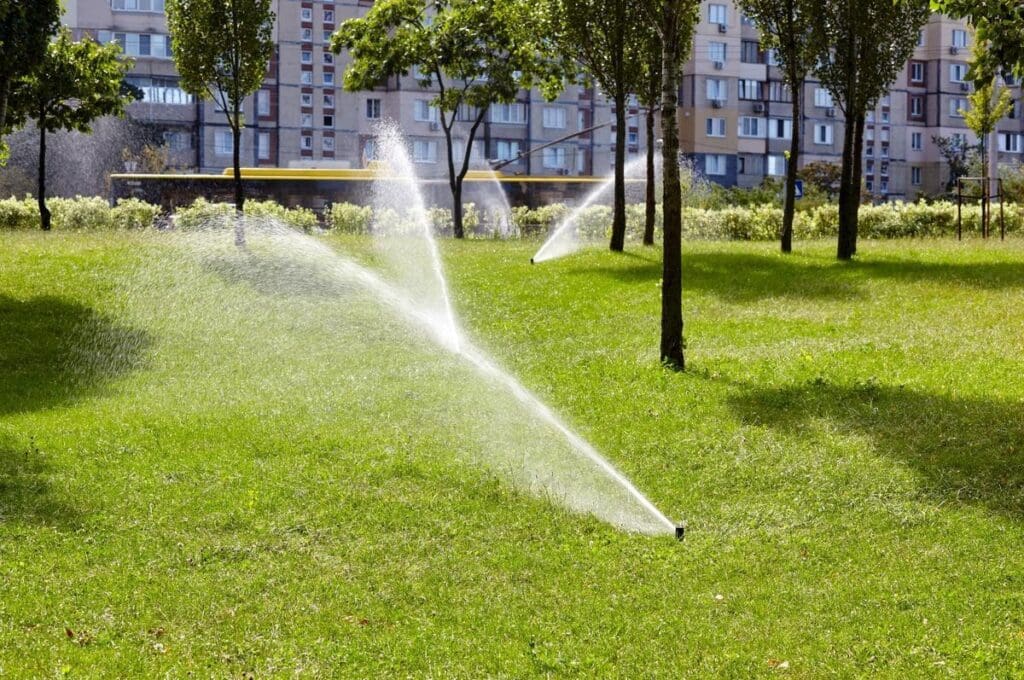
A well-designed irrigation system with proper head coverage and smart scheduling ensures your lawn receives consistent, efficient watering through every season — including Oklahoma’s demanding summer months.
Common Questions and Honest Answers About Smart Controllers
Will a smart controller work if my Wi-Fi signal is weak near the controller box? Most smart controllers need a reasonably reliable Wi-Fi connection to function. If your controller is mounted far from your router — in a garage, on an exterior wall, or in a utility area — you may need a Wi-Fi extender or mesh node nearby. Without a stable connection, the controller typically reverts to a local backup schedule rather than failing completely, but real-time weather adjustment requires connectivity.
What happens during a power outage? Most smart controllers retain their programming through short outages via internal memory. After a longer outage, you may need to reset the time and date, but zone schedules and profiles are typically stored in the app’s cloud account and can be resynced quickly.
Can I keep my existing zones and heads with a smart controller? Yes. A smart controller replaces only the timer box — your existing zone wiring, valves, lateral lines, and sprinkler heads all stay in place. The controller change has no effect on underground components.
Does a smart controller eliminate the need for professional irrigation service? No, and this is worth saying clearly. A smart controller manages scheduling and can flag anomalies, but it cannot repair a broken head, clear a clogged nozzle, adjust a misaligned rotor, service a backflow preventer, or diagnose a valve that is not opening correctly. It is a management tool, not a maintenance replacement. The combination of a smart controller and professional annual service is where you get the most out of both.
Is it hard to switch back if I don’t like it? No. The wiring is standard, and any irrigation technician can swap back to a conventional timer in under 30 minutes. In practice, though, very few homeowners who upgrade to smart control want to go back once they experience automatic weather skips and remote access.
Do smart controllers work well in Oklahoma’s climate? Very well, actually. Oklahoma’s wide seasonal swings — from cold late winters to brutal July heat to unpredictable spring rainfall — are exactly the conditions where weather-responsive scheduling delivers the most value. A smart controller that automatically reduces run times in a wet May and ramps up in a dry August is doing work that most homeowners simply don’t do manually on their traditional timers.
For more than 25 years, Complete Lawn Care has been a trusted lawn care and irrigation service provider in the Tulsa area. We believe great results don’t come from guessing — they come from experience, science, and continual improvement. Our agronomy support allows us to make smarter corrections, faster — and that same philosophy extends to the irrigation technology we recommend and install. We stay current on the platforms and products that genuinely perform, so our recommendations are based on what actually works in Oklahoma conditions, not what’s trending in a catalog.
Ready to Upgrade to Smart Irrigation? We Can Help.
Whether you want to upgrade your controller, need your existing system serviced before the season starts, or have a zone that has not been working right, Complete Lawn Care‘s irrigation repair and maintenance service covers it all. We install and configure smart controllers, integrate flow monitoring where applicable, and can remotely manage scheduling for customers who want that layer of service — so your system is always running at the right time, for the right duration, with someone keeping an eye on it year-round.
And if your lawn also needs fertilization, weed control, and a science-based seasonal care plan, ask about our 7-step lawn care program — guided by agronomic expertise and built specifically for Tulsa-area turf.
Call us at (918) 605-4646, email [email protected], or visit completelawncaretulsa.com to get a quote. We serve Tulsa, Broken Arrow, Bixby, Jenks, Owasso, and Sand Springs.
Experience. Science. Intentional Lawn Care — That’s the Complete Lawn Care Difference.