Why Does Water Pool in One Spot in My Yard?
By the lawn care experts at Complete Lawn Care | Serving Tulsa, Broken Arrow, Bixby, Jenks, Owasso, and Sand Springs
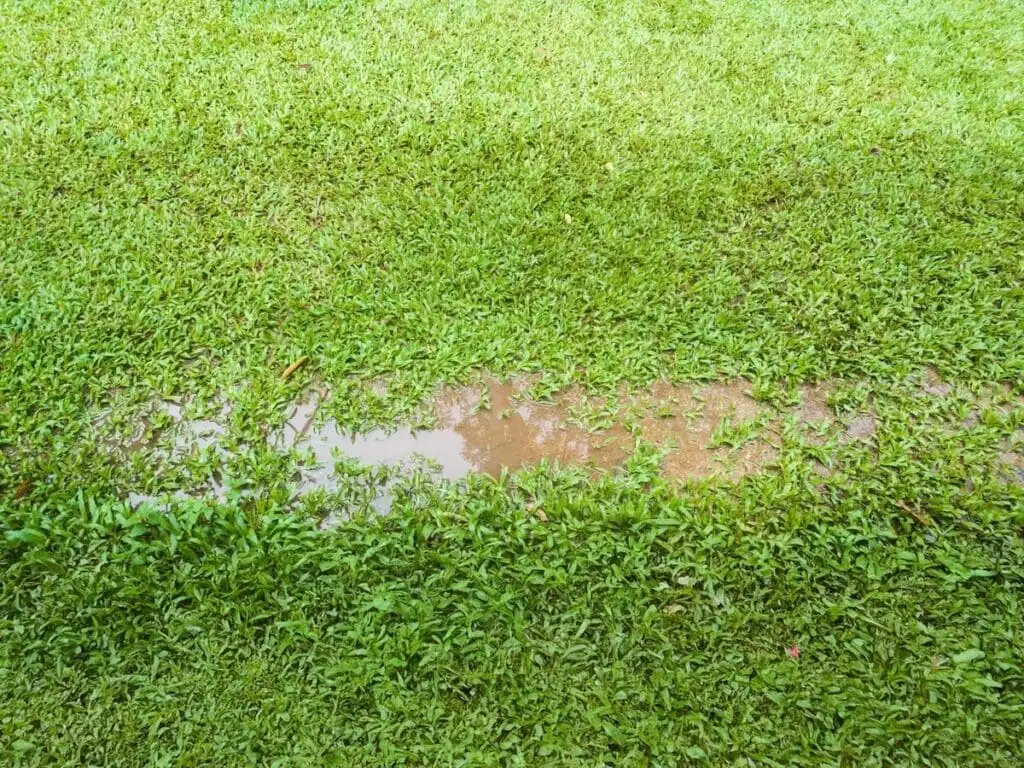
Water pools in one area of your yard after rain because that spot sits lower than the surrounding ground, because the soil underneath has become too compacted to absorb water at the rate it arrives, or because something is blocking or redirecting drainage in that direction. In most Tulsa-area yards, the answer involves a combination of all three — Oklahoma's heavy clay soil drains slowly to begin with, and low spots collect whatever water the clay cannot absorb fast enough.
The Most Common Reasons Yards Pool in One Spot
Understanding why water collects where it does is the first step toward fixing it. There are several distinct causes, and they often overlap in the same yard.
Low Spots & Negative Grade
This is the most common culprit in established Tulsa neighborhoods. Over time, soil settles unevenly. Old tree roots decompose underground and leave voids. Foot traffic, heavy equipment, or freeze-thaw cycles can shift the surface grade. When the ground around one area sits higher than the area itself, every rain event funnels water into that low point.
Clay Soil Compaction
Oklahoma's native clay is notoriously slow to absorb water even when it is not compacted. Once compacted from foot traffic, mowing, or years of surface pressure, the absorption rate drops even further. Water sits on top waiting for the soil to accept it, and in a low area that means it accumulates faster than it can drain.
Thatch & Surface Crusting
A thick layer of thatch can become hydrophobic when dry. Water beads on it and runs off rather than soaking through. Similarly, the surface layer of clay can crust after repeated wet-dry cycles, creating a physical barrier that slows infiltration and causes water to pool before it can percolate.
Downspout & Hardscape Runoff
Sometimes pooling is not about the soil at all — it is about where water is being directed. A downspout that terminates at grade level, a driveway or patio that slopes toward the yard, or a neighbor's property that drains across the property line can all create concentrated wet spots that would not exist otherwise.
Failed Underground Drainage
Older homes in Tulsa, Broken Arrow, and surrounding communities sometimes have buried drain tiles, French drains, or dry wells that were installed decades ago and have since failed, collapsed, or become clogged. When underground drainage stops working, the symptoms show up at the surface as persistent wet areas.
How to Diagnose Which Problem You Have
Before spending money on a solution, take a few minutes to observe what is actually happening. The pattern and timing of pooling tells you a lot.
Pools Quickly, Drains Within Hours
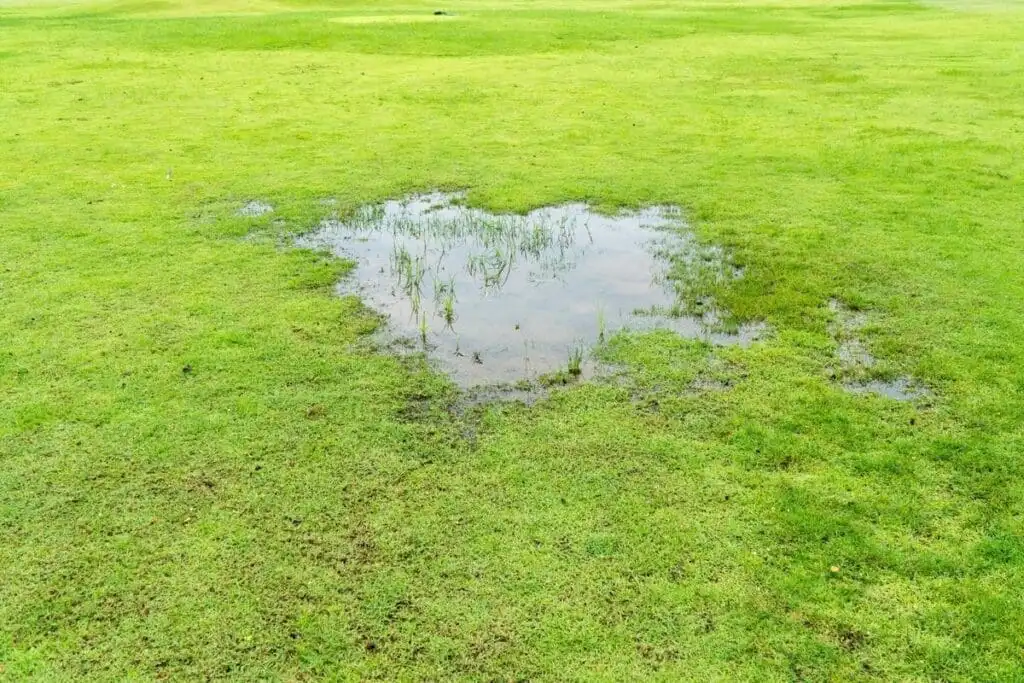
If water pools immediately during rain and disappears within a few hours, the issue is likely a low spot combined with slow soil infiltration. The area is collecting water faster than it can drain, but drainage is still occurring. This is the most manageable scenario and is often correctable with topdressing or aeration.
Stays 24–48+ Hours After Rain
If water pools and stays for 24 to 48 hours or longer after rain stops, you are dealing with either severe compaction, a hardpan layer beneath the surface, or a grade problem that prevents water from moving toward a drain or lower area. Standing water for extended periods will suffocate grass roots and create ideal conditions for fungal disease.
Only Near House or Downspout
If pooling only happens near your house, fence line, or directly in the path of a downspout, you likely have a surface water management issue — water is being directed to that point and the volume exceeds what the soil can absorb. Redirecting the source is often more effective than trying to improve drainage at the symptom.
Walk the yard during or right after a heavy rain if you can. Watch which direction water moves across the surface and where it naturally wants to go. That observation will tell you more about your grade than any survey.
Solutions That Actually Fix Yard Drainage Problems
The right fix depends on the cause. Here is what works for each scenario.
Topdressing Low Spots
For minor low areas, topdressing with a quality soil blend or compost can gradually raise the grade and improve infiltration. Apply in thin layers of no more than a half inch at a time over active turf so the grass can grow through it, and repeat as needed over multiple seasons. Filling a significant low spot all at once will smother the grass.
Core Aeration
For compaction-driven pooling, core aeration is one of the most cost-effective first steps available. A core aerator pulls small plugs of soil out of the ground, creating channels that allow water, air, and organic matter to penetrate the compacted layer. On Oklahoma clay, this can meaningfully improve infiltration rates, especially when followed by a topdressing of compost.
French Drains
Where there is a persistent low area with no natural outlet, a French drain — a gravel-filled trench containing a perforated pipe — can intercept subsurface water and redirect it away from the problem area. A French drain works best when there is a viable outlet, such as a storm drain, a ditch, or a lower area of the property.
Regrading
For significant grade problems, especially those directing water toward a home's foundation, regrading is often the most reliable long-term solution. Proper regrading around a home should establish a positive slope of at least 6 inches of drop over the first 10 feet away from the foundation. This typically requires professional equipment and expertise.
Redirecting Downspouts
If a downspout is contributing to pooling, extending it with a downspout extender or underground drain line can move that concentrated discharge to a better location. Splash blocks alone rarely solve the problem on clay soil. A downspout that releases water 10 to 15 feet from the problem area makes a significant difference.
What Happens to Your Lawn When Water Pools Repeatedly
Root Suffocation & Turf Die-Out
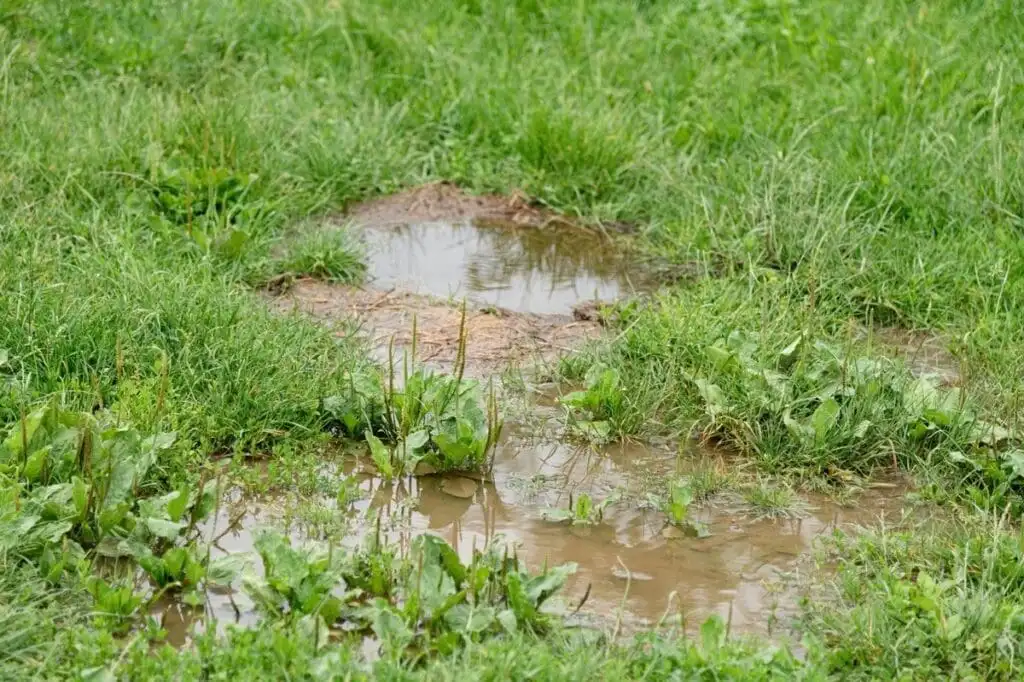
Grass roots need both water and oxygen. When soil stays saturated for extended periods, oxygen is pushed out of the root zone and roots begin to suffocate. You will typically see yellowing, thinning, and eventual die-out in the persistently wet area, which is then colonized by weeds and moss that tolerate wet conditions better than turfgrass.
Fungal Disease Risk
Prolonged wet conditions create an ideal environment for turf diseases, particularly fungal issues like Pythium root rot and gray leaf spot. On Bermuda lawns — the most common grass type across the Tulsa metro — repeated saturation during hot Oklahoma summers can trigger problems that persist long after the water recedes.
Foundation Risk
Persistent pooling near a foundation is a more urgent concern. Water that repeatedly saturates soil against a foundation can cause settling, hydrostatic pressure on basement walls, and in extreme cases structural damage. Any pooling within 10 feet of your home's foundation deserves a closer look sooner rather than later.
Should I Have My Soil Tested Before Making Changes?
Yes, and this is a step most homeowners skip entirely. A soil test tells you your soil's infiltration characteristics, organic matter percentage, and pH — all of which affect drainage behavior. Oklahoma clay soils are not uniform. Some areas have heavier compaction or a different clay composition than others, and the amendments that help in one area may not be the right choice everywhere.
At Complete Lawn Care, we recommend having your soil tested at least once a year. Drainage problems are often soil health problems in disguise, and a test removes the guesswork from both diagnosis and treatment. If you have a persistent wet spot that has not responded to basic fixes, a soil test is often the missing piece of information.
Quick Answers: Yard Drainage FAQs
How long should it take for standing water to drain?
In a healthy lawn with reasonable soil, standing water from a normal rain event should drain within 24 hours. If water is still present 48 hours after rain stops, you have a drainage problem worth investigating.
Will aerating my lawn fix a drainage problem?
It depends on the cause. If compaction is the primary driver, aeration can meaningfully improve infiltration over time. If the problem is grade-related — meaning water is physically flowing to a low spot — aeration alone will not fix it.
Can I fix a drainage problem myself?
Minor low spots and compaction issues are manageable DIY projects. French drains, regrading, and underground drain line work are more complex and generally benefit from professional involvement to ensure proper slope and outlet planning.
Does my irrigation system contribute to pooling?
It can. Irrigation zones programmed to run longer than your soil can absorb water — especially on clay — will produce runoff that collects in low spots. Check your run times and consider shorter, more frequent cycles that allow water to percolate between cycles rather than overwhelming the soil's absorption rate.
Will planting different grass help with drainage?
Grass type does not significantly change soil drainage rates. Some varieties of Zoysia and certain tall fescue blends tolerate wet conditions better than Bermuda, but they are not a substitute for fixing the underlying drainage issue.
Trusted Tulsa Lawn Care for Over 25 Years
For more than 25 years, Complete Lawn Care has been a trusted lawn care provider in the Tulsa area. We believe great results don't come from guessing — they come from experience, science, and continual improvement. We invest heavily in leadership training, research and development, and product testing, ensuring our team stays current on the latest turf products, application methods, and correction strategies.
Serving Tulsa, Broken Arrow, Bixby, Jenks, Owasso, and Sand Springs.