What Is the Difference Between Annuals and Perennials for Oklahoma?
Annuals are plants that complete their full life cycle in one growing season and must be replanted each year. Perennials are plants that die back in winter but return from their root system each spring, often for many years. In Oklahoma, the distinction matters more than in milder climates because our weather extremes — the brutal summer heat, wide temperature swings, and clay-heavy soil — affect how each plant type performs and how long it actually survives. Choosing the right mix of annuals and perennials for your Tulsa-area landscape is one of the most impactful decisions you can make for long-term curb appeal and lower maintenance.
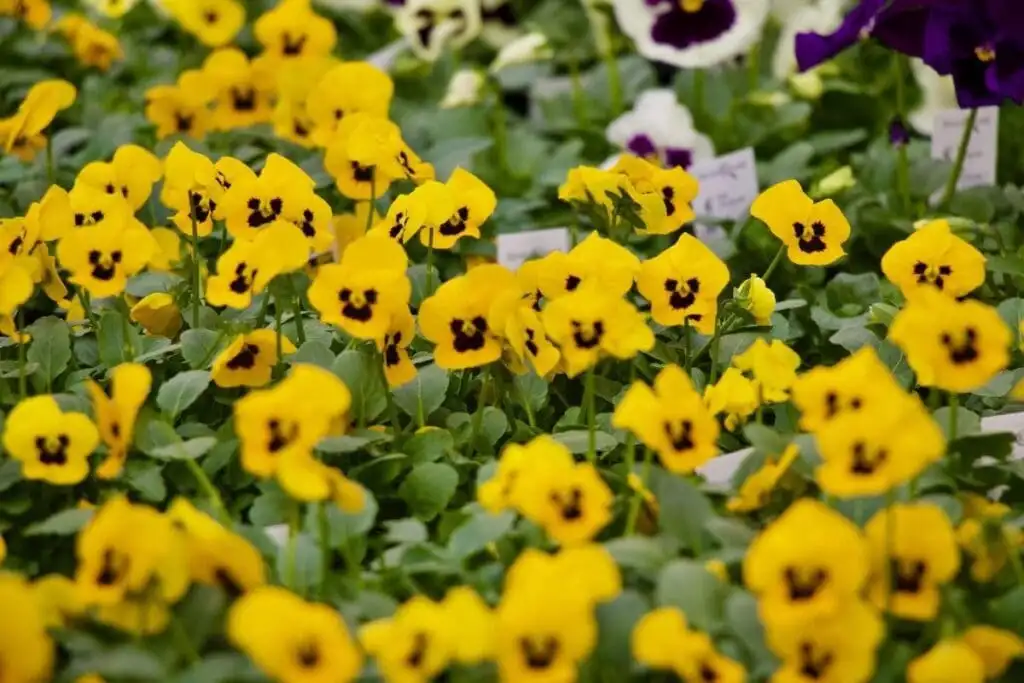
Yellow violas are a classic cool-season annual in the Tulsa area — planted in fall or late winter, they deliver vivid color through frosts that would kill warm-season annuals, then give way to summer flowers once heat arrives.
Annuals: What They Are and How They Work in Oklahoma
An annual completes its entire life cycle — germination, growth, flowering, seed production, and death — within one growing season. When frost kills it in the fall, it is gone for good. You have to plant again the following season.
That sounds like a downside, and in terms of cost and labor it can be. But annuals have a significant advantage: they bloom for a very long time. Most annuals are bred specifically to flower continuously from planting until frost, which gives you months of color in a way that few perennials can match. That is why annuals dominate high-visibility landscape beds, container plantings, and front-yard color pops throughout the Tulsa metro area.
In Oklahoma, annuals are further divided into two categories based on temperature tolerance, and knowing the difference is critical to avoiding the single biggest mistake Tulsa homeowners make — planting too early or choosing the wrong type for the season.
Cool-season annuals thrive in the 40 to 65 degree range and tolerate frost. Pansies, violas, snapdragons, and dianthus fall into this group. In Tulsa, these go in the ground in September through October for fall and winter color, or in February through early March for a spring display before heat arrives. They will fade or die as summer temperatures climb into the 90s.
Warm-season annuals need heat and die with frost. Petunias, marigolds, zinnias, vinca, impatiens, begonias, and lantana are the workhorses of Tulsa summer landscapes. They go in after the average last frost date — mid-April in most years — and thrive through Oklahoma's long, hot summer until the first fall freeze ends their season.
Perennials: What They Are and Why They Matter in Oklahoma
A perennial lives for more than two years. The above-ground portion typically dies back with frost, but the root system survives winter and sends up new growth each spring. Well-chosen perennials establish over time, spreading and filling in, which means your maintenance investment decreases as the planting matures.
In Oklahoma, perennial success hinges on choosing plants that are truly adapted to our specific conditions: clay soil, hot and dry summers, cold but inconsistent winters, and occasional ice events. A perennial rated for Zone 7 on a national chart does not automatically succeed in Tulsa — some underperform in our clay, others struggle through July and August heat that exceeds what they evolved to handle.
The good news is that Oklahoma has a rich selection of native and regionally adapted perennials that are genuinely tough. Once established, many of these plants require less water and almost no supplemental care, which makes them the backbone of a low-maintenance Tulsa landscape.
The tradeoff is that most perennials bloom for a specific window — often just a few weeks to a couple of months — rather than all season. Designing a perennial garden that provides color from spring through fall requires layering plants with staggered bloom times, which takes more planning than filling a bed with petunias.
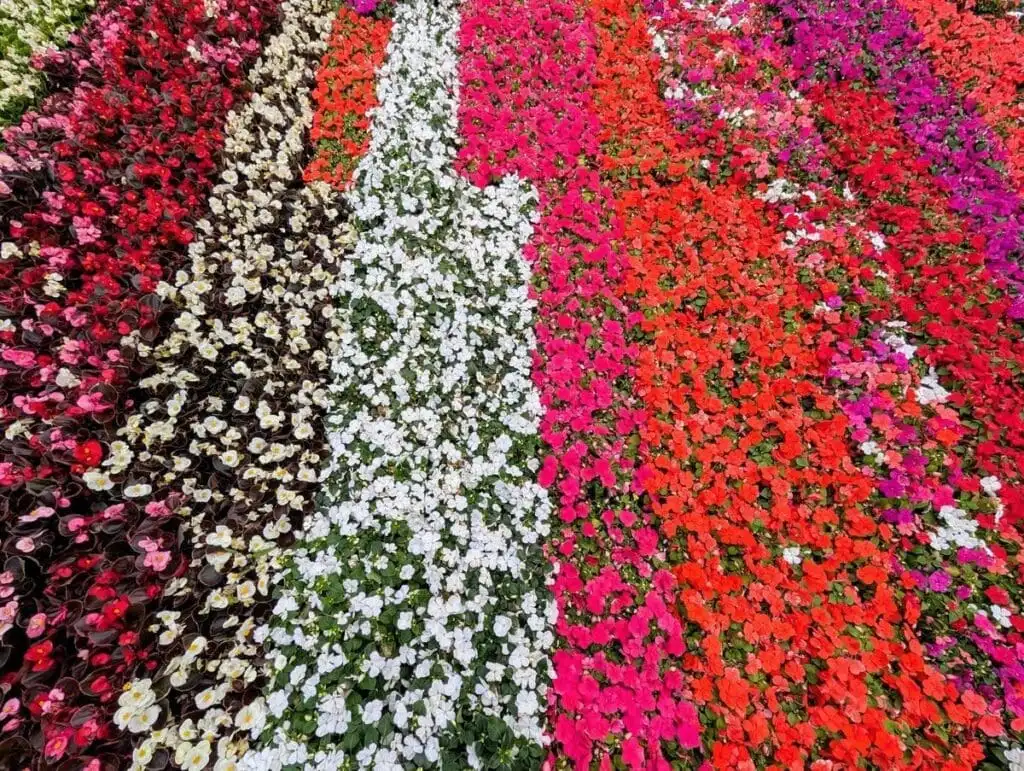
Mass plantings of warm-season annuals like impatiens and begonias deliver saturated color from mid-April through first frost — ideal for high-traffic beds in Tulsa landscapes where seasonal impact matters more than low maintenance.
How Oklahoma's Climate Changes the Calculation
What makes the annuals vs. perennials question genuinely different in Oklahoma compared to, say, the Pacific Northwest or the mid-Atlantic states is the intensity of our weather.
Our summer heat regularly exceeds 100 degrees Fahrenheit. Our soil is predominantly clay-based throughout the Tulsa metro area, which holds moisture well but compacts easily, drains poorly, and heats up significantly in summer. Our winters are inconsistent — some years mild enough that borderline-hardy plants survive, other years cold enough to kill plants rated for our zone.
This means:
Annuals vs. Perennials: Side-by-Side Comparison
Use this table to help decide which type makes more sense for different areas of your Tulsa landscape.
Best Annuals for the Tulsa, Oklahoma Area
These warm-season annuals consistently perform well through Oklahoma summers when planted after mid-April:
For cool-season color, pansies and violas are the clear leaders in the Tulsa area, offering frost hardiness and color from fall through early spring.
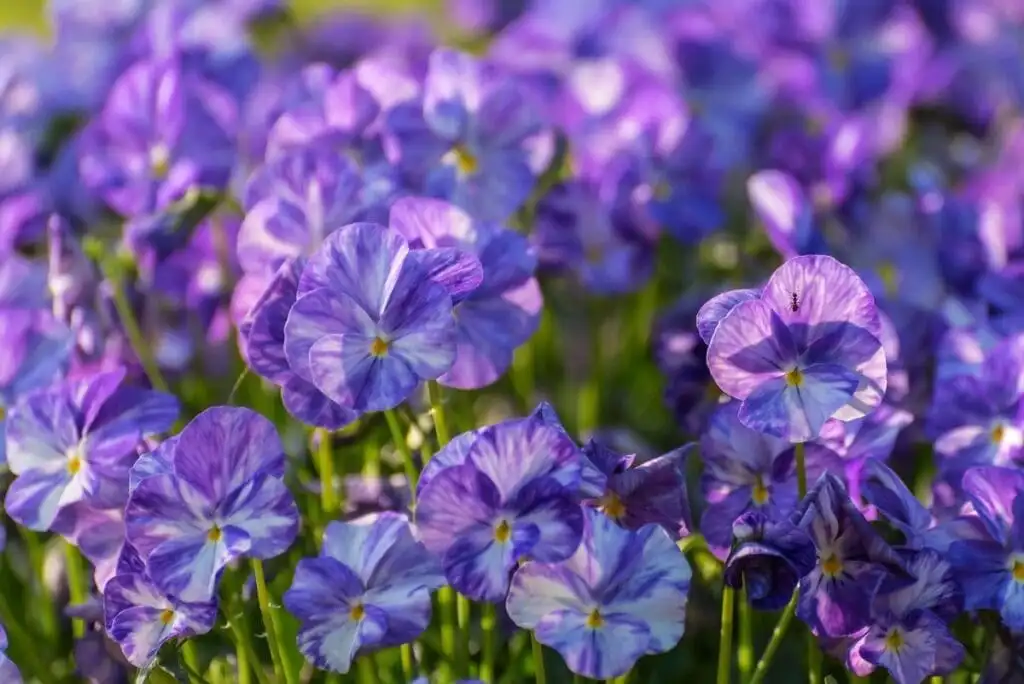
Purple pansies are among the hardiest cool-season annuals available in Oklahoma — they handle frost, light freezes, and winter cold that would kill any warm-season flower, making them the go-to choice for fall and early spring color across the Tulsa area.
Best Perennials for the Tulsa, Oklahoma Area
These perennials have proven themselves reliable in Tulsa's heat, clay soil, and climate variability:
The Smartest Approach: Combine Both
The most effective Tulsa-area landscapes do not choose between annuals and perennials — they use both strategically. Perennials form the backbone of the planting, returning each year and filling in over time. Annuals fill the seasonal color gaps, rotating through cool-season and warm-season varieties to keep beds looking full and vibrant from February through November.
A practical approach for most Tulsa homeowners: build beds with 60 to 70 percent established or planned perennials for low-maintenance structure, and use 30 to 40 percent annual space for seasonal rotations. This gives you long-term cost efficiency from the perennials while still delivering the saturated, continuous color that only annuals provide.
Why Tulsa Homeowners Trust Complete Lawn Care
For more than 25 years, Complete Lawn Care has been a trusted lawn and landscape partner in the Tulsa area. We believe great results don't come from guessing — they come from experience, science, and continual improvement.
Our landscape maintenance team understands the specific challenges of Oklahoma's clay soil, summer heat, and unpredictable winters. We invest in agronomy expertise and ongoing training so that every recommendation we make — whether about plant selection, soil preparation, or seasonal timing — is guided by what actually works here, not what looks good on a national plant tag.
We also offer soil testing as part of our landscape services, because understanding your soil is the most important step before any new planting. An annual soil test takes the guesswork out of amendments, fertilization, and plant selection.
Ready for a Landscape That Works All Season in Tulsa?
Whether you want to build a low-maintenance perennial foundation, add seasonal annual color, or redesign your beds for year-round curb appeal, Complete Lawn Care's landscape maintenance team is ready to help. We serve homeowners throughout Tulsa, Broken Arrow, Bixby, Jenks, Owasso, and Sand Springs.
Contact us at completelawncaretulsa.com or call (918) 605-4646 to get started. Let's build a landscape that looks great and performs reliably through everything Oklahoma throws at it.
Experience. Science. Intentional Lawn Care — That’s the Complete Lawn Care Difference.