Small Holes Appearing in Your Lawn Overnight?
In the Tulsa area, mysterious overnight lawn damage is most commonly caused by moles, armadillos, skunks, or ground-nesting insects. The shape, size, pattern, and location of the holes tells you which animal is responsible — and the response is completely different for each.
What's Causing the Holes in Your Lawn?
The answer matters because each cause requires a completely different response. Here's a quick overview of the four most common culprits in Tulsa-area lawns.
Moles
Tunnel through soil seeking earthworms and grubs. Leave raised ridge tunnels and volcano-shaped mounds. Requires grub reduction and targeted trapping.
Armadillos
Dig open holes foraging for beetle grubs. Damage is almost entirely a grub problem. Professional grub treatment significantly reduces the attractant.
Skunks & Birds
Forage the surface for grubs and larvae. Widespread bird probing across large turf areas is a clear sign of significant grub infestation needing professional treatment.
Ground-Nesting Insects
Digger wasps and cicada killers create pencil-sized holes in sparse turf. They are beneficial insects that are not aggressive and require no intervention.
Moles: The Most Common Nighttime Lawn Disruptor in Tulsa
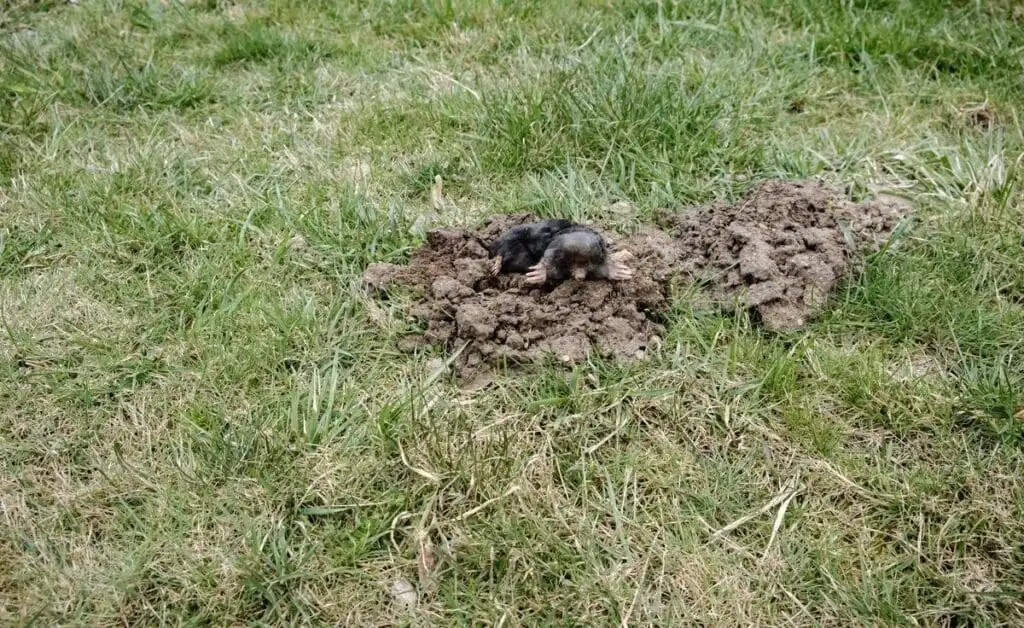
The Eastern mole is the most frequent cause of mysterious overnight lawn damage across the Tulsa metro, including neighborhoods in Broken Arrow, Bixby, Jenks, Owasso, and Sand Springs. Moles are small, nearly blind subterranean mammals that spend their entire lives underground tunneling in search of earthworms, grubs, and soil insects. They do not eat grass roots or plant material — the surface damage homeowners see is purely a side effect of their tunneling activity.
How to Identify Mole Activity
Surface ridge tunnels — raised, soft ridges crossing the lawn in irregular or winding paths just below the surface. Fresh tunnels feel soft and spongy underfoot.
Volcano-shaped mounds — symmetrical piles of loose soil pushed up from below, typically 6 to 10 inches in diameter. Mole mounds are round and centered; gopher mounds are fan-shaped with a plug hole on one side.
Spongy or raised turf sections — walking across the lawn and feeling ground that gives underfoot, or seeing sections of turf that appear lifted away from the soil, indicates active shallow tunneling.
No visible open holes — moles do not leave clean open holes the way burrowing rodents do. If you see open holes rather than ridges and mounds, the cause is more likely voles, rodents, or insect activity.
The Grub Connection — and Its Limits
Many homeowners are told that treating their lawn for grubs will eliminate moles. This is partially true and partially misleading. Reducing the grub population does reduce one food source for moles. However, moles primarily eat earthworms — not grubs — and a healthy Tulsa-area lawn with good organic content is rich in earthworms. Grub treatment alone rarely eliminates an established mole population. Trapping remains the most reliably effective mole control method.
Mole activity in Tulsa-area lawns is most intense in spring (March through May) and fall (September through November) when earthworm populations are concentrated near the soil surface. During Oklahoma's hot, dry summers, moles move deeper in the soil profile — which sometimes leads homeowners to think the problem resolved when it has simply moved temporarily out of the visible zone.
Armadillos: The Grub-Focused Nighttime Digger
Armadillos have expanded their range northward through Oklahoma over the past two decades and are now a regular presence in residential lawns throughout the Tulsa metro. Unlike moles, armadillos dig open holes and disturb soil in a highly visible way — they excavate directly into the turf, leaving irregular depressions, lifted sod sections, and displaced soil.
Multiple Shallow Excavations
3 to 5 inches deep and 3 to 6 inches across, scattered across the lawn in no particular pattern. Armadillos forage randomly, following their nose to beetle grub concentrations.
Lifted Turf Sections
Unlike mole tunnels that push soil up from below, armadillo foraging literally peels back or lifts sections of turf in their search for grubs just below the root zone.
Nighttime Damage Appearance
Armadillos are almost exclusively nocturnal feeders. Damage that appears overnight without any daytime sightings is characteristic of armadillo activity.
The response to armadillo damage is more direct than mole management: armadillos are there because grubs are there. A well-timed grub application — in June and July when grub larvae are young and near the soil surface — eliminates or greatly reduces the grub population before it reaches the density that attracts armadillos and other foraging wildlife.
Skunks, Birds, and Other Nighttime Foragers
Skunks
The most common large-animal nighttime digger in residential lawns throughout eastern Oklahoma. Skunk damage looks like multiple small, roughly cone-shaped excavations with loose soil pushed to one side — similar to someone pushing a hand trowel into the soil repeatedly. Grub treatment is the most effective long-term deterrent.
Birds — Starlings, Grackles & Robins
When starlings or grackles work across a Tulsa lawn in large numbers probing the soil, the result looks like dozens of small shallow holes scattered across a large area. This widespread bird foraging pattern is one of the most reliable indicators of a significant grub infestation. If you see widespread shallow bird probing, a professional grub assessment is warranted.
Ground-Nesting Hunting Wasps
Digger wasps and cicada killers create pencil-sized to half-inch diameter holes in the turf, particularly in areas of sparse grass. These are solitary wasps that do not sting unless physically handled, are not aggressive toward people, and are genuinely beneficial insects. No intervention is needed.
Voles and Field Mice
Voles create half-inch to inch-wide surface runways through grass and burrow holes near the base of ornamental plants and lawn edges. They eat plant roots, bulbs, and bark — unlike moles, voles cause direct plant damage. Dense ornamental ground cover adjacent to lawn is the primary harborage.
The Scale of Serious Lawn Damage
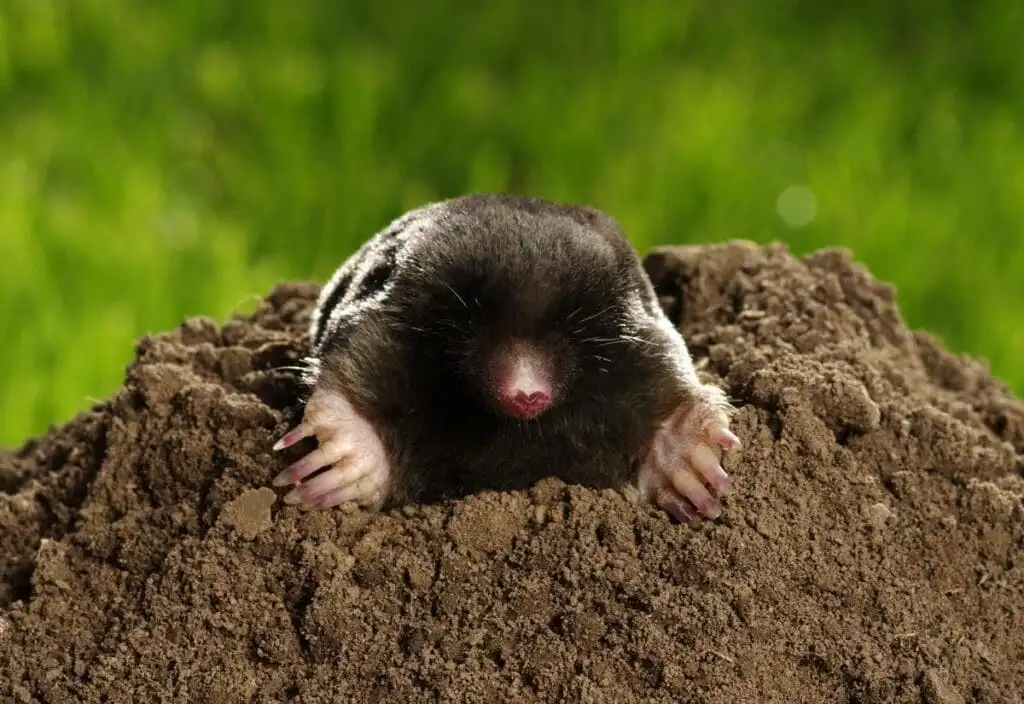
Extensive soil disturbance across a section of lawn from concentrated digging activity is characteristic of either an established mole network active for several weeks, or armadillo foraging in a grub-rich turf area. In both cases, the visible damage understates the extent of the subsurface activity. Addressing the subsurface food source — grub populations — while simultaneously using targeted trapping or exclusion is the most effective combined approach for Tulsa-area homeowners.
The Grub Connection: Why Professional Grub Treatment Matters
Three of the most common causes of nighttime lawn damage in the Tulsa area — armadillos, skunks, and grub-foraging birds — are primarily attracted to lawns because of the grub population below the surface. This makes professional grub control both a pest management strategy and a lawn health investment.
How White Grubs Damage Your Lawn
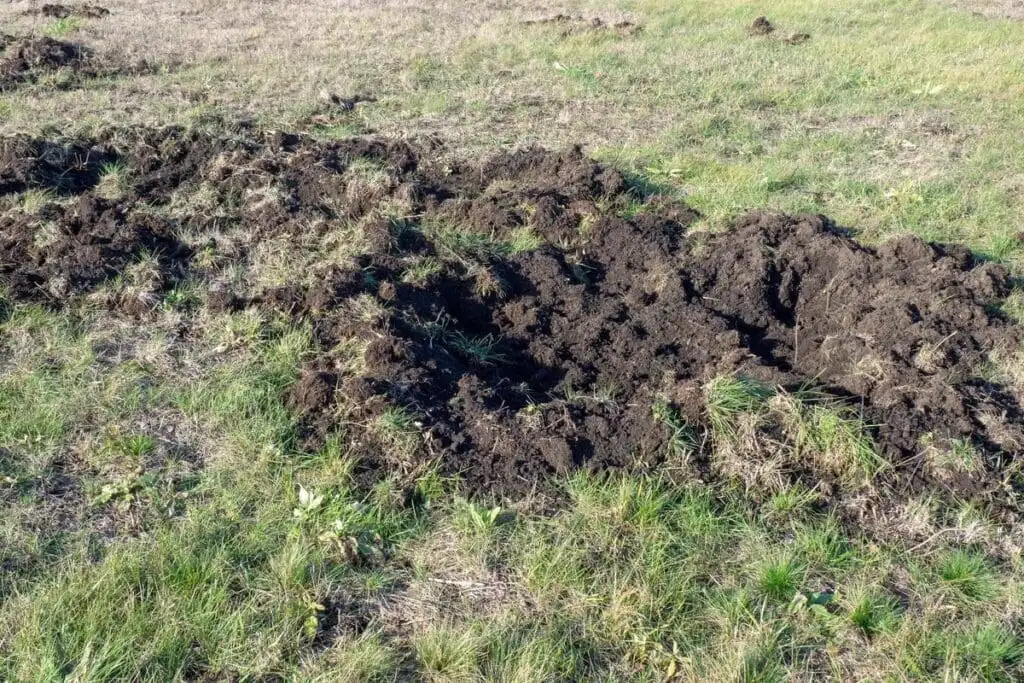
White grubs — the larval stage of Japanese beetles, June bugs, and masked chafers — feed on turf root systems from late summer through fall. At low population levels, grub activity is below the damage threshold. At higher populations — typically above eight to ten grubs per square foot in established Bermuda or Zoysia — root feeding creates brown, spongy patches that pull up from the soil surface like a loose rug.
The widescale nighttime digging by armadillos and skunks that homeowners find in the morning is often the first visible indicator of a grub population that has already been damaging the turf root system silently for weeks.
Complete Lawn Care's 7-Step Program Includes Preventive Grub Control
Complete Lawn Care's 7-step agronomy-supported program includes preventive grub control timed to the most vulnerable stage of the grub life cycle — early summer, when first-instar larvae are near the soil surface and susceptible to treatment before they grow to the size and depth where damage occurs. This timing is guided by our agronomy expertise and represents a science-based approach to grub management that goes beyond reactive treatment after visible damage has appeared.
This is not just a pest management benefit — grub populations above threshold levels damage turf root systems directly and are worth controlling for lawn health reasons regardless of wildlife pressure.
Dealing With Overnight Lawn Damage in the Tulsa Area?
Whether it's moles, armadillos, skunks, or a grub infestation driving wildlife to your lawn, Complete Lawn Care has the expertise and the right program to address both the visible damage and the root cause. Serving Tulsa, Broken Arrow, Bixby, Jenks, Owasso, Sand Springs, and surrounding areas.