What Causes Water Hammer Noise When My Sprinklers Turn On?

Water hammer in irrigation systems is caused by a sudden pressure wave moving through the pipe when water velocity changes abruptly — typically when a zone valve opens or closes rapidly and the moving water has nowhere to go in the instant the flow is interrupted or started. The result is a thud, bang, or series of banging sounds that travel through the pipe and into the surrounding soil and structure. In residential irrigation systems in Tulsa and the surrounding area, the most common causes are air trapped in the zone line from low-head drainage between cycles, rapid valve closure sending a pressure shock backward through the pipe, and excessive incoming water pressure. Understanding which pattern you are hearing — a single bang at startup, a bang at shutoff, or repeated banging during the cycle — identifies the cause and the fix.

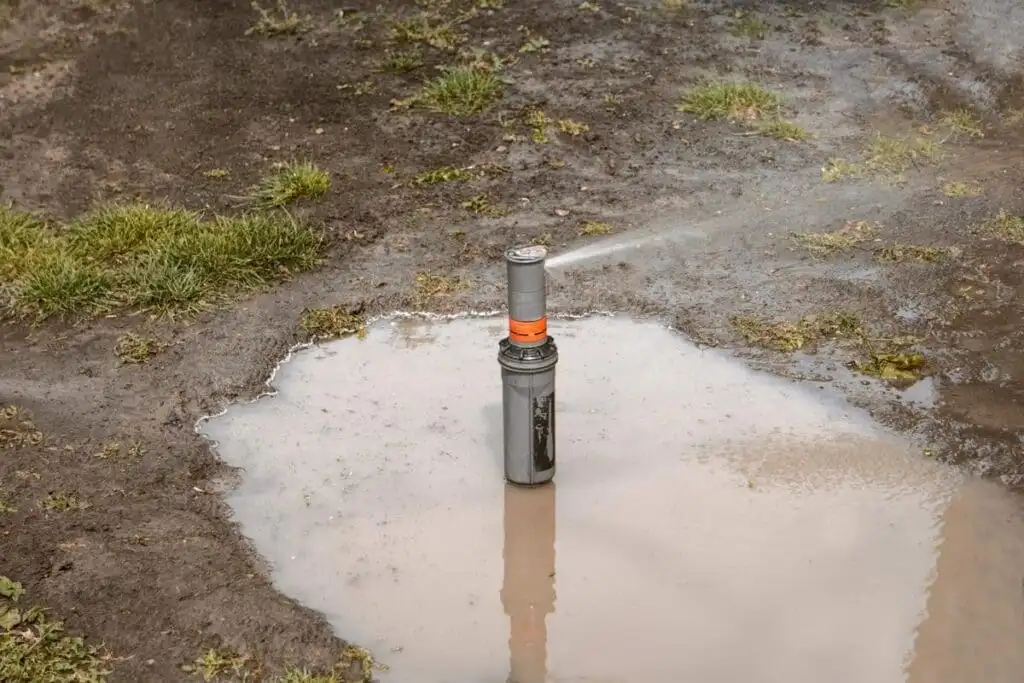
A pop-up rotor head operating in a flooded, muddy area — a scenario where irrigation water has pooled around the head rather than being absorbed by the soil. When zone lines fill with air between cycles (due to low-head drainage allowing the pipe to drain), the zone startup expels that air as a pressure wave. This air-slug effect produces a single sharp bang at zone startup and is the most common water hammer scenario on sloped Tulsa-area residential irrigation systems. Check valve heads at low-point locations prevent the drainage that allows air to re-enter the line.

What Water Hammer Actually Is

The technical term is hydraulic shock. When water flowing through a pipe is suddenly stopped — or when a column of fast-moving water hits air or a closed valve — the kinetic energy of the moving water converts instantly into a pressure wave. This wave travels back through the pipe at the speed of sound in water (approximately 4,700 feet per second), reflects off closed valves and fittings, and creates a pressure spike that can be many times higher than the normal operating pressure of the system. The audible result is the characteristic thud or bang.

In household plumbing, the most familiar version is the bang you hear when a washing machine valve snaps closed quickly. In irrigation systems, the physics are the same but the pipe layout, operating pressure, and cycle timing create specific patterns that point to specific causes. A residential irrigation system in Tulsa operating at the typical 40 to 60 PSI range can produce pressure spikes well above 100 PSI during a water hammer event — enough to stress pipe joints, crack PVC fittings over time, and accelerate the aging of valve diaphragms. Addressing water hammer is not just about the noise; it is about protecting the system from repeated pressure damage.

Cause 1: Air in the Zone Line (Single Bang at Startup)

The most common water hammer pattern in Tulsa-area residential irrigation is a single sharp bang when a zone first activates — followed by normal operation for the rest of the cycle. This pattern almost always indicates air trapped in the zone line.

Here is how the air gets there: when a zone shuts off and the supply pipe has any slope, water drains downhill through the lowest heads by gravity (low-head drainage). As water drains out through those low-point heads, air flows back into the pipe to replace it — the same physics as water draining from an upside-down bottle. The next time the zone activates, the valve opens and the pump sends water into a line that is partially full of air. The moving water column slams into the trapped air, compresses it briefly, then expels it through the heads in a pressure surge. The impact of water hitting air — or of the air slug being expelled at high velocity — produces the bang.

This pattern is recognizable by the timing: single bang at zone start, then normal quiet operation. If you listen carefully you may also hear a brief sputtering or irregular spray pattern at the heads in the first few seconds of the cycle as the air is expelled before normal water flow establishes.

The fix targets the source of the air entry: low-head drainage. Installing check valve heads at the low-point heads on the affected zone prevents the post-cycle drainage that allows air into the pipe. With check valve heads in place, the pipe stays full of water between cycles, no air accumulates, and the startup bang disappears.

Identifying Which Heads Are Allowing Air Back InRun the zone and observe it for 5-10 minutes after shutoff.The heads that seep, trickle, or drip after the zone closes are the drainage points — these are also the  air entry points. As water drains out, air enters through the same heads.Mark these locations. Replace them with check valve head bodies (same brand and nozzle, different body).Check valve versions of common residential heads (Rainbird, Hunter, Toro) are $5-$15 each.After replacement, run the zone through one full cycle and listen at startup on the next cycle.A correctly installed check valve head eliminates both the drainage and the startup water hammer.

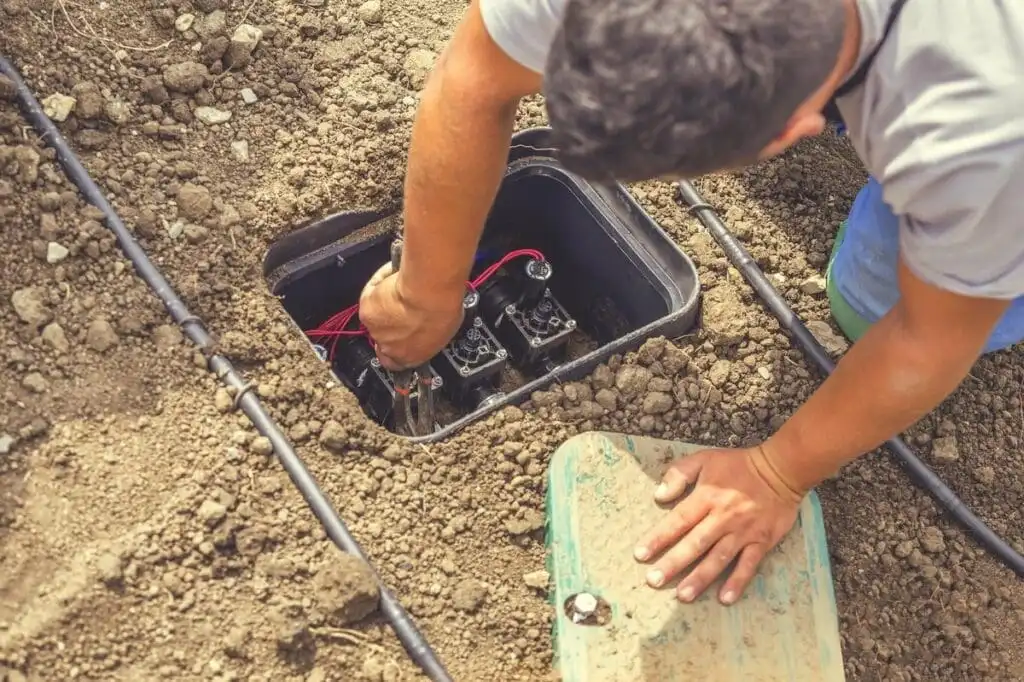
An irrigation technician servicing zone valves inside a valve box — the zone valve is the most common source of water hammer in residential irrigation systems. A valve that closes too quickly generates a pressure wave in the downstream pipe; a valve that opens too quickly into a pipe containing air generates a startup pressure wave. Slowing the valve closing speed, or installing a slow-close solenoid valve, addresses shutoff-triggered water hammer without requiring pressure regulation changes to the entire system.

Cause 2: Rapid Valve Closure (Bang at Zone Shutoff)
The second most common water hammer pattern is a bang or thud at zone shutoff rather than startup. This is the classic hydraulic shock scenario: the zone valve closes, the moving column of water in the pipe has nowhere to go, and the kinetic energy converts to a pressure spike that travels back through the pipe.

Standard residential solenoid valves close within a fraction of a second when the solenoid is de-energized. In many systems, this closure speed is fast enough to generate a measurable pressure wave, particularly on longer zone lines or at higher operating pressures. The longer the zone pipe run and the higher the flow velocity, the more kinetic energy in the moving water column and the larger the pressure spike from abrupt closure.

Several factors in Tulsa-area residential irrigation systems amplify shutoff hammer:

  • Higher than average incoming water pressure. Tulsa Water and other regional utilities commonly deliver water at 60 to 80 PSI at the meter — higher than the recommended 40 to 50 PSI for optimal irrigation system performance. Higher inlet pressure means higher flow velocity in the zone lines and more kinetic energy available to convert to a pressure spike at closure.
  • Long zone pipe runs. A zone with multiple heads spread across a large area has more pipe volume and more water mass in motion during the cycle. More mass, more impact at closure.
  • Valve closing speed. Standard solenoid valves close faster than flow control valves or slow-close valves. The speed of closure is the primary determinant of how severe the shutoff pressure spike is.

Solutions for shutoff-triggered water hammer:

Slow-close solenoid valve replacement. The most effective and permanent solution for shutoff hammer is replacing standard fast-close valves with slow-close versions. Slow-close solenoid valves incorporate a flow restriction or a gradual-close mechanism that extends the valve closure from a fraction of a second to one to three seconds. This gives the moving water column time to decelerate gradually rather than stopping instantly. Slow-close valves are available for all major residential irrigation brands at roughly the same cost as standard replacement valves ($20 to $45).

Water hammer arrestors. A water hammer arrestor is a device installed in the pipe that absorbs the pressure spike through a spring-loaded piston mechanism. When the pressure wave arrives, the piston compresses rather than the pressure spike traveling through the pipe. Arrestors are available at plumbing and irrigation supply stores and can be installed at the valve outlet or at strategic points along the zone line. They are effective but they address the symptom (the pressure wave) rather than the cause (rapid valve closure). They are a good choice when valve replacement is not practical.

Pressure reducing valve (PRV) at the irrigation supply. If the incoming water pressure at the irrigation supply is consistently above 65 PSI, installing a pressure reducing valve to bring supply pressure to 45 to 55 PSI reduces the flow velocity in the zone lines and correspondingly reduces the severity of any shutoff pressure wave. A PRV also reduces wear on all components throughout the system and is worth considering if pressure is consistently high regardless of water hammer.

Cause 3: Excessive Incoming Pressure

Irrigation systems are designed to operate within a specific pressure range — typically 30 to 50 PSI at the head for residential spray heads and 30 to 45 PSI for rotor heads. When the supply pressure delivered to the system significantly exceeds this range, the entire system operates under elevated stress and water hammer events at any cause — air slug, valve closure, demand variation — produce larger pressure spikes than they would at normal operating pressure.

How to check your irrigation supply pressure: a simple pressure gauge with a hose bib fitting (available for $10 to $15 at hardware stores) screwed onto the backflow preventer test port or a hose connection on the irrigation supply line gives you a direct reading. The gauge should be checked while the system is not running (static pressure) and during an active zone cycle (dynamic pressure).

Tulsa area static water pressure typically ranges from 55 to 80 PSI at the meter, and many residential properties do not have a pressure reducing valve on the irrigation supply — they draw directly from the household supply at whatever pressure the utility delivers. If static pressure at the irrigation supply point is above 65 PSI, pressure regulation is worth adding both for system longevity and for reducing water hammer severity. A whole-house PRV (if one is not already installed) or a dedicated irrigation PRV on the supply to the backflow preventer are both effective options.

A rotor head at full rise delivering a focused stream pattern — this head type operates at higher flow velocities than fixed-spray heads, making shutoff water hammer more significant on rotor-dominant zones with long pipe runs. On Tulsa-area residential systems with multiple rotor zones and supply pressures above 65 PSI, slow-close valve replacement or a pressure reducing valve on the irrigation supply are the most effective solutions for persistent shutoff banging.

Is Water Hammer Damaging My Irrigation System?

Yes — repeatedly, over time. Single water hammer events are unlikely to cause immediate, visible damage. But repeated pressure spikes at every zone startup or shutoff cycle, multiplied across hundreds of irrigation cycles per season, gradually stress the system in specific and predictable ways:

  • PVC fitting joints crack along glue lines from repeated pressure cycling. The same fittings that crack from freeze events are also vulnerable to fatigue from sustained water hammer. On systems with persistent water hammer that has never been addressed, tee fittings and elbows along the zone lines develop hairline cracks that eventually become active leaks.
  • Valve diaphragms wear faster. Repeated pressure spikes stress the rubber diaphragm on every closure. Diaphragms that would otherwise last 10 to 15 years may require replacement in 5 to 8 years on systems with persistent shutoff hammer.
  • Head bodies and nozzles experience accelerated wear from the pressure spike transmitted through the riser. On heads at the ends of long zone lines where the pressure wave reflection is strongest, repeated hammer events contribute to internal component fatigue.
  • Backflow preventer check valves can develop premature wear on the seating surfaces from repeated slamming. Backflow preventers on systems with persistent high-pressure hammer events are worth including in annual spring inspection checklists.

The severity of these effects depends on the frequency, magnitude, and duration of the water hammer events. A single occasional bang at startup due to intermittent low-head drainage is manageable. A bang at every zone startup and shutoff, every cycle, across multiple zones, represents repeated stress that accumulates into real repair costs over three to five years.

Water Hammer and Tulsa-Area Clay Soil: An Added Complication

Oklahoma’s expansive clay soil adds a complication to irrigation water hammer that homeowners in other regions do not face as acutely. Repeated pressure spikes in buried PVC pipe cause the pipe to flex and move slightly with each event. In stable sandy or loamy soil, this movement is absorbed. In Tulsa-area expansive clay — which shrinks and contracts dramatically through the wet-dry cycles of an Oklahoma year — the soil movement and pipe flexion from water hammer work together to stress fitting connections and joints more aggressively than either factor would alone.

Pipe joints that are already being stressed by clay soil movement during dry conditions are more vulnerable to fatigue cracking from water hammer pressure spikes. This is why long-standing water hammer issues in Tulsa-area residential systems often eventually produce pipe leaks at fitting locations that were installed correctly and have held for years — the combination of soil movement and repeated pressure cycling eventually exceeds the joint’s tolerance.

Addressing water hammer proactively is a meaningful way to extend the service life of irrigation infrastructure in this region. Annual soil testing recommended by Complete Lawn Care for every property in our service area helps track soil moisture conditions — and understanding the relationship between soil shrinkage during dry periods and irrigation system stress helps us make smarter recommendations about system maintenance timing and priority.

Water Hammer Diagnosis Quick Reference

Matching the sound pattern to the likely cause and solution:

Sound PatternMost Likely CauseSolution PathNotes
Single loud bang at zone startupAir slug expelled at zone valve opening — one-time pressure waveDIY — flush zone to clear air; check for low-head drainage refilling air into pipeCommon after winterization blowout or extended system shutdown
Banging throughout zone cyclePressure fluctuation from oversized valve or zone design issueProfessional assessmentContinuous hammering suggests pressure regulation or zone design problem
Thud at zone shutoff onlyValve closing too fast — rapid shutoff pressure waveDIY — adjust valve closing speed; or install water hammer arrestorSlow-close solenoid valve upgrade solves most shutoff hammer issues
Rattling in walls during irrigation cycleShared pipe vibration — irrigation supply draws from household lineProfessional plumbing assessmentIndicates pressure wave is transmitting into household supply piping
Banging at backflow preventer locationCheck valve slam or high incoming pressure spikeProfessional — backflow preventer servicePressure reducing valve (PRV) installation may be required if supply pressure is excessive
Intermittent banging, not every cycleAir accumulating in line between cycles (low-head drainage refilling air)DIY — install check valve heads at low pointsLow-head drainage allows air into zone lines; check valve heads prevent this

When to Have It Professionally Assessed

Water hammer that is limited to a single startup bang on a zone with low-head drainage is a DIY repair (check valve head replacement) and does not require professional service. These situations benefit from professional assessment:

  • Banging continues throughout the zone cycle — not just at startup or shutoff — suggesting a pressure regulation or zone design issue that goes beyond simple air or valve closure causes.
  • Rattling is audible inside the house during irrigation cycles, indicating the pressure wave is transmitting into the household supply piping. This warrants a plumbing assessment to confirm there is no risk to household pipe connections.
  • Banging is at the backflow preventer location — backflow preventer service and potential PRV installation are best performed by a licensed irrigation or plumbing professional.
  • Multiple zones are affected and the issue is persistent despite checking for low-head drainage and valve closure speed — a comprehensive system pressure test and zone-by-zone assessment identifies whether systemic pressure issues or multiple valve problems are contributing.

Irrigation Service and System Care Throughout the Tulsa Area

For more than 25 years, Complete Lawn Care has been serving homeowners in Tulsa, Broken Arrow, Bixby, Jenks, Owasso, and Sand Springs with irrigation repair, maintenance, and seasonal service. We diagnose irrigation problems accurately before recommending repairs — because understanding the actual cause of a water hammer event, a zone failure, or a leak is the only way to fix it correctly the first time.

With over 25 years of experience, we combine proven results with science-based irrigation and lawn care. We invest in training and agronomy expertise to ensure every recommendation is intentional, effective, and grounded in what actually works for Oklahoma’s climate, soil, and water conditions. Our agronomy support allows us to make smarter corrections, faster — whether we are addressing a soil moisture issue connected to irrigation performance or a mechanical problem in the system itself.

Experience tells us what to do. Science tells us when and why. Every service call is intentional.

Hearing Banging When Your Sprinklers Run?

Contact Complete Lawn Care at completelawncaretulsa.com or call (918) 605-4646. We will identify the cause and fix it correctly — serving Tulsa, Broken Arrow, Bixby, Jenks, Owasso, and Sand Springs.

Experience. Science. Intentional Lawn Care — That’s the Complete Lawn Care Difference.

Related Posts