Do You Need to Remove Old Mulch Before Adding New?
By the landscape experts at Complete Lawn Care | Serving Tulsa, Broken Arrow, Bixby, Jenks, Owasso, and Sand Springs
In most cases, no — you do not need to remove all of your old mulch before adding new. If the existing layer is still in reasonable condition, raking it to break up any compaction and topping it off with one inch of fresh material is the smarter, more efficient approach.
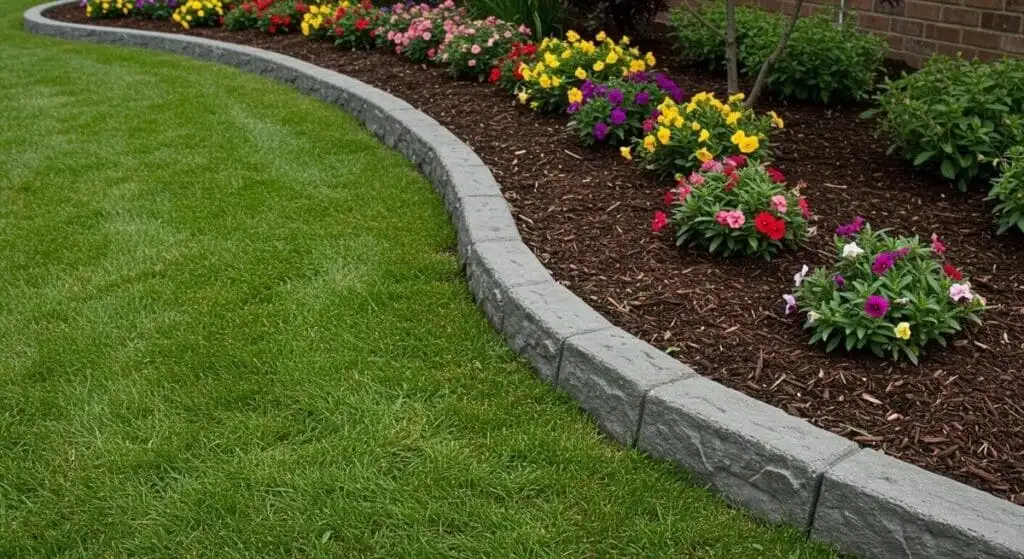
Clean bed edges and proper mulch depth make a dramatic difference in how a landscape looks and how plants perform — getting the refresh approach right each season is what maintains that standard year over year.
Why You Usually Do Not Need to Remove Old Mulch
The default assumption that fresh mulch means starting from bare soil each year is one of the most common — and most labor-intensive — unnecessary practices in residential landscape maintenance. Organic mulch does not stop being useful the moment it looks faded. In fact, the layer of partially decomposed material under fresh mulch is actively working in your favor.
As organic mulch breaks down, it contributes humus and nutrients to the soil beneath it. Beneficial soil microorganisms — bacteria, fungi, and invertebrates — colonize decomposing mulch and play a critical role in the long-term fertility and structure of your bed soil. Scooping that layer out and sending it to the landfill every spring throws away an asset that took a full season to develop.
The practical case for topdressing rather than replacing is equally strong. A full removal of an average foundation bed might generate several wheelbarrows of material that needs to be hauled, bagged, or disposed of — a morning of labor that produces no better result than a 30-minute topdress of fresh material. For most Tulsa-area homeowners refreshing beds once a year, full removal is simply not necessary.
When Old Mulch Does Need to Come Out — or at Least Come Down
The condition of your existing mulch determines the right approach for any given season. Topdressing is not always the answer, and knowing when the situation calls for more is what separates a good-looking bed from one that actually functions correctly.
Total Depth Past Four Inches
This is the most common reason professional crews pull old mulch before refreshing. Homeowners who topdress every spring without assessing total depth can end up with five, six, or even eight inches of accumulated material over several seasons. Mulch that deep blocks oxygen and water from reaching roots, becomes anaerobic in lower layers, and can cause root and crown issues that look like plant disease but are actually a soil environment problem.
Hydrophobic Old Layer
Mulch that has been in place a long time — particularly wood-based mulch in hot, dry conditions — can develop a hydrophobic surface layer that repels water rather than allowing it to pass through to the soil below. Test this by pouring a small amount of water on the existing mulch surface. If it beads and runs off instead of soaking in, the layer should be broken up or removed before adding more material on top.
Mold or Fungal Issues
Slime molds, artillery fungus, and other fungal growth in mulch suggest conditions — typically excessive moisture, poor airflow, or very deep material — that fresh topdressing alone will not fix. If you see recurring fungal problems in the same beds year after year, pulling the old layer, letting the bed air out, and starting fresh with properly aged material is a more effective reset.
Fully Decomposed Mulch
Mulch that has fully broken down into fine, dark, soil-like material has already completed its useful life as a mulch layer. At this point you are effectively applying fresh mulch on top of amended soil — which is fine — but if you want full weed suppression and moisture retention benefits, you need enough total depth to achieve them, which may require more material than a thin topdress provides.
Full Bed Renovation
If you are removing plants, replanting, or significantly redesigning a bed, starting with a clean base makes the work easier and gives you a clearer picture of what the soil actually looks like. This is also the right moment for a soil test — understanding what your bed soil needs before you mulch and plant is far more useful than testing after the fact.
The Complete Lawn Care Approach: Assess First, Then Decide
When Complete Lawn Care handles a mulch refresh for a Tulsa-area client, the process does not start with a wheelbarrow — it starts with an assessment. We check the current depth in several spots across the bed, look at the condition of the existing material, check for any buildup against plant crowns or tree trunks, and evaluate whether the old layer is still functional or has become a liability.
In many cases, the right approach is to remove approximately half of the existing layer — raking out the bottom, most decomposed material while leaving the fresher upper portion — and then install a full layer of new mulch on top. This restores the bed to the correct two-to-three-inch total depth, brings back fresh color and a clean finished appearance, contributes new organic material, and avoids the cost and effort of complete removal while still correcting any depth or condition issues.
The result looks and performs the same as a full remove-and-replace — at a fraction of the labor and disposal cost. For homeowners paying for professional landscape maintenance, this approach delivers better value.
How to Assess Your Own Beds Before Adding Mulch
Before ordering mulch or heading to the home improvement store, spending five minutes evaluating your beds will tell you exactly what approach makes sense this season.
Step 1: Check Depth
Push a pencil or screwdriver straight down into the mulch layer in three or four spots until you feel firm soil resistance. Below 1.5 inches: add material, no removal needed. At 2–3 inches: a light topdress of one inch or less restores color. At 4 inches or more: pull some out before adding more.
Step 2: Do the Water Test
Pour a small amount of water onto the existing mulch surface in a couple of spots. If it soaks in readily within a few seconds, the material is still permeable and functional. If it beads and runs off, you have a hydrophobic layer that needs to be broken up or removed.
Step 3: Check Crowns & Trunks
Even if overall depth is fine, accumulated material in contact with woody stems and trunks needs to be pulled back before you add anything on top. Correct any inadvertent mulch volcano situations before another fresh layer compounds them.
Step 4: Rake the Bed Surface
A quick once-over with a hard rake loosens the material, improves permeability, and gives the new layer better contact rather than sitting on top of a mat.
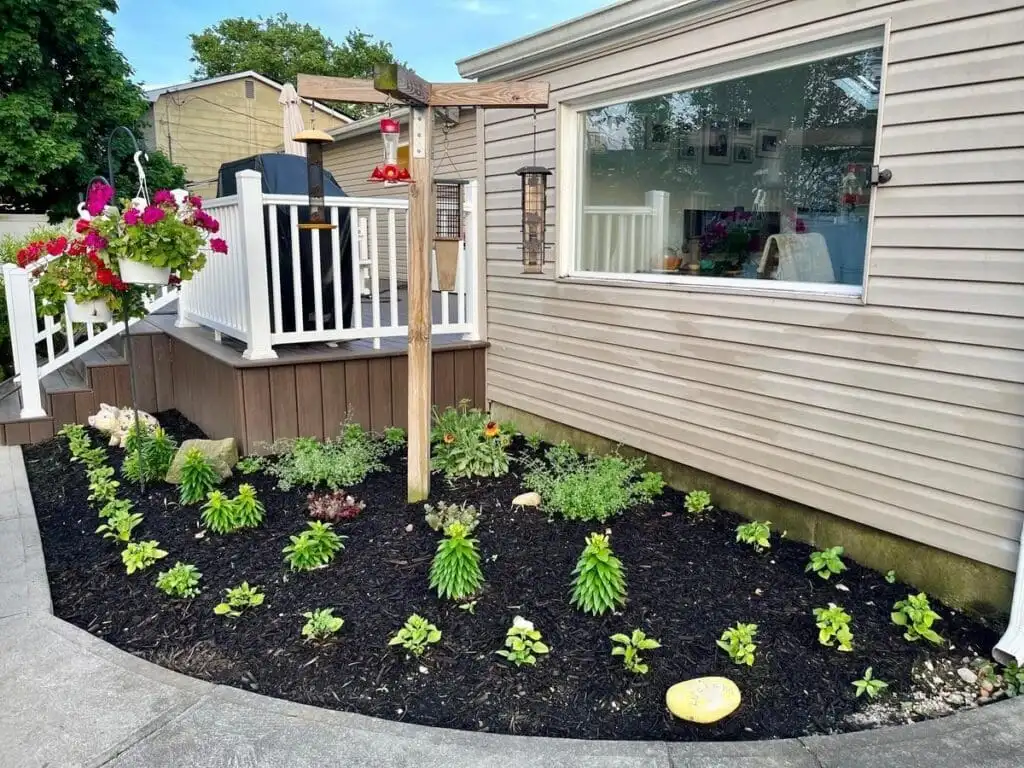
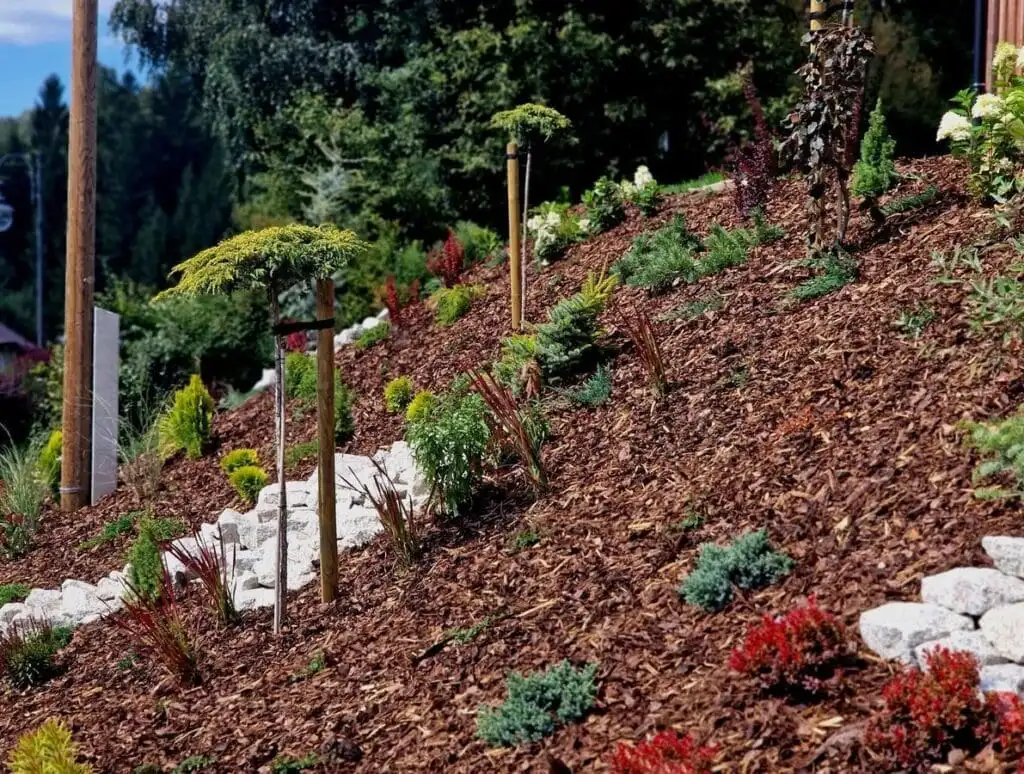
A large mulched landscape bed with established plantings — managing mulch depth and refresh timing correctly keeps these beds looking sharp and protects plant roots through Oklahoma's demanding summer months.
How Much New Mulch Do You Need for a Refresh?
The amount of new mulch you need depends on your current depth and your target. For a standard topdress on beds that are at or slightly below two inches, adding one inch of fresh material typically restores appearance and function without pushing total depth past three inches.
1 inch deep
One cubic yard covers approximately 300 square feet — ideal for an annual topdress on beds in good condition.
3 inches deep
One cubic yard covers approximately 100 square feet — use this rate for partial removal and fuller refresh scenarios.
200–300 sq ft bed
One to two cubic yards of bulk mulch is typically sufficient for an annual topdress on a standard front foundation bed.
Measure your bed square footage before ordering — it takes about two minutes and prevents both overordering and the frustration of running short halfway through. Factor in a 10 to 15 percent buffer for settling and irregular bed geometry.
Does the Type of Mulch Affect How Long You Can Leave It?
Yes. Different mulch materials break down at different rates, which affects how often they need to be refreshed and how aggressively the old layer accumulates.
Shredded Hardwood
The most commonly used mulch in Tulsa-area landscapes. Breaks down at a moderate rate, contributing organic matter over a season while maintaining functional depth. An annual or every-other-year topdress keeps beds looking and performing well.
Cedar Mulch
Breaks down more slowly than hardwood — needs to be refreshed less often but contributes less organic matter. For beds where low maintenance is the goal, cedar extends the interval between refreshes. For soil improvement, hardwood is the better long-term choice.
Pine Bark Nuggets
Last longer visually but tend to float and shift in heavy rain — a real consideration in Oklahoma's spring storm season. They also break down slowly and contribute relatively little to soil structure. Check for displacement after significant rain events and redistribute before adding more.
Ready for a Professional Mulch Refresh?
Complete Lawn Care serves Tulsa, Broken Arrow, Bixby, Jenks, Owasso, and Sand Springs. Our team assesses your beds first, then recommends the right approach — so you get results that look great and perform well all season long.