By the landscape experts at Complete Lawn Care | Serving Tulsa, Broken Arrow, Bixby, Jenks, Owasso, and Sand Springs
How Deep Should Mulch Be? The Right Depth for Trees, Shrubs, and Beds in Tulsa
For most landscape beds, shrubs, and perennials in the Tulsa area, two to three inches of mulch is the right depth — enough to suppress weeds and retain moisture without cutting off oxygen and water to roots. Around trees, the mulch must be kept two to three inches away from the trunk itself, spread outward in a flat layer as far as the drip line if possible.
Why Mulch Depth Matters More Than Most Homeowners Realize
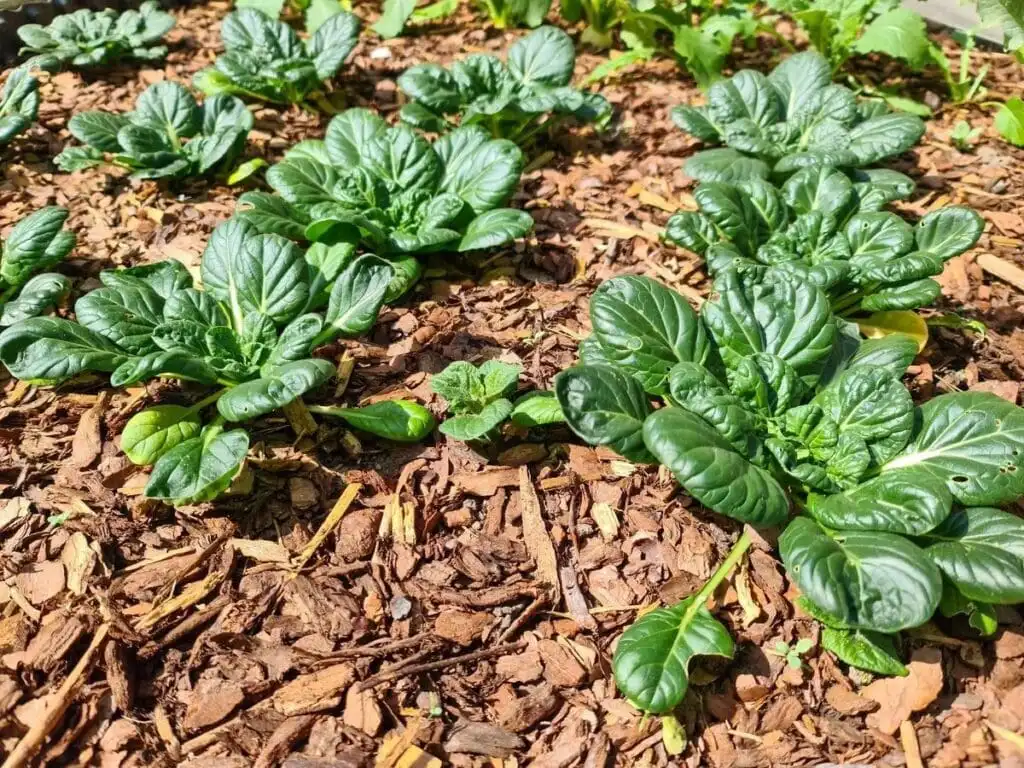
Shredded bark mulch applied around emerging perennials — proper mulch depth and keeping material away from plant crowns protects roots while allowing air and water to reach the soil.
Mulch does several important jobs at once: it holds soil moisture, moderates soil temperature, suppresses weed germination, and slowly improves soil structure as it breaks down. All of those functions have a depth threshold where they start working well — and a depth where they start causing harm.
Too Shallow (Under 1.5 inches)
You lose most weed suppression because light still reaches the soil surface. Moisture retention also drops significantly — which matters enormously during Oklahoma's summer dry stretches when beds can lose moisture rapidly in the heat.
The Sweet Spot (2–3 inches)
The depth at which mulch provides full weed suppression, meaningful moisture retention, and root zone temperature moderation without creating oxygen or water barriers. For the vast majority of landscape situations around Tulsa, this is your target.
Too Deep (Over 4 inches)
Creates a thick, water-resistant mat that can prevent rain and irrigation from reaching the root zone. Deeply mulched beds stay wet longer, creating ideal conditions for fungal disease and root rot — especially in Oklahoma's clay-heavy soils.
The Right Way to Mulch Around Trees
Trees deserve special attention because the consequences of mulching incorrectly are more serious and longer-lasting than with annuals or perennials. A tree that is volcano-mulched for several consecutive years can develop serious structural and health problems that shorten its life significantly.
The Correct Mulch Ring (Donut) Method
Spread mulch in a flat, even layer starting two to three inches away from the trunk — never touching the bark — and extending outward to the drip line if possible. The majority of a tree's feeder roots are active at the outer canopy edge, and protecting that area has far more root health benefit than piling mulch high at the base.
Why Trunk Contact Causes Serious Damage
Tree bark is not designed to stay wet. Mulch piled against the trunk holds moisture in continuous contact with bark, creating conditions for fungal cankers, bacterial infections, and softening of outer bark layers. As bark deteriorates, it loses its ability to protect the cambium layer — the living tissue that moves nutrients and water throughout the tree.
Rodent and Pest Risks
Piled mulch at the trunk creates attractive habitat for rodents — particularly voles and mice — that gnaw on bark during winter months when other food sources are scarce. In Oklahoma winters, vole damage to young trees and shrubs under mulch is a genuine concern that a proper mulch-free zone around the trunk helps prevent.
Mulch Depth Guidelines by Plant Type
While two to three inches covers most situations, there are some plant-specific considerations worth knowing for Tulsa-area landscapes.
Established Trees
Two to three inches, starting two to three inches away from the trunk, extending as far outward as practical. Never exceed four inches even at the outer edge. Keep the surface flat, not mounded.
Newly Planted Trees (First Two Years)
Same depth guidelines, but be especially careful about trunk contact. New transplants have compromised root systems and are more vulnerable to moisture stress and disease at the root collar. A clean, dry zone around the trunk is non-negotiable.
Shrubs & Ornamental Plantings
Two to three inches. Keep mulch a couple of inches back from the crown of the shrub. Especially important for shrubs prone to crown rot in Oklahoma's humid summer conditions, such as knockout roses, boxwoods, and many ornamental grasses.
Perennials
One to two inches is often better. Heavy mulch can delay emergence in spring, and if applied before perennials have pushed through, it can smother them entirely. Pull mulch back from perennial crowns in early spring, let plants emerge, then tuck the mulch back in.
Annual Flower Beds
One inch is usually sufficient for annuals, which have shallower root systems and benefit more from mulch for moisture retention than insulation. Deeper mulch in annual beds can create slug and disease habitat that hurts more than it helps.
Vegetable Gardens
One to two inches of organic mulch — straw, shredded leaves, or fine wood chips — works well between vegetable rows. Avoid deep mulch directly against vegetable stems, and be cautious with freshly chipped wood where nitrogen tie-up during decomposition can affect plant growth.
How to Measure Mulch Depth in an Existing Bed
The Screwdriver Test
Push a screwdriver, pencil, or ruler straight down into the mulch layer in several spots around the bed until you hit firm soil. The depth it penetrates before resistance is your current mulch depth. If you are already at three inches, adding another full layer will put you at five or six inches — well past the functional range.
When Beds Are Already Too Deep
Raking out the excess to bring depth back to two to three inches is better than leaving it and hoping the bottom layer breaks down fast enough. Heavily matted, compacted mulch at the bottom of an overly deep bed often becomes hydrophobic and actually repels water rather than allowing it to pass through.
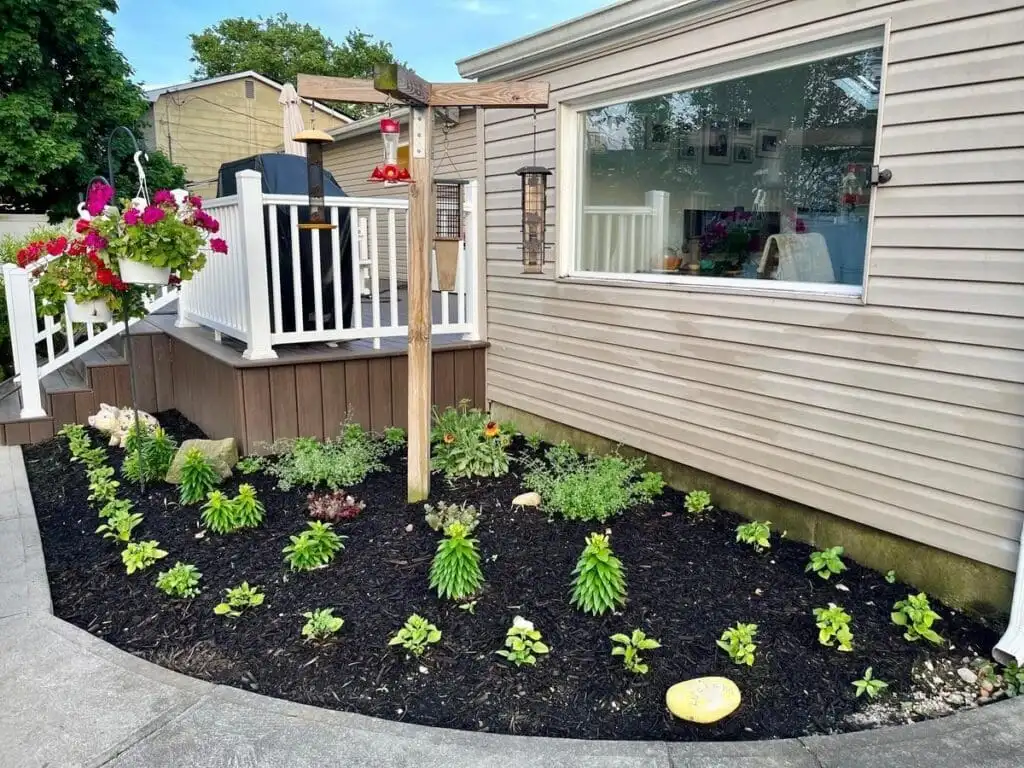
A freshly mulched foundation bed with clean edging — dark mulch at the correct two-to-three-inch depth creates a finished look while protecting plant roots and suppressing weeds through the growing season.
How Much Mulch Do You Actually Need?
One of the most practical questions homeowners face is how much mulch to order or buy. The math is straightforward once you know your target depth and square footage.
0.62 cu yd
Covers 100 sq ft at 2 inches deep
0.93 cu yd
Covers 100 sq ft at 3 inches deep
~2 cu yd
Standard pickup truck bed load — covers ~200 sq ft at 3 inches
14 bags
2-cu-ft bags needed per cubic yard (bulk is more cost-effective for large beds)
When ordering, add about 10 to 15 percent to your estimate to account for settling, irregular bed shapes, and the spots that always end up needing a bit more.
The Connection Between Mulch Depth and Your Lawn's Overall Health
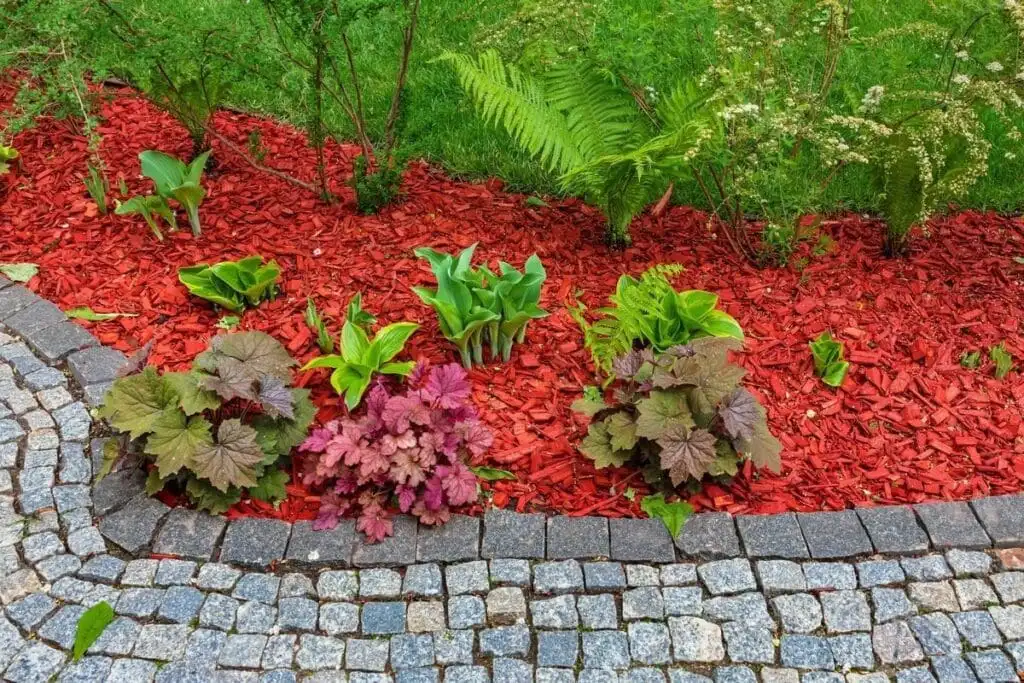
Colored mulch applied at the correct depth in a professionally edged landscape bed — the right depth and clean borders make a dramatic difference in how beds look and how plants perform through the season.
Mulched Beds and Lawn Health Work Together
Properly mulched beds require less supplemental irrigation, which means your irrigation system can focus its runtime on turf zones rather than compensating for bare, moisture-depleted bed soil.
Weed pressure in well-mulched beds is lower, which reduces the seed bank that constantly migrates into lawn edges. The slow organic matter improvement in mulched beds over multiple seasons gradually improves the clay soil profile that affects drainage and root health across your entire property.
At Complete Lawn Care, we approach landscape maintenance and lawn care as a connected system rather than separate services. Our mulch installation work is timed and executed to complement your lawn's seasonal needs, and we can recommend an annual soil testing schedule that takes both your turf and your beds into account.
Quick Answers: Mulch Depth FAQs
Is it okay to put mulch right up against my house foundation?
No. Keep mulch at least six inches away from your home's foundation and any wood siding, framing, or trim. Mulch against a foundation holds moisture against the structure, creates termite habitat, and can cause wood rot over time. This is one of the most important clearance rules in any landscape installation.
My neighbor piles mulch high around their trees and nothing seems wrong. Should I be concerned?
Tree decline from chronic volcano mulching is often slow and happens below the surface before it is visible in the canopy. By the time a tree shows obvious stress symptoms — thinning canopy, dead branches, bark damage — the underlying problem may have been developing for years. Correct mulch depth and keeping the trunk clear prevents a problem that is much easier to avoid than to fix.
Mulch depth: common questions
How thick should bark mulch be?
How deep should mulch be around trees?
How deep should mulch be in a flower bed?
How many inches of mulch should I add each year?
How much mulch do I need?
Ready for Professional Mulch Installation in Tulsa?
Complete Lawn Care serves Tulsa, Broken Arrow, Bixby, Jenks, Owasso, and Sand Springs. Our team installs mulch at the correct depth, with proper clearances around trees, shrubs, and foundations — so your beds look great and your plants stay healthy all season long.