How Do I Test If a Sprinkler Solenoid Is Bad?
You test a sprinkler solenoid with a multimeter set to resistance (ohms). Disconnect the two solenoid wires from the controller wiring at the valve box and touch the multimeter probes to the two solenoid wire terminals. A reading between 20 and 60 ohms indicates a functional solenoid — the exact healthy range varies by brand, but this window covers most Rainbird, Hunter, and Toro residential solenoids. A reading near zero (short circuit) or no reading at all (open circuit / infinite ohms) confirms the solenoid has failed and needs replacement. If you do not have a multimeter, there is a no-tool field test using the manual bleed that tells you in about two minutes whether the solenoid or the wiring is the source of a zone failure — that test is described in the next section.
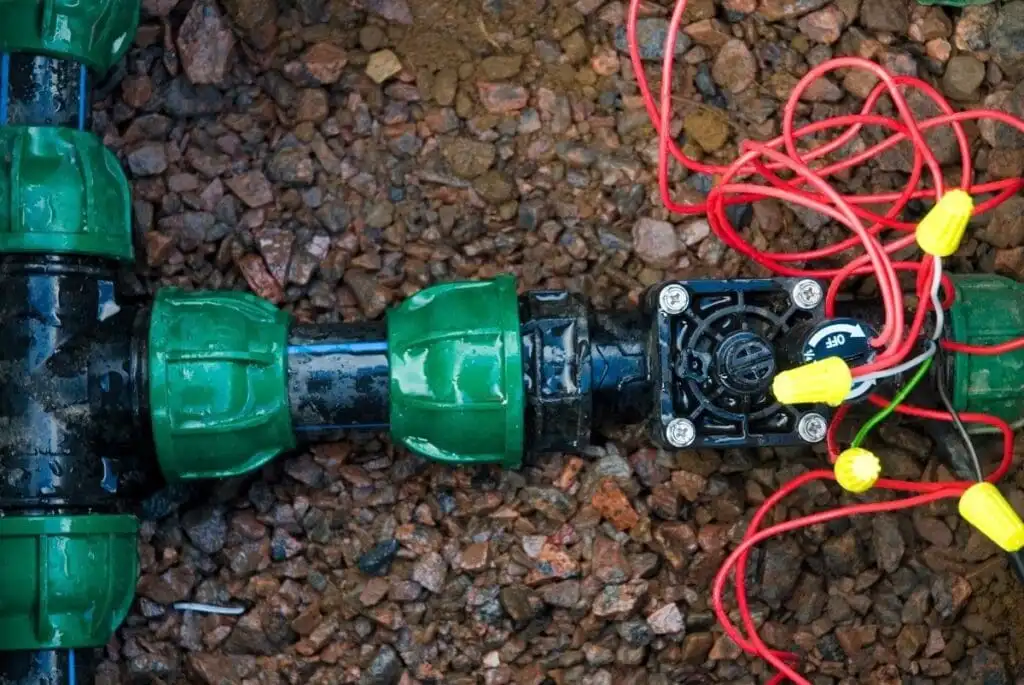
A zone valve solenoid with zone wires and wire connector nuts visible — this is what you are testing when you diagnose a solenoid. The solenoid body attaches to the valve body with a quarter to half turn and connects to the irrigation controller via two low-voltage wires (24V AC): a common wire (typically white) shared across all zones, and a zone-specific wire (typically color-coded by zone). Testing the solenoid means measuring the electrical resistance of the coil windings inside the solenoid body between these two wire terminals. On Tulsa-area systems, spring startup is the most common time to find a failed solenoid — freeze events over winter damage the internal windings without any visible external evidence of failure.
The Manual Bleed Test: No Tools Required
Before getting a multimeter, this two-minute field test tells you whether the zone failure is electrical (solenoid or wiring) or mechanical (valve diaphragm). It works on any solenoid valve brand:
If the manual bleed confirms the zone can run (the problem is electrical), the solenoid is the most likely single component failure and the multimeter resistance test described below confirms or rules it out before you buy a replacement.
The Multimeter Resistance Test: Step by Step
A basic multimeter — available for $10 to $20 at hardware stores throughout Tulsa, Broken Arrow, and the surrounding area — is the definitive tool for solenoid testing. The test takes about five minutes at the valve box:
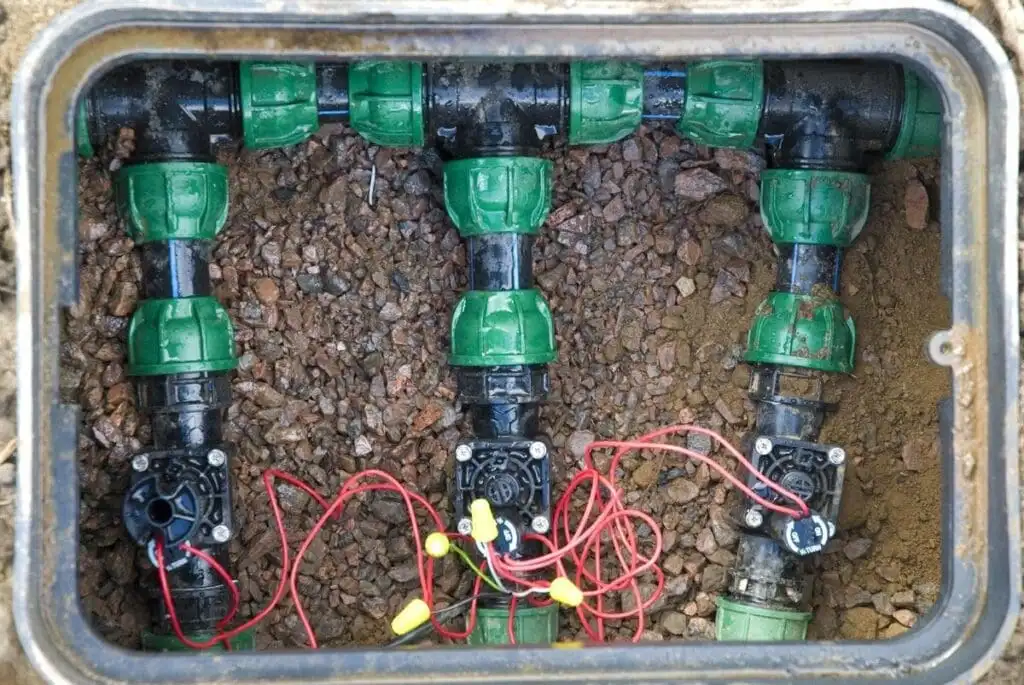
A valve manifold with multiple solenoids inside a valve box — each solenoid controls one irrigation zone. When testing multiple solenoids on the same manifold, disconnect and test each solenoid individually by its pigtail wires to ensure you are reading only that solenoid's resistance, not the combined resistance of the wiring circuit. On Tulsa-area systems with manifolds like this one, testing all solenoids during a spring startup inspection takes about 15 minutes with a multimeter and is an efficient way to identify any zone that failed over winter before running the irrigation season.
Reading the Results
What the multimeter reading tells you:
Testing Without a Multimeter: The Swap Test
If you do not have a multimeter and cannot get one quickly, the swap test uses a known-good solenoid from a functioning valve to confirm whether the suspect solenoid is the failure:
The swap test is slower than a multimeter test and requires handling functioning valve components, but it is a reliable confirmation method when test equipment is not available.
Why Solenoids Fail in Tulsa-Area Systems
Understanding the most common causes of solenoid failure in this region helps with both timing expectations and prevention:
Freeze damage. The most common cause of solenoid failure in Oklahoma is freeze damage during winter. Water retained inside the solenoid housing from the end of the irrigation season freezes and expands, cracking the internal coil windings. The external solenoid body typically shows no visible damage — it looks identical to an undamaged solenoid — but the multimeter test reveals an open circuit (infinite ohms) where the winding wire has broken. Solenoids damaged this way in December or January often do not show up as zone failures until spring startup, when the system is pressurized and the controller sends the first signal to the failed solenoid. On Tulsa-area systems that were not properly winterized, spring startup routinely reveals one or more solenoid failures from the preceding winter.
Age and moisture exposure. Solenoid coil windings gradually degrade from repeated heat cycling and moisture exposure in the valve box environment. Solenoids on residential systems in the Tulsa area that are 15 to 20 years old — which includes many original components on systems installed in the early 2000s construction boom across Broken Arrow, Bixby, and Jenks — are reaching the end of their reliable service life. A solenoid that tests at the high end of the resistance range (50 to 80 ohms) is approaching failure; replacement is appropriate before it fails completely mid-season.
Corrosion at wire terminals. Tulsa's hard water leaves mineral deposits throughout the irrigation system, including on wire connector nuts and solenoid terminal connections in valve boxes that have experienced water intrusion. Corroded connections create increased resistance at the terminal point that the multimeter will detect as an elevated ohm reading even if the solenoid coil windings are intact. Before concluding a solenoid with a high resistance reading needs replacement, disconnect the pigtail wires, clean the bare wire ends with sandpaper or a wire brush to remove corrosion, and retest. A reading that drops to the normal range after cleaning indicates the solenoid is fine and the connection was the issue.
Voltage surge damage. Lightning is a real risk to irrigation system electronics in Oklahoma. A nearby lightning strike or a significant utility power surge can damage solenoid coil windings — producing either an open circuit (winding burned out) or a short circuit (windings fused together). Short circuit readings on a solenoid that was working normally before a storm event are a reliable indicator of surge damage. The same surge that damaged the solenoid may have also damaged the controller terminal — test the terminal after replacing a surge-damaged solenoid to confirm it is still outputting the correct 24V AC signal.
What to Do After Confirming a Bad Solenoid
Replacing a failed solenoid is one of the fastest irrigation repairs there is. The process:
Solenoid replacement cost: $10 to $25 for the part at retail. Time: 10 to 15 minutes per valve. This is one of the most accessible irrigation repairs for homeowners who are comfortable with basic electrical connections and can locate their valve boxes.
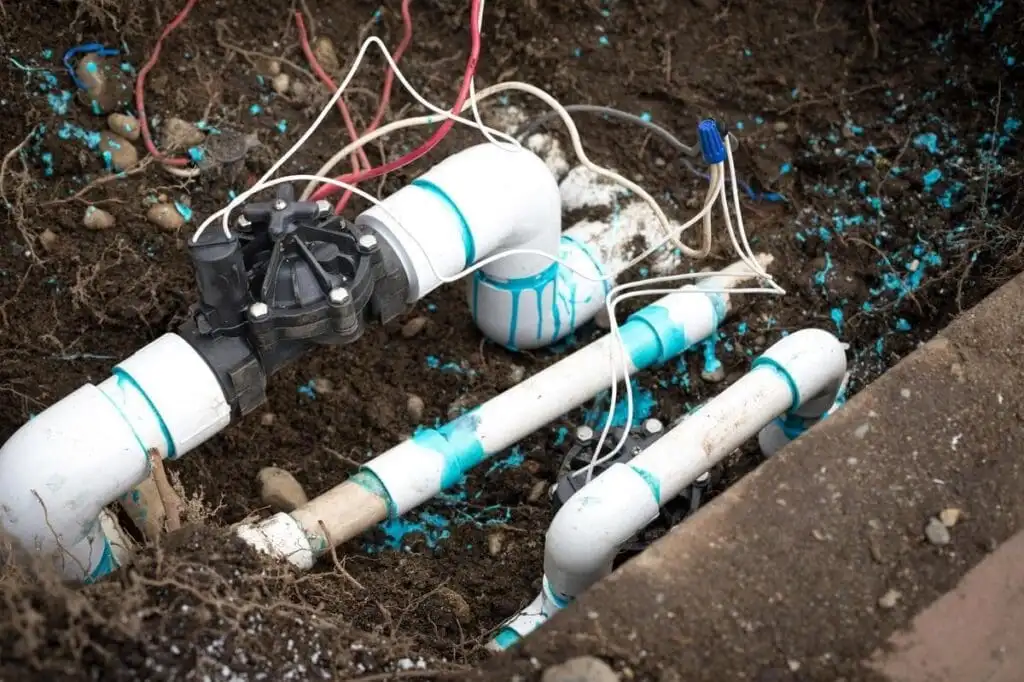
A zone valve installation with PVC fittings, solenoid body, and zone wiring in an excavated area — this type of valve installation with fresh PVC cement marks visible is typical of a new zone valve being installed after the original valve body was too damaged to repair. When a solenoid test confirms the solenoid has failed but solenoid replacement does not restore zone function, the next test is the valve diaphragm. When both solenoid and diaphragm appear functional but the zone still does not operate, the wiring between the controller and the valve is the remaining diagnostic area.
When Solenoid Replacement Does Not Fix the Zone
If replacing a confirmed bad solenoid does not restore zone function, the diagnosis moves to the next most likely cause. Work through this sequence:
Irrigation Diagnosis and Repair in the Tulsa Area
For more than 25 years, Complete Lawn Care has been diagnosing and repairing irrigation systems throughout Tulsa, Broken Arrow, Bixby, Jenks, Owasso, and Sand Springs. Our irrigation team approaches every zone failure with a systematic process — solenoid, wiring, controller, valve diaphragm — rather than replacing components at random until something works. The science-based, intentional approach that guides our lawn care program applies equally to irrigation service.
With over 25 years of experience, we combine proven results with a data-driven approach to irrigation service. We have seen every failure pattern common to Oklahoma's climate — from spring solenoid failures after freeze events to wiring damage from landscaping work to valve diaphragm failures on systems that have been in service since the early 2000s. We find the actual cause and fix it correctly the first time.
Experience tells us what to do. Science tells us when and why. Every service call is intentional.
Zone Not Running on Your Tulsa-Area System?
Contact Complete Lawn Care at completelawncaretulsa.com or call (918) 605-4646. We will diagnose it accurately and fix it right — serving Tulsa, Broken Arrow, Bixby, Jenks, Owasso, and Sand Springs.
Experience. Science. Intentional Lawn Care — That’s the Complete Lawn Care Difference.