How to Fix a Lawn Low Spot: The Right Solution for Every Cause
The right fix depends on how deep the depression is, how large it is, and whether it is caused by soil settling, compaction, or an actual drainage problem. Diagnosing correctly before spending money is the most important step.
Step 1: Diagnose Before You Fix
Low spots that hold water look the same whether they are caused by soil settling, soil compaction, or genuine drainage problems — but the solutions are completely different. Filling a compaction-driven low spot without addressing the compaction will result in the same problem returning within one or two seasons. Filling a drainage-driven low spot without redirecting the water that flows into it will result in the new surface sinking back into the same depression as saturated soil continues to shift.
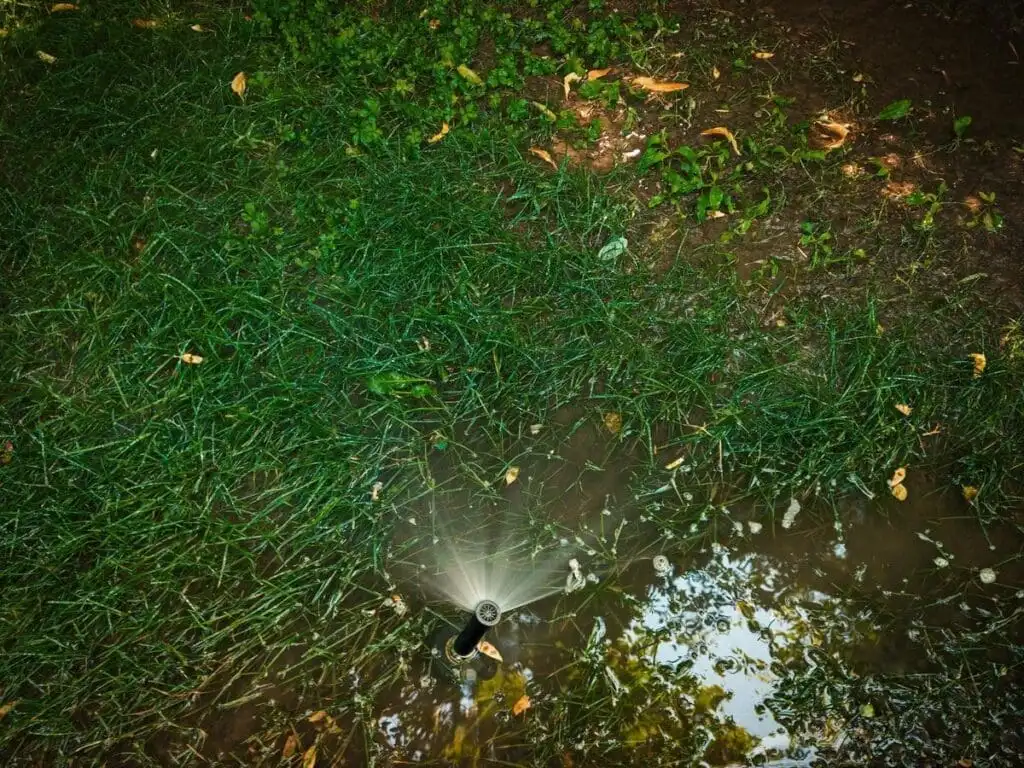
A sprinkler head surrounded by standing water is a clear signal that this area cannot absorb water at the rate it is being applied — either from irrigation, rainfall, or both. In Tulsa's clay-heavy soils, this is often a combination of a genuine low spot and poor water infiltration in compacted or saturated soil.
Observe the Low Spot During Heavy Rain and Ask These Questions
Where is the water coming from?
Is it pooling in place from rainfall directly on that area, or is water flowing into the low spot from other parts of the yard, from a downspout, from a neighboring property, or from a slope above it? If water is flowing in from elsewhere, filling the low spot will not solve the problem.
How long does the water stay?
A low spot that drains completely within 24 to 48 hours after a heavy rain is behaving differently than one that holds water for three or four days. Chronic standing water that persists for days suggests either a deeper drainage problem or severely compacted soil with very low infiltration capacity.
Is the low spot getting deeper over time?
Progressive settlement — a low spot that grows deeper season over season — often indicates a buried organic matter issue (decomposing tree roots, old construction debris, buried organic fill) or a slow subsurface drainage failure. These require more intervention than simple surface grading.
Are there multiple low spots in a pattern?
Multiple low spots in a line can indicate a broken or settling irrigation line, a failed buried drain, or a drainage swale that has filled in. A single isolated depression is more likely to be simple soil settlement.
The Cause Determines the Fix: Four Root Causes
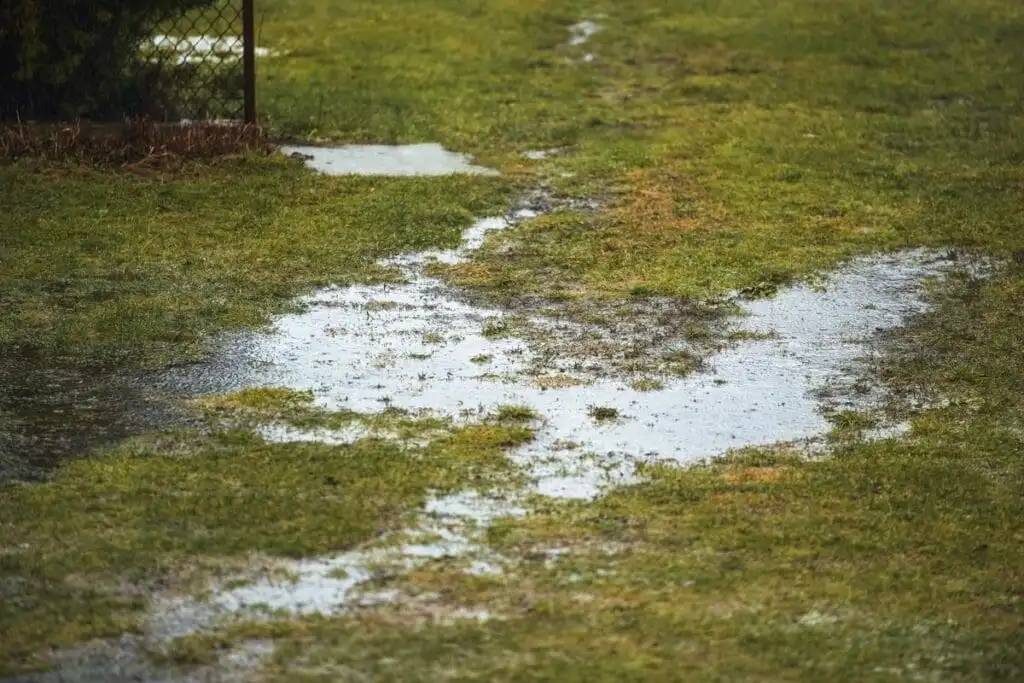
Standing water pooling across a lawn area after rain — a textbook low-drainage situation in Tulsa's clay-heavy soils. When multiple areas pool simultaneously, it often signals that the overall yard grade is directing water toward a central low point, which requires grading or drainage infrastructure rather than simple soil filling.
1. Soil Settlement
The most common cause in Tulsa-area yards. Over time, lawn soil settles unevenly due to decomposing organic material, erosion of fine particles, and the natural consolidation of disturbed fill soil. In established yards, low spots from settlement are usually shallow (half an inch to two inches) and stable in size. These respond well to top dressing.
2. Soil Compaction
Heavily compacted soil — common in Tulsa's clay yards under high foot traffic, along fence lines, and in areas regularly crossed by mower wheels — loses pore space and absorbs water much more slowly. Water ponds on the surface because it cannot infiltrate fast enough. Core aeration is the primary fix.
3. Topographic Low Point
Some yards genuinely have low areas where the overall grade directs surface water. Water from rainfall, neighboring yards, or roof runoff funnels to this point and has nowhere to go. These situations require either regrading or installing subsurface drainage (French drain, channel drain) to capture and redirect the water.
4. Subsurface Failure
Broken irrigation lines, failed or crushed drain tiles, and decomposing buried organics can all create persistent low spots by removing soil support from below. These situations often produce low spots that return or worsen after surface-level repairs and typically require a professional to diagnose and repair the underground cause.
Fix 1: Top Dressing for Shallow Low Spots (Under 2 Inches)
For shallow, stable depressions caused by soil settlement, top dressing is the most effective and DIY-accessible solution. The process fills the depression gradually using a leveling mix of sand and topsoil, allowing grass to grow through the fill rather than killing it with a sudden deep coverage. Use a leveling mix of approximately 50 to 70 percent coarse sand and 30 to 50 percent quality topsoil or compost — pure sand added to clay soil without adequate proportions can set almost like concrete when it dries.
Mow Short First
Mow the low spot area to around 1 inch before filling. This allows the leveling mix to make better contact with the soil rather than sitting on top of long grass.
Apply Half an Inch at a Time
Apply no more than half an inch of leveling mix at a time. Deeper single applications smother and kill the grass underneath. For a two-inch depression, plan on four applications spaced four to six weeks apart.
Spread and Water
Spread the mix evenly using the back of a leaf rake or a straight board. Work the material into the grass. Water the area thoroughly after each application to help the mix settle into the voids.
Overseed if Needed
If the grass in the depression is thin or bare from prolonged saturation, overseed after the final leveling application — mid-spring for Bermuda and Zoysia, early fall for tall fescue.
Timing for Oklahoma: Bermuda and Zoysia — April through August. Tall fescue — September through October. Avoid top dressing any grass type during dormancy — the fill will sit without growing through.
Fix 2: Core Aeration for Compaction-Driven Low Spots
When a low spot holds water primarily because compacted soil cannot absorb it fast enough — rather than because the area is genuinely lower — core aeration is the right first step. Core aeration removes cylindrical plugs of soil across the lawn, creating channels for water, air, and nutrients to penetrate the compacted zone.
A single core aeration treatment will not transform severely compacted Oklahoma clay into freely draining soil, but it meaningfully improves infiltration. For best results in Tulsa-area clay soils, aerate in fall (September to October for warm-season grasses), apply a thin layer of compost or quality top dressing over the aeration holes, and water thoroughly afterward. If the same area re-compacts and re-develops drainage issues within one to two seasons, you are likely dealing with structural soil problems that require a drainage solution rather than a soil improvement solution.
Fix 3: Grading for Deeper Depressions (Over 2 Inches)
Depressions deeper than two inches cannot be addressed through gradual top dressing without either killing the existing grass under deep fill or taking so many seasons of incremental applications that the problem persists for years. Deeper depressions require removing the turf, filling with quality topsoil to match the surrounding grade, recompacting lightly, and resodding or reseeding.
Mark and Remove Turf
Mark the extent of the low area and the target finished grade using stakes or spray paint. Use a sod cutter or flat spade to remove existing grass. Keep sod pieces intact if possible for reuse.
Fill with Quality Topsoil
Fill the depression with quality topsoil mixed with compost in a ratio of approximately 3 to 1. Avoid using straight fill dirt without checking its clay content — dense fill clay will recreate compaction and drainage problems quickly in Tulsa's climate.
Tamp and Restore Grass
Tamp the fill lightly — enough consolidation to prevent rapid settling but enough pore space for root penetration. Replace the saved sod or reseed with the appropriate grass type. Water daily for two to three weeks during establishment.
For larger grading projects — filling depressions of 12 to 24 inches, regrading entire portions of a yard, or reshaping the yard to direct water away from the foundation — professional grading equipment and experience produce significantly better results than hand work.
Fix 4: French Drains and Channel Drains for Flow-Driven Problems
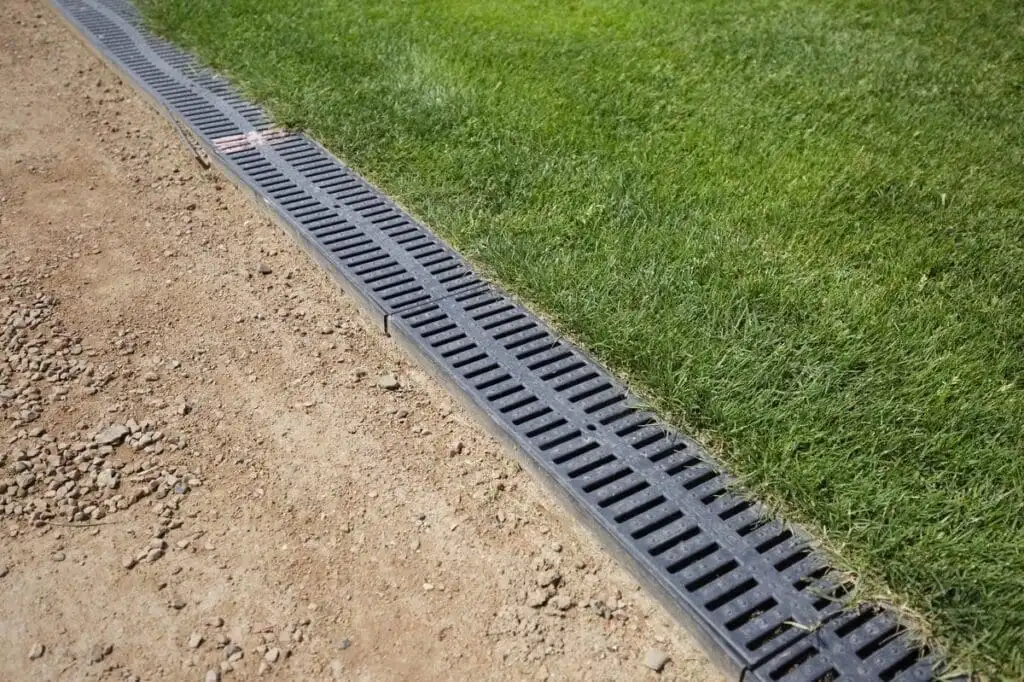
A channel drain (trench drain) installation at the edge of a lawn — one of the most effective solutions for low spots caused by water flowing across hard surfaces like driveways, patios, and sidewalks onto adjacent turf. When the drainage problem is a flow pattern rather than a soil issue, infrastructure like this intercepts and redirects water before it reaches the problem area.
When water is flowing into a low spot from other parts of the yard, a downspout, a neighboring property, or an upslope area, filling the depression is a band-aid. The right solution intercepts and redirects the water before it reaches the problem area. French drains capture subsurface water flow; channel drains intercept surface flow along hard edges. Applying a band-aid solution to a drainage-driven problem is the most common and expensive mistake Tulsa-area homeowners make.
Not Sure What's Causing Your Lawn Low Spot?
Diagnosing correctly before spending money is the most important step. Our team serves the Tulsa area and can identify whether your low spot needs top dressing, aeration, grading, or drainage infrastructure — and give you a straight answer before any work begins.