Can You Fill Low Spots in Your Lawn Without Killing the Grass?
Yes — you can fill shallow low spots without killing the grass, but the depth of the depression and the material you use determine whether the grass survives or needs to be replaced. The key rule is never cover more than half an inch of grass at a time.
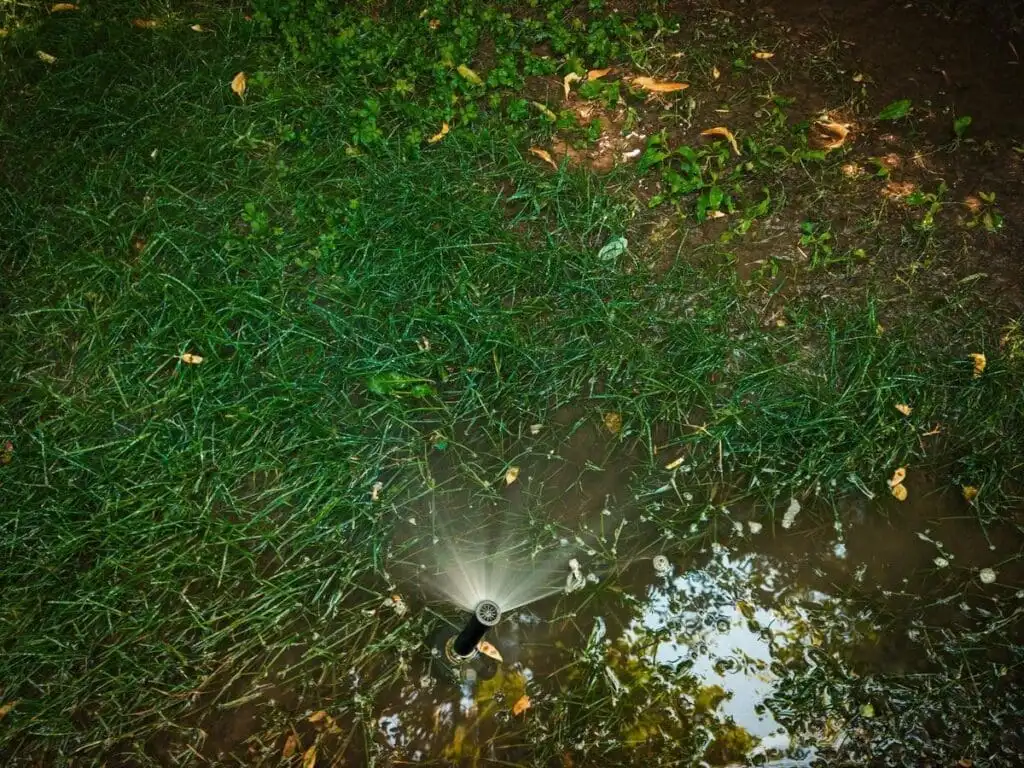
Standing water pooling in low areas of a Tulsa-area yard after rain. Low spots that hold water are a common problem in Oklahoma's clay-heavy soils, where even modest depressions collect and hold water far longer than in sandier soil regions. The right repair approach depends entirely on the depth of the depression and whether the water problem is a grading issue or a drainage flow issue.
Why Depth Is the Critical Variable
Grass survives being covered with fill material by growing upward through it. Stolons — the horizontal above-ground stems that Bermuda and Zoysia grass use to spread — can push through a thin layer of loose material during active growing season. Roots can follow upward as the crown of the plant gradually migrates toward the new surface. But this process has limits, and exceeding those limits kills the grass.
½ Inch Layer
Sits lightly enough over grass that blades can push through within days during active summer growth. Light still reaches leaf tissue below the fill, and the grass maintains photosynthetic capacity to fuel recovery.
1 Inch Layer
Borderline — some grass survives in warm-season peak growth, some does not, depending on vigor and conditions at the time. Results vary widely.
Over 1½ Inches
Will smother the grass in most cases. Tissue below loses access to light, cannot fuel upward growth, and dies within one to two weeks. Never apply this much in a single pass.
This is why the incremental approach works for shallow depressions and does not work for deep ones. A two-inch depression filled in four half-inch applications spaced four to six weeks apart gives the grass time to grow through each layer before the next is added. But a two-inch depression cannot be safely filled in a single application — no matter how good the material.
The Right Fill Material for Tulsa Lawns
The choice of fill material matters as much as application depth — and this is where many homeowners make an expensive mistake. Using pure topsoil from a landscape supply company sounds logical, but Tulsa-area topsoil typically has high clay content. Filling a low spot in a clay lawn with more clay soil may level the surface, but it does not improve drainage through the filled area.
50–70% Coarse Sand
Provides porosity and prevents the fill from compacting into a dense, impermeable layer. Coarse or medium sand — not fine or masonry sand, and not pea gravel — is the right choice.
20–30% Quality Topsoil
Provides organic matter and nutrients that support grass growth through the fill layer.
10–20% Compost
Improves water retention without adding clay density, and provides microbial activity that helps break down any thatch layer the fill is applied over.
What to avoid: pure play sand (too fine, packs poorly), straight fill dirt (high clay, poor drainage), and heavy peat-based mixes (retain too much moisture in already-slow-draining clay soils). None of these will kill the grass immediately, but they do not solve the underlying drainage issue and often create a visible texture difference in the lawn surface over time.
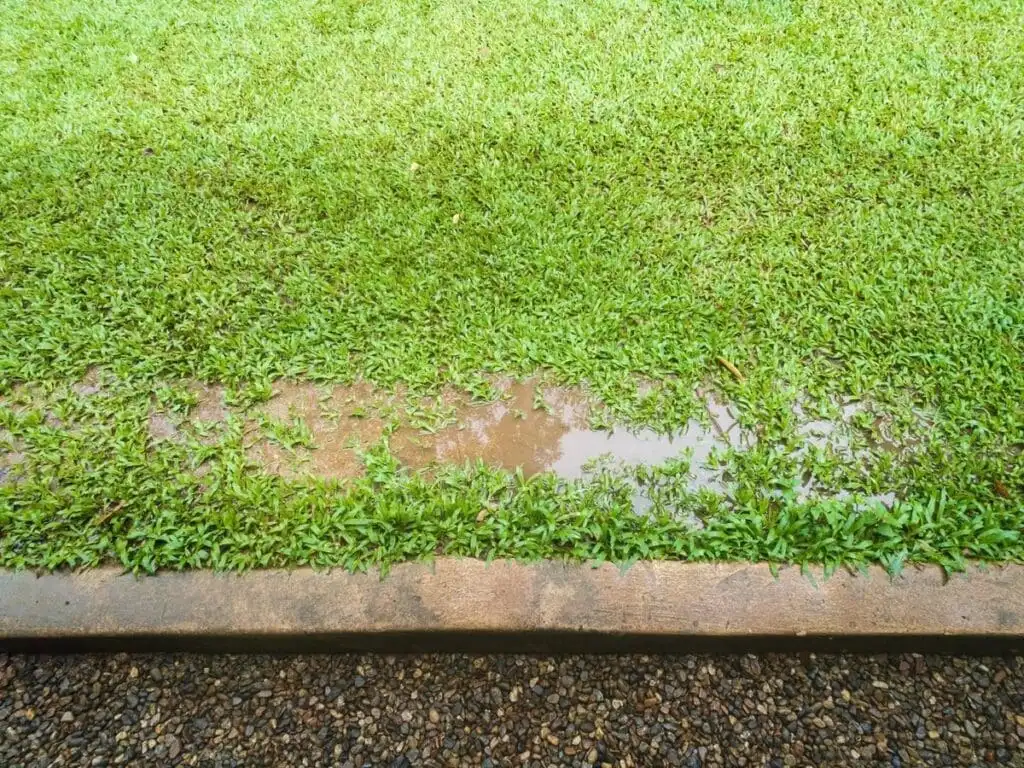
A sprinkler head running in a pooled area — a scenario that combines a lawn low spot with potential irrigation overwatering. Before filling any low area that stays chronically wet, it is worth confirming whether the irrigation system is applying water at a rate the clay soil cannot absorb. An irrigation adjustment may reduce or eliminate the pooling before any grading work is done.
Step-by-Step: Filling Shallow Low Spots Without Killing Grass
For depressions under two inches deep, this process produces reliable results on Bermuda and Zoysia lawns in the Tulsa area when performed during the active growing season.
Step 1: Mow Short
Cutting to approximately one inch before applying fill helps the leveling mix reach the soil surface rather than sitting suspended on top of long blades.
Step 2: Prepare Leveling Mix
Use a sand-based leveling mix. Mix thoroughly before applying. Clumped or wet fill is difficult to spread evenly and tends to pile rather than feather into thin layers.
Step 3: Apply No More Than ½ Inch
Spread the mix using a shovel and the back of a leaf rake. Feather the edges into the surrounding grade. The fill should be thin enough that grass blades are still visible above it after spreading.
Step 4: Work Mix Down
Use the back of a rake or a push broom to work the fill down into the turf canopy so it makes contact with the soil surface. Leveling mix sitting on top of grass blades will not fill effectively.
Step 5: Water Thoroughly
Watering helps the fill settle into voids and makes contact with existing soil. Apply enough water to fully wet the fill layer — not just a light surface rinse.
Step 6: Wait 4–6 Weeks
During Bermuda's peak summer growth, four weeks is typically sufficient. In spring or fall when growth is slower, six weeks is more appropriate. Repeat until level, then overseed if needed.
Best Times to Top Dress in Oklahoma
Bermuda Grass
Late April through August — active growing season for best grass recovery.
Zoysia
May through August — slightly later than Bermuda due to slower spring green-up.
Tall Fescue
September and October — cool-season grass establishes best in fall; avoid summer.
Avoid top dressing during dormancy (winter) on any grass type. Avoid top dressing Bermuda or Zoysia in September and October when they are slowing for dormancy. Never top dress within 6 weeks of a heavy pre-emergent application.
When You Cannot Avoid Removing the Grass
For depressions deeper than two inches, the incremental approach is not practical. Filling a three-inch depression in half-inch increments would require six applications across a full growing season — and the low spot would continue to hold water and create turf stress throughout that entire period. The more effective approach for deeper depressions is to remove the existing turf, fill properly, and restore the grass in one operation.
1. Cut & Remove Existing Sod
A sod cutter, flat spade, or square-bladed shovel allows sod removal in manageable sections. If the grass is healthy, it can often be replanted after filling.
2. Fill in Layers
For 2–4 inch depressions, fill with the sand-topsoil-compost mix. For deeper depressions (4–6 inches or more), use a structural fill base and cap with 2–3 inches of leveling mix where roots will establish.
3. Compact Lightly
Tamp the fill enough to prevent rapid settling but avoid compacting to the point that root penetration and water infiltration are reduced.
4. Replace Sod or Reseed
If reusing removed sod, replant within 24 hours of removal and water daily for 2–3 weeks. If reseeding, use seed matched to your existing grass type and water twice daily until establishment is confirmed.
Common Mistakes That Kill Grass During Low Spot Repair
The following mistakes account for most of the failed low spot repairs we see on Tulsa-area properties.
Applying Too Much Fill at Once
Covering more than an inch of grass in a single application is the most common cause of grass death during low spot repair. The grass will appear fine for a week, then begin to yellow and die as the smothered tissue loses access to light. The fix then becomes sod replacement — more expensive and time-consuming than the incremental approach would have been.
Using the Wrong Fill Material
Heavy clay-based topsoil packed into a low spot creates a dense zone with poor drainage. The surface levels off, but after a few rain events the new fill compacts and settles, the low spot reforms, and the drainage in the filled area may actually be worse than before. The sand-based leveling mix is not optional — it is the difference between a repair that holds and one that needs to be redone.
Filling low spots: common questions
How do I fill low spots in my lawn without killing the grass?
What kind of dirt is best to fill low spots in a yard?
How deep can I fill over grass at one time?
When is the best time to level a lawn in Oklahoma?
What if the low spot is too deep to top dress?
Need Help Leveling Your Lawn?
Complete Lawn Care Tulsa specializes in Tulsa-area lawn grading and low spot repair. Get a professional assessment and let us handle the hard work the right way.