
Complete Lawn Care • April 2026 • Tulsa, OK
Short Answer: The ideal time to start up your sprinkler system in the Tulsa metro is late March through mid-April, once the risk of hard freeze has clearly passed. Starting too early exposes the system to potential damage if a late freeze arrives. Starting too late means dealing with dry conditions before the system is ready. A proper spring startup includes slowly re-pressurizing the main line to avoid water hammer, inspecting every zone for damage from winter, checking each head for proper function and alignment, testing the controller and rain sensor, and adjusting the programming for spring conditions. Most Tulsa homeowners should have their system up and verified by mid-April so it is ready to support lawn care through the growing season. Here is what a proper startup looks like.
If you winterized your sprinkler system properly last fall, you are ahead of most homeowners. The pipes were blown out, the water was shut off, and the system has been sitting idle through the freeze season. Now it is time to bring it back online.
The timing of spring startup matters more than people realize, and the process is more involved than just turning the water back on. Here is how we think about it for Tulsa metro properties.
The Right Window for Spring Startup
For the Tulsa area, the ideal startup window is late March through mid-April. By this point, the probability of a hard freeze (below 28 degrees) has dropped significantly, and the lawn is beginning to come out of dormancy and will soon need supplemental water.
Starting too early carries risk. If you charge the system in early March and a late freeze hits, any exposed lines, heads, or backflow preventers can split from the freezing water inside. These repairs are expensive and entirely preventable by waiting for the right window.
Starting too late is a different problem. By late April and especially May, lawns are growing actively and need consistent water. A system that is not ready by then means the lawn starts the growing season at a disadvantage.
Why Rushing Startup Causes Damage
The most common mistake in sprinkler startup is opening the main valve too fast. Water hammer is a real thing. When water rushes into a dry, empty system at full pressure, the pressure spike can crack fittings, damage valves, and blow out the weakest points in the line.
The correct process is to open the main valve slowly over several minutes, letting the system fill gradually. As the lines pressurize, air needs to escape through the heads, which is why the first pop-up cycle of the year often has heads spitting air and water in ways they do not normally do.
What a Proper Startup Includes
A thorough spring startup on a Tulsa sprinkler system includes:
Inspecting the backflow preventer for freeze damage. This is the most common failure point after a winter freeze because backflow assemblies are typically located above ground. If the preventer was not properly drained, it may need repair or replacement before the system can be safely pressurized.
Slowly pressurizing the main line, watching for any visible leaks or underground bubbling that would indicate a burst pipe.
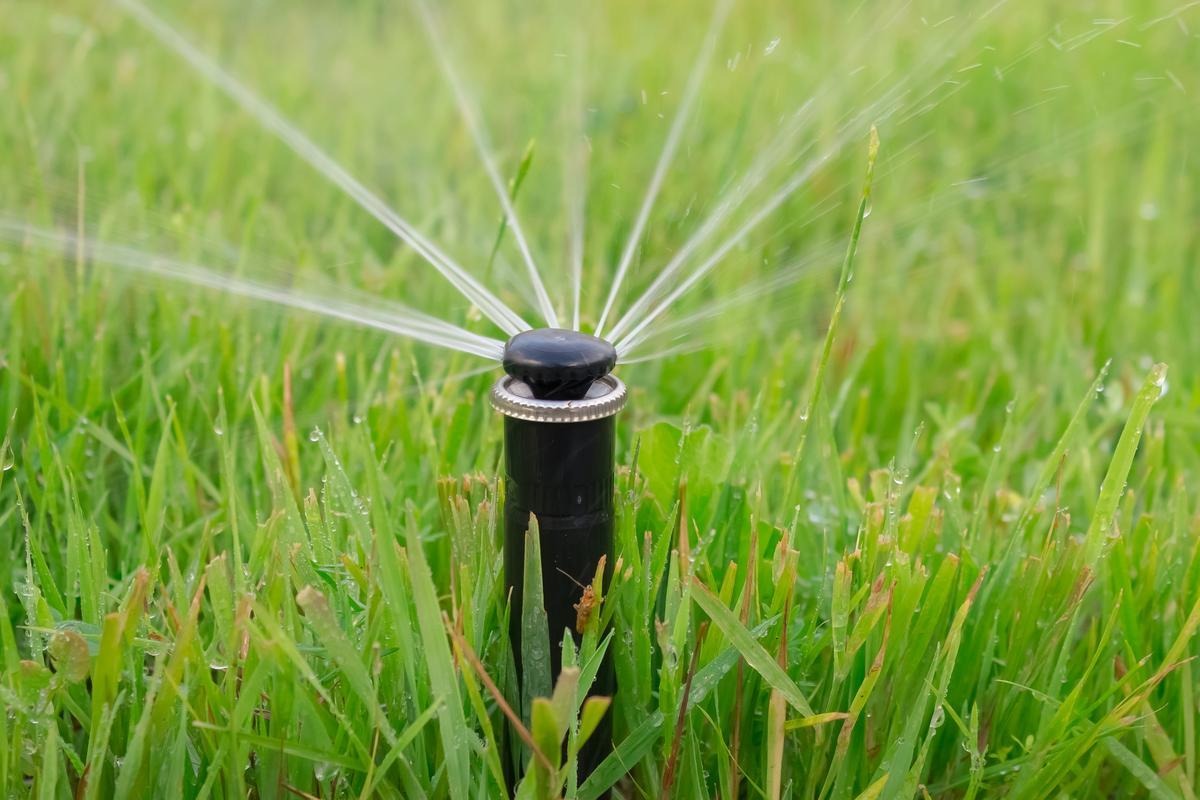
Running each zone individually, checking that every head pops up, sprays the correct pattern, and covers the intended area without obvious leaks or geysers.
Adjusting heads that have shifted, settled, or been damaged over winter. Heads commonly get bumped by mowers during fall cleanup, and the misalignment may not be obvious until the system runs.
Checking the controller for proper function. Batteries may need replacing. Settings may need updating for spring conditions. The rain sensor needs to be tested to confirm it is still working.
Calibrating run times for current conditions. Spring water needs are lower than summer water needs. Starting with appropriate run times prevents overwatering in April and May when the lawn is ramping up.
Common Problems Found at Startup
Here are the most common issues we find when starting up Tulsa sprinkler systems in spring:
Cracked or broken heads from lawn maintenance, vehicle traffic, or freeze damage. Heads are inexpensive to replace but the damage must be identified.
Leaky valves that drip continuously or fail to fully close between zones. A leaking valve wastes water and can cause soft or waterlogged spots in the lawn.
Underground leaks, which show up as wet spots, soft ground, or unusually green patches in the lawn. Underground repairs are more involved and typically require professional service to locate and fix.
Controller issues, including dead backup batteries, lost programming from power outages, or outdated controllers that need replacement.
Coverage gaps, where previously adequate coverage has become inadequate due to landscape growth, head wear, or shifting. These often need head adjustments or sometimes additional heads to fix.
Setting Your Controller for Spring
Spring watering in Oklahoma is different from summer watering. Temperatures are cooler, rainfall is more frequent, and evapotranspiration rates are lower. A sprinkler schedule that works in July will massively overwater in April.
A reasonable spring starting point for Tulsa metro lawns is two watering events per week, with run times that deliver about one-half inch of water per event (roughly half of what the lawn needs in peak summer). Run times vary by head type, so the easiest way to calibrate is to place rain gauges or empty tuna cans in the spray pattern and measure actual output over a typical run.
Then adjust based on weather. If we get significant rainfall in a given week, skip that watering cycle. If conditions are unusually warm and dry for spring, add a third cycle. The controller is a starting point, not a fixed schedule.
When to Call a Professional
Spring startup is a DIY task for homeowners who know their system well and are comfortable with basic troubleshooting. If you are not sure where your backflow preventer is, if your controller is unfamiliar, if you find obvious damage during startup, or if the system behaves in ways you cannot diagnose, it is worth calling a professional.
The cost of a professional startup and inspection is modest compared to the cost of undetected damage or improper setup that causes issues all summer.
The calls we get most often in April tell a consistent story. A homeowner runs the system for the first time all year, spots a geyser, a leak, or a zone that will not come on, and realizes the problem has probably been there since last fall. Startup service is designed to catch exactly those things before May arrives and the lawn actually needs the water.
What to Do Next
If you would like a professional sprinkler startup and inspection for your Tulsa, Broken Arrow, Jenks, or Owasso property, give us a call at (918) 605-4646 or request a quote online. Here is what to expect: we respond the same day, use satellite imaging to measure and assess your property (no walkthrough required, though for irrigation work we can usually be there same day or next), and send you a customized quote within a few days. If it is a fit, your first service is typically within a week. No contracts. Cancel anytime. Getting your system right in April sets up consistent lawn performance for the rest of the year.