
Mulch
By the landscape experts at Complete Lawn Care | Serving Tulsa, Broken Arrow, Bixby, Jenks, Owasso, and Sand Springs
The two best times to apply mulch in Oklahoma are mid-spring — typically late March through April — and again in early fall around September or October. Spring mulching protects plant roots and conserves soil moisture heading into Oklahoma’s demanding summer heat, while fall mulching insulates roots going into winter and helps soil retain the organic matter that builds long-term bed health. That said, mulch can be applied almost any time of year in the Tulsa area as long as you avoid a few specific timing mistakes. Knowing what those are, and why the timing windows matter, will help you get far more value out of every bag or yard of mulch you put down.
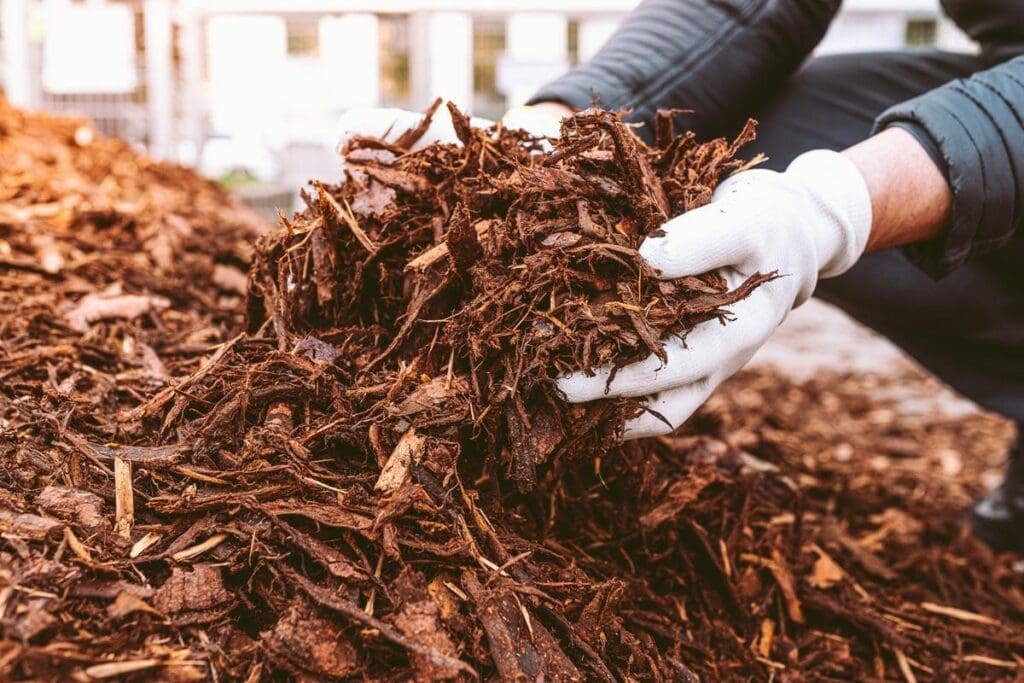
Quality shredded hardwood mulch — the texture, moisture content, and source material all affect how well mulch performs in Oklahoma’s climate. Not all mulch is created equal.
Why Timing Your Mulch Application Matters in Oklahoma
Oklahoma’s climate is not gentle. Tulsa-area summers regularly push above 100 degrees, the soil dries and cracks during drought stretches, and winter temperature swings can be dramatic — freezing hard for days then warming back into the 60s within a week. Mulch is one of the most effective tools a homeowner has for buffering plant roots against those extremes, but only when it is applied at the right time and in the right way.
Apply mulch too early in spring — before the soil has had a chance to warm up — and you trap cold in the root zone, slowing the emergence of perennials and the green-up of shrubs. Apply it too late in fall after the ground freezes and you lose most of the insulation benefit for overwintering roots. Apply too thick in the wrong season and you create moisture and disease problems that hurt more than they help.
Understanding the logic behind the timing windows makes it much easier to get right every year, regardless of whether a particular spring arrives early or a fall stretches warm later than expected.
Spring Mulching: The Most Important Application of the Year
For most Tulsa-area homeowners, the spring mulch application is the most impactful one. The goal is to apply after the soil has begun to warm but before the full heat of summer arrives and before weed seeds have had the chance to germinate en masse.
In the Tulsa metro, that window typically runs from late March through April. By late March, soil temperatures in northeast Oklahoma are usually climbing above 50 degrees consistently, perennials are beginning to push new growth, and shrubs are breaking dormancy. That is the point where mulch transitions from a cold trap into a genuine benefit — it holds the warmth already in the soil, slows moisture evaporation as temperatures start climbing, and creates a physical barrier that prevents most weed seeds from getting the light they need to germinate.
Applying spring mulch before weeds emerge is one of the most important details in that sequence. Mulch applied over bare soil in early spring can suppress 70 to 80 percent of annual weed germination on its own. Mulch applied after weeds are already up does nothing to suppress them and just makes them harder to pull. Timing is the difference between mulch working for you and mulch just being decorative.
Two to three inches is the right depth for spring application in Oklahoma beds. Deeper than three inches in summer heat can create anaerobic conditions and invite fungal issues, especially in beds with limited airflow. Shallower than two inches and you lose most of the weed suppression and moisture retention benefit.
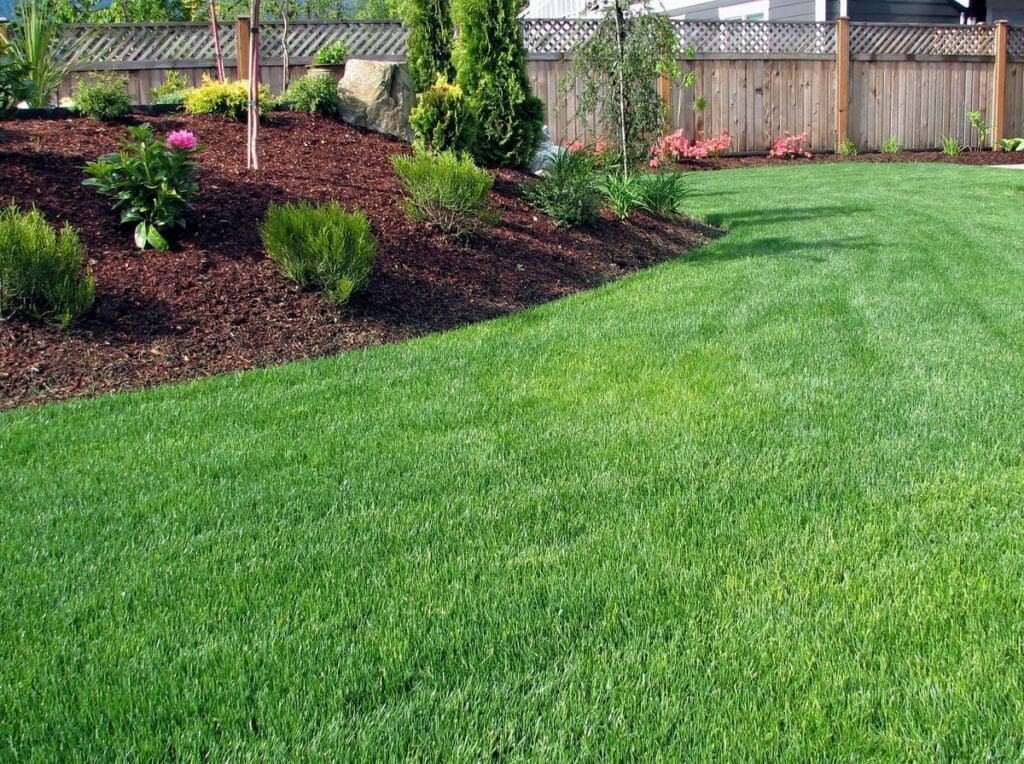
A well-mulched landscape bed alongside a healthy Tulsa-area lawn — proper mulch depth and clean bed edges make a significant difference in both plant health and curb appeal through the summer months.
Fall Mulching: The Application Most Homeowners Skip
Fall mulching gets far less attention than spring, but it delivers real benefits that compound over time — especially in Oklahoma’s clay soils.
The ideal window for fall mulch application in the Tulsa area is September through mid-October. At this point, summer heat has broken, plants are beginning to slow their above-ground growth and redirect energy to root development, and soil temperatures are still warm enough that organic mulch will continue to break down slowly and feed soil biology through the early part of winter.
The primary purpose of fall mulch is root insulation. When a hard freeze hits northeast Oklahoma — and in most years, that first serious freeze comes sometime in November — plants whose root zones are covered with two to three inches of mulch experience less thermal shock than exposed roots. This is particularly valuable for marginally hardy plants, newly installed shrubs and perennials in their first winter, and ornamental grasses that are not fully established.
Fall mulch also continues the slow process of organic matter decomposition into the soil. Over multiple seasons, this is one of the most effective ways to improve Oklahoma clay soil from the top down — each year’s mulch layer breaks down into organic material that improves soil structure, drainage, and microbial activity in the bed. It is a slow process, but it is cumulative and it works.
One timing caution for fall: do not mulch too late in the season. Mulch applied after the ground has already frozen hard does not insulate effectively because it cannot moderate temperature swings in soil that is already locked up. You want the mulch in place before the first hard freeze, not after.
What Type of Mulch Works Best in the Tulsa Area?
Mulch type matters more than most homeowners realize, and the right choice depends on the application.
Shredded hardwood mulch is the most widely used and generally the best all-purpose choice for landscape beds in the Tulsa area. It breaks down at a moderate pace, knits together well to resist washing in heavy Oklahoma rains, and improves soil structure as it decomposes. Look for mulch that has been aged or composted rather than freshly chipped — fresh wood chips can temporarily tie up soil nitrogen as they decompose, sometimes yellowing nearby plants in the process.
Cedar mulch is a popular choice for its natural insect-repelling properties and longer lifespan. It does not break down as quickly as hardwood, which means it needs to be refreshed less often but contributes less organic matter to the soil over time. It is a reasonable choice for beds where low maintenance is the priority.
Pine bark nuggets provide good drainage and a clean appearance but tend to float and migrate in the kind of heavy rain events that Oklahoma gets in spring and early summer. For sloped beds or areas with significant runoff, shredded material stays in place better.
Rubber mulch and rock mulch are sometimes used in Oklahoma landscapes, but both have meaningful drawbacks for plant health. Rubber mulch absorbs heat dramatically — in full Oklahoma sun it can reach temperatures that damage plant roots — and it contributes nothing to soil health. Rock mulch raises soil temperature, increases evaporation, and does not suppress weeds effectively once organic debris fills in the gaps. For plant beds where long-term soil health matters, organic mulch is the right choice every time.
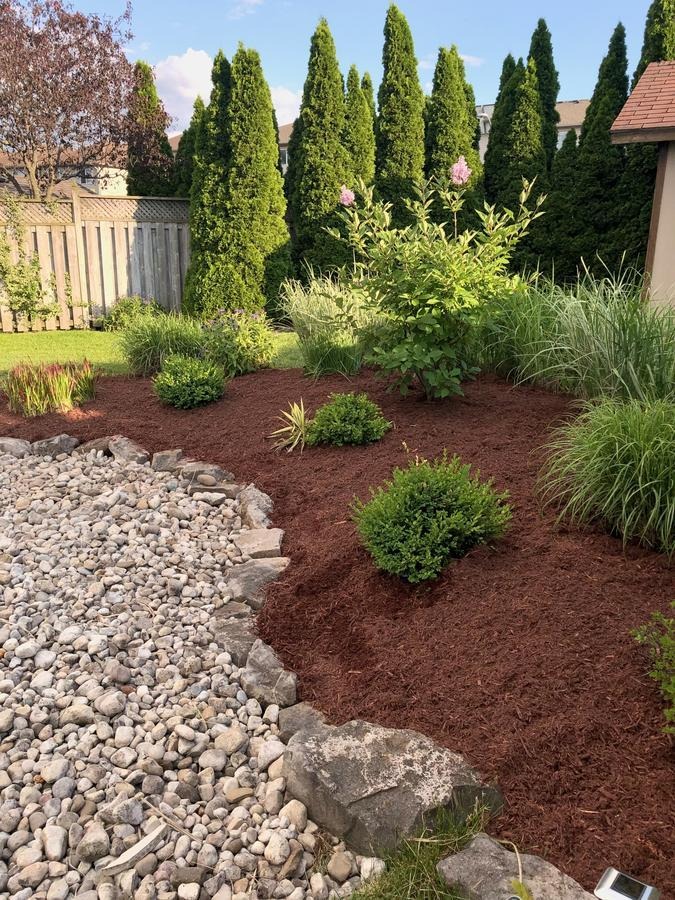
A professionally maintained landscape bed with fresh mulch around established shrubs and ornamental grasses — consistent annual mulching protects roots, suppresses weeds, and builds better soil with every season.
Common Mulching Mistakes Oklahoma Homeowners Make
Volcano mulching around trees. This is probably the most widespread mulching mistake in residential landscapes across the Tulsa metro. Piling mulch directly against the base of a tree trunk — creating that familiar volcano shape — traps moisture against the bark, promotes fungal disease, and creates habitat for insects and rodents that damage the tree. Mulch should be applied in a flat layer that stops two to three inches away from the trunk and extends outward to the drip line if possible. Keep it flat, not piled.
Applying too thick. More than three to four inches of mulch in Oklahoma’s humid summer conditions can prevent water and oxygen from reaching roots, create anaerobic pockets that foster root rot, and cause plants to develop shallow surface roots that are more vulnerable to drought. Two to three inches is sufficient for all the protective benefits mulch provides.
Skipping the edging step. Fresh mulch applied without clean bed edges migrates into the lawn, looks sloppy within a few weeks, and makes future maintenance harder. Re-cutting bed edges before mulching is worth the extra time — it creates a physical barrier that keeps mulch in the bed and gives the finished result a clean, intentional appearance.
Using fresh wood chips from recent tree work. Freshly chipped green wood has a high carbon-to-nitrogen ratio that can temporarily pull nitrogen from the soil as microbes work to break it down. If you have tree work done and receive a pile of fresh chips, let them age for at least a few months before using them in plant beds near sensitive ornamentals.
Not refreshing mulch annually. Mulch breaks down over the course of a season. By the following spring, most organic mulch has compacted and thinned to a point where it is providing only a fraction of its original benefit. Refreshing with a thin one-inch topdress each spring rather than removing and replacing the entire layer is the most efficient approach — it maintains depth without overdoing it.
How Mulching Connects to Your Overall Lawn and Landscape Health
Mulch and turf care are more connected than they might seem. Healthy, well-mulched beds require less supplemental watering — which means irrigation water stays in the lawn zones where it belongs rather than being wasted on bare soil. Weed suppression in beds reduces the seed bank that constantly tries to invade turf edges. And improved soil structure in mulched beds means fewer compaction and drainage problems over time.
At Complete Lawn Care, we think about the lawn and the landscape as a connected system. Our landscape maintenance services include mulch installation and bed refresh work that is timed to align with the seasonal needs of Tulsa-area landscapes — not just whenever it is convenient to schedule. We also recommend annual soil testing to homeowners who want a clear picture of what their beds and lawn actually need, so every application — mulch, fertilizer, or amendment — is based on data rather than habit.
Experience tells us what to do. Science tells us when and why.
Quick Answers: Mulching FAQs for Oklahoma Homeowners
Can I mulch in the summer? Yes, though it is less ideal than spring. Summer mulching still provides moisture retention and some weed suppression benefit. Avoid applying during extreme heat over existing plants that are already stressed — the disturbance can compound heat stress. If you missed spring, a summer application is still better than nothing.
How much mulch do I need? To cover 100 square feet at two inches deep, you need roughly 0.6 cubic yards of mulch, or about 17 cubic feet. Most bags at home improvement stores are 2 cubic feet, so about 8 to 9 bags per 100 square feet. Bulk delivery by the yard is significantly more cost-effective for larger beds.
Should I remove old mulch before adding new? Generally no — removing functional old mulch wastes the organic matter it has already started contributing to the soil. Rake the existing layer to break up any compaction or matting, then topdress with one inch of fresh material to restore depth and color. Remove old mulch only if it has developed mold, has become hydrophobic, or has built up past four inches.
Does mulch attract termites? This is a common concern in Oklahoma. The honest answer is that mulch can provide habitat for termites if it is in direct contact with your home’s foundation or wood framing. Keep mulch pulled back at least six inches from the foundation, and avoid deep mulch layers directly against any wood structure. The termite risk from properly installed mulch kept away from the structure is minimal.
Is colored mulch safe for plants? Most commercially dyed mulches use iron oxide or carbon-based colorants that are not harmful to plants. The more relevant question is the quality of the base material — dyed mulch is sometimes made from ground-up pallets or recycled wood that may contain preservatives. Look for dyed mulch made from known source material, or stick with undyed shredded hardwood if you have any concern.
For more than 25 years, Complete Lawn Care has been a trusted lawn and landscape service provider in the Tulsa area. We believe great results don’t come from guessing — they come from experience, science, and continual improvement. Every recommendation we make — including when and how to mulch — is guided by what actually works in Oklahoma conditions, adjusted for the season, and backed by the kind of long-term turf and landscape knowledge that only comes from decades of working in this specific climate.
Let Complete Lawn Care Handle Your Mulching and Landscape Maintenance
If you want your beds mulched on the right schedule, with the right material, at the right depth — without spending your weekend doing it — Complete Lawn Care‘s landscape maintenance service covers mulch installation and bed refresh work throughout the Tulsa metro area. We also offer soil testing so your landscape and lawn decisions are based on what your soil actually needs.
And for comprehensive year-round turf care, ask about our agronomy-guided 7-step lawn care program — science-based fertilization and weed control built specifically for Oklahoma conditions.
Call us at (918) 605-4646, email [email protected], or visit completelawncaretulsa.com to get a quote. We serve Tulsa, Broken Arrow, Bixby, Jenks, Owasso, and Sand Springs.
Experience. Science. Intentional Lawn Care — That’s the Complete Lawn Care Difference.