
The most effective way to stop armadillos from digging up your Broken Arrow lawn is live trapping and removal, combined with reducing the conditions that attract them in the first place. Armadillos are not protected in Oklahoma and may be trapped or removed year-round. However, there is seldom a quick or easy fix. Repellents, mothballs, and scare devices are not effective against armadillos, according to Oklahoma State University Extension. The honest answer is that armadillo control requires consistent effort, and the most reliable approach combines professional trapping with lawn care practices that make your yard less attractive to these persistent diggers.
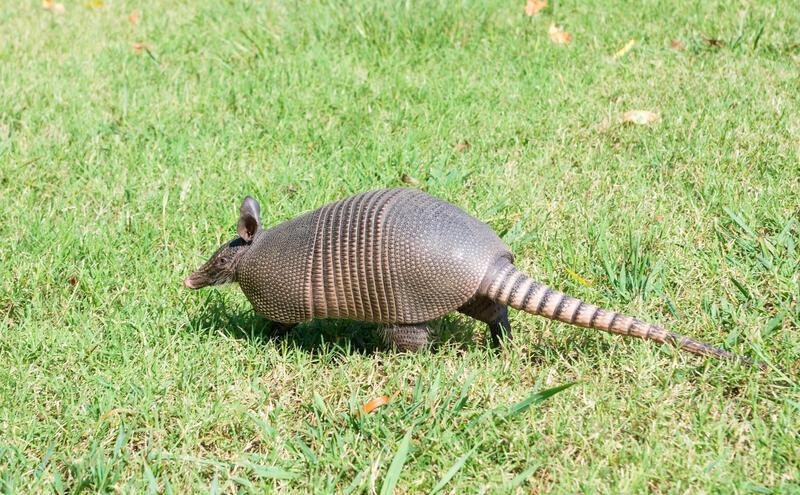
Image: A nine-banded armadillo crossing a green lawn. Armadillos are common throughout Oklahoma and are the primary cause of overnight digging damage in Tulsa-area lawns. They forage at night using their strong sense of smell to locate grubs and earthworms underground.
Why Armadillos Are Digging Up Your Lawn
Armadillos are not digging for fun. They are hunting. The nine-banded armadillo, which is the species found throughout Oklahoma, feeds almost exclusively on insects, grubs, and earthworms that live in the soil. Their powerful front claws and remarkable sense of smell allow them to detect invertebrates several inches underground and dig them out quickly.
According to Oklahoma State University Extension, armadillo damage is generally most pronounced during the summer months in irrigated lawns. Irrigation makes the soil softer and easier to dig through, and it also brings invertebrates closer to the surface where armadillos can reach them. If you water your lawn regularly, which you should be doing for healthy bermudagrass in the Broken Arrow and Tulsa area, you are inadvertently creating the perfect foraging conditions for armadillos.
The damage is easy to identify. Armadillos leave multiple shallow holes, typically three to six inches deep, scattered across the lawn. They also root through loose mulch in landscape beds, similar to how a pig roots through soil. The holes usually appear overnight because armadillos are primarily nocturnal, especially during the hot Oklahoma summer. You go to bed with a nice lawn and wake up to what looks like someone took a garden trowel to random spots across your yard.
In Broken Arrow, where many homes back up to wooded creek areas along Haikey Creek, the Illinois River corridor, and the numerous green spaces throughout the city, armadillos have abundant natural habitat nearby. They maintain burrows in wooded and brushy areas and then venture onto residential lawns at night to forage. If your property borders a tree line, creek, or undeveloped area, you are especially likely to see armadillo activity.
What Does NOT Work
Let’s get the bad news out of the way first, because a lot of homeowners waste time and money on approaches that sound reasonable but do not produce results.
Repellents: OSU Extension is direct about this. Repellents are not considered effective for keeping armadillos out of the landscape. This includes castor oil products, commercial armadillo repellent sprays, and granular deterrents. While some products may cause an armadillo to avoid a small area temporarily, they will simply move to another part of your yard and continue digging.
Mothballs and ammonia: These are common internet recommendations that do not work. Mothballs contain known carcinogens and are designed for insect control in enclosed spaces, not wildlife deterrence in open yards. Ammonia evaporates quickly outdoors and has no meaningful effect on armadillo behavior. Neither substance warns armadillos of danger. They simply walk around it.
Scare devices: OSU Extension also notes that scare tactics do not provide relief from armadillo damage. Armadillos have poor eyesight and are remarkably single-minded when foraging. Motion-activated lights and noise makers may startle them briefly, but they return as soon as they realize there is no actual threat.
Eliminating grubs to remove the food source: This sounds logical, but OSU Extension specifically cautions against this approach as a primary armadillo control strategy. If armadillos are already habituated to your lawn, reducing their food supply can actually increase damage temporarily as they dig more aggressively searching for dwindling food. Additionally, soil insecticides can harm many beneficial insects that are important for your lawn’s ecosystem. OSU recommends targeting the armadillo rather than the insect community unless you also have a specific insect pest problem.
This is an important point that we want to be transparent about at Complete Lawn Care. While we provide professional pest control services for lawn-damaging insects like grubs, chinch bugs, and sod webworms, we do not recommend applying insecticides solely to deter armadillos. The science does not support it as an effective standalone strategy, and it can cause more harm than good to the beneficial insect populations in your soil.
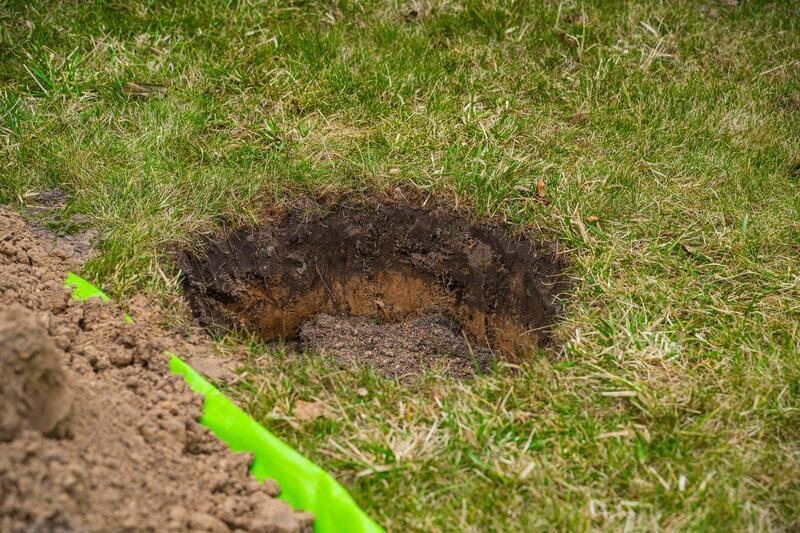
Image: A deep hole dug by an armadillo in a residential lawn, with excavated soil pushed to the side. Armadillo digging holes can range from a few inches to six or more inches deep, damaging grass roots and creating tripping hazards across the yard.
What Actually Works: Trapping and Removal
Trapping is the most consistently effective method for controlling armadillos on residential properties. Oklahoma State University Extension recommends using a large live-catch cage trap, ideally 10 by 12 by 32 inches, with doors on both ends.
The key to successful armadillo trapping is placement and funneling. Armadillos rarely climb over obstacles, so you can use boards, temporary fencing, or existing landscape barriers to funnel them toward the trap opening. Place the trap either where the damage is concentrated or along the route you believe the armadillo is using to enter your property, such as gaps along a fence line or paths from a wooded area. The trap does not need to be baited. While some homeowners have had success with overripe fruit or eggs, armadillos are often caught simply by being funneled into the trap as they follow their habitual foraging path.
One effective tip from OSU: because armadillos are attracted to freshly irrigated soil, running your irrigation in the area around the trap can help draw them in. Lining the bottom of the trap with freshly dug soil can also improve your capture rate.
Armadillos are not protected in Oklahoma and may be trapped year-round. However, it is not legal to relocate a trapped armadillo to another location without permission from the landowner at the relocation site. OSU recommends that trapped armadillos be humanely dispatched, or that homeowners contact a licensed nuisance wildlife control operator to handle the removal. There are several professional wildlife control companies serving the Broken Arrow and Tulsa area that specialize in armadillo trapping and removal.
One important safety note: always wear gloves when handling traps, armadillos, or soil that armadillos have disturbed. Armadillos are the only mammal other than humans known to carry leprosy (Hansen’s disease). While the probability of transmission is considered low, it is not worth the risk of handling them with bare skin.
Making Your Lawn Less Attractive to Armadillos
While trapping removes the immediate problem, making your property less inviting reduces the chance that a new armadillo moves in to fill the vacancy. Here are practical steps that actually help.
Reduce unnecessary irrigation. This is the single biggest factor within your control. Armadillos are drawn to irrigated lawns because soft, moist soil is easier to dig through and the moisture brings their food sources closer to the surface. We are not suggesting you stop watering your lawn. Bermudagrass in the Broken Arrow area needs consistent irrigation to stay healthy through the summer. But watering efficiently, not excessively, matters. Complete Lawn Care offers irrigation repair, maintenance, and service to ensure your system is delivering the right amount of water without overwatering. If you have zones that are running too long or heads that are creating soggy spots, fixing those issues removes some of the appeal for armadillos.
Water in the early morning rather than the evening. Armadillos forage at night. If you run your irrigation in the evening, the soil is at peak moisture exactly when armadillos are most active. Watering in the early morning gives the surface time to dry before nightfall, making it slightly less attractive for overnight foraging.
Remove cover near your lawn. Armadillos prefer areas with brush, woodpiles, low-growing shrubs, and dense ground cover where they can hide and build burrows. Cleaning up these areas around the perimeter of your property, especially along fence lines and near wooded edges, makes the space feel less sheltered for armadillos traveling from their daytime burrows to your lawn.
Install fencing in targeted areas. OSU Extension notes that fences more than 12 inches tall can eliminate most armadillo access, as long as the fence fits closely to the ground. For small, high-value areas like flower beds or vegetable gardens, a low fence buried a few inches into the soil can be effective. For entire lawns, fencing is generally not practical, but protecting specific areas that armadillos target repeatedly can reduce the damage to manageable levels.
Repairing Armadillo Damage to Your Lawn
The good news for most Broken Arrow homeowners is that bermudagrass, the dominant warm-season grass in our area, recovers relatively well from armadillo damage. Bermudagrass is a rhizomatous grass, meaning it spreads through underground runners. Healthy bermudagrass can fill in bare patches created by armadillo digging on its own, provided the lawn is getting proper nutrition, water, and mowing.
To speed recovery, fill the holes with topsoil, press the surrounding turf back into contact with the soil, and water the repaired areas. The bermudagrass will begin sending runners across the bare spots within a few weeks during the growing season. This is one of the reasons a well-maintained lawn with dense, healthy turf bounces back faster from armadillo damage than a thin, stressed lawn.
If you have fescue in your lawn, the situation is trickier. OSU Extension notes that cool-season grasses like fescue are more problematic because bare patches will need to be reseeded in the fall. Fescue also requires more irrigation than bermudagrass during the Oklahoma summer, which makes fescue lawns even more attractive to armadillos. This is one of many reasons our team generally recommends bermudagrass for Tulsa-area lawns where conditions allow it.
Complete Lawn Care’s 7-step lawn care program is designed to keep your bermudagrass as thick and healthy as possible, which directly improves its ability to recover from armadillo damage, foot traffic, weather stress, and other challenges. Proper fertilization timing, soil health management, and consistent mowing through our weekly mowing service all contribute to a lawn that fills in faster after damage. We also recommend annual soil testing to ensure your fertility program matches what your specific lawn needs.
Armadillo Damage vs. Other Lawn Damage
Before you declare war on armadillos, make sure they are actually the cause of your lawn damage. Several other animals create similar-looking disturbances in Tulsa-area yards.
Skunks dig shallow, cone-shaped holes that are smaller than armadillo holes, typically less than four inches in diameter and less than three inches deep. Skunk damage often appears in clusters and is usually accompanied by a distinct odor if the animal has been active recently.
Squirrels dig small holes when burying or retrieving nuts and acorns. These are typically two to three inches in diameter and quite shallow. The holes are scattered and random rather than concentrated in feeding areas.
Raccoons will peel back sections of sod to get at grubs underneath. This looks very different from armadillo holes. Instead of individual dig spots, raccoon damage appears as rolled-back flaps of turf.
Pocket gophers push fan-shaped mounds of dirt to the surface but do not leave open holes like armadillos. If you are seeing dirt mounds rather than dug-out holes, gophers are the more likely suspect.
Correct identification matters because the control methods are completely different for each animal. Our pest control team at Complete Lawn Care can help you identify what is actually causing the damage so you are not wasting time and money on the wrong approach.
Building a Lawn That Recovers Faster
For more than 25 years, Complete Lawn Care has been a trusted lawn care provider in the Tulsa area. We believe great results do not come from guessing. They come from experience, science, and continual improvement.
That is why we invest heavily in leadership training, research and development, and product testing, ensuring our team stays current on the latest turf products, application methods, and correction strategies. We have also implemented one of the few agronomy-supported programs in Tulsa, working directly with an industry expert who helps guide our application timing, product selection, and ongoing improvements based on proven agronomic science, not trends.
Our agronomy support allows us to make smarter corrections, faster. When armadillo damage, weather events, or other setbacks hit your lawn, we can adjust your care program to support recovery rather than applying a one-size-fits-all approach.
Armadillos Tearing Up Your Broken Arrow Lawn?
We get it. Waking up to a yard full of holes is frustrating, especially when you are investing in keeping your lawn looking good. While Complete Lawn Care does not provide wildlife trapping services, we are your partner in everything else: keeping your lawn thick and healthy enough to recover quickly from armadillo damage, dialing in your irrigation to avoid creating unnecessary attractants, treating any underlying grub or pest problems that may be contributing, and adjusting your fertilization program to support turf recovery in damaged areas.
We serve homeowners across Tulsa, Broken Arrow, Bixby, Jenks, Owasso, and Sand Springs. Give us a call at (918) 605-4646 or visit completelawncaretulsa.com to get a quote. You can also request a quote directly at completelawncaretulsa.com/get-a-quote/.
Complete Lawn Care
812 South 8th Street, Broken Arrow, OK 74012
Phone: (918) 605-4646
Email: [email protected]
Web: completelawncaretulsa.com
Experience. Science. Intentional Lawn Care. That is the Complete Lawn Care Difference.