
Mosquitoes are attracted to your yard by three things: standing water where they can breed, dense vegetation where they can rest during the day, and the presence of people and animals they can feed on. If your property provides any combination of these, mosquitoes will find it. The more of these conditions your yard offers, the worse your mosquito problem will be.
The good news is that two of those three attractants are things you can control. You cannot stop being a warm-blooded human who exhales carbon dioxide, but you can eliminate the standing water and reduce the vegetation conditions that turn your yard into a mosquito habitat. Understanding exactly what draws mosquitoes to your property is the first step toward making it less inviting to them.
Here in the Tulsa area, our climate, rainfall patterns, and typical residential landscaping create conditions that mosquitoes love. Let us walk through each attractant in detail so you know what to look for on your own property.
Standing Water: The Number One Attractant
Standing water is not just something mosquitoes like. It is something they require. Female mosquitoes must have standing water to lay their eggs. Without it, they cannot reproduce. A single female mosquito lays 100 to 300 eggs at a time, and she can lay multiple batches during her lifetime. Those eggs hatch into larvae that develop entirely in water before emerging as flying adults. If your yard has standing water, you are not just attracting mosquitoes. You are producing them.
What makes this particularly challenging in Oklahoma is that standing water shows up in places most homeowners never think to check. Here are the most common breeding sites we find on Tulsa-area properties.
Clogged gutters. This is one of the biggest hidden breeding sites. When gutters are clogged with leaves and debris, they hold water at the roofline for days or weeks after rain. Mosquitoes breed in that water, and because it is above your line of sight, you never see it happening. By the time adults are biting you on the patio, they may have hatched two stories above your head. Cleaning gutters in the spring and keeping them clear through the season eliminates this problem.
Flower pot saucers and planters. The saucers under potted plants are some of the most productive mosquito breeding sites on residential properties. They hold small amounts of water that warm quickly in the sun and provide a perfect environment for larvae. If you have potted plants on your patio, deck, or around your landscaping, check the saucers after every rain and dump them.
Kids’ toys and outdoor equipment. Wagons, buckets, sand table lids, plastic playhouses, tire swings, and anything else that collects even a small amount of water is a potential breeding site. A bottle cap of water is enough for mosquitoes to lay eggs. After rain, walk through the yard and flip, dump, or store anything that is holding water.
Bird baths and decorative water features. A bird bath with stagnant water is a mosquito nursery. If you want to keep a bird bath, change the water completely at least twice a week, or add a small fountain pump that keeps the water moving. Mosquitoes avoid laying eggs in moving water. The same applies to decorative ponds and water features. If the water is circulating, mosquitoes stay away. If it is stagnant, they move in.
Tarps, grill covers, and pool covers. Anything that creates a depression where water pools after rain is a breeding opportunity. Grill covers that sag and hold water, tarps over firewood or equipment, and pool covers with standing water on top are all common producers. Tighten covers so they shed water rather than collecting it.
Low spots and poor drainage. Many Tulsa-area yards, particularly in neighborhoods built on Oklahoma’s heavy clay soil, have low spots that hold water for days after rain. If there is an area of your yard that stays soggy or has visible puddles 48 hours after a storm, mosquitoes are breeding there. Addressing drainage issues through grading, French drains, or other solutions eliminates these permanent breeding sites.
Irrigation system problems. Overwatering, broken heads that create puddles, and poor drainage around irrigation zones can all produce standing water that breeds mosquitoes. At Complete Lawn Care, our irrigation service team identifies and corrects these kinds of issues, which improves both your turf health and your mosquito situation. If your sprinkler system is creating standing water anywhere on your property, that is a problem worth fixing.
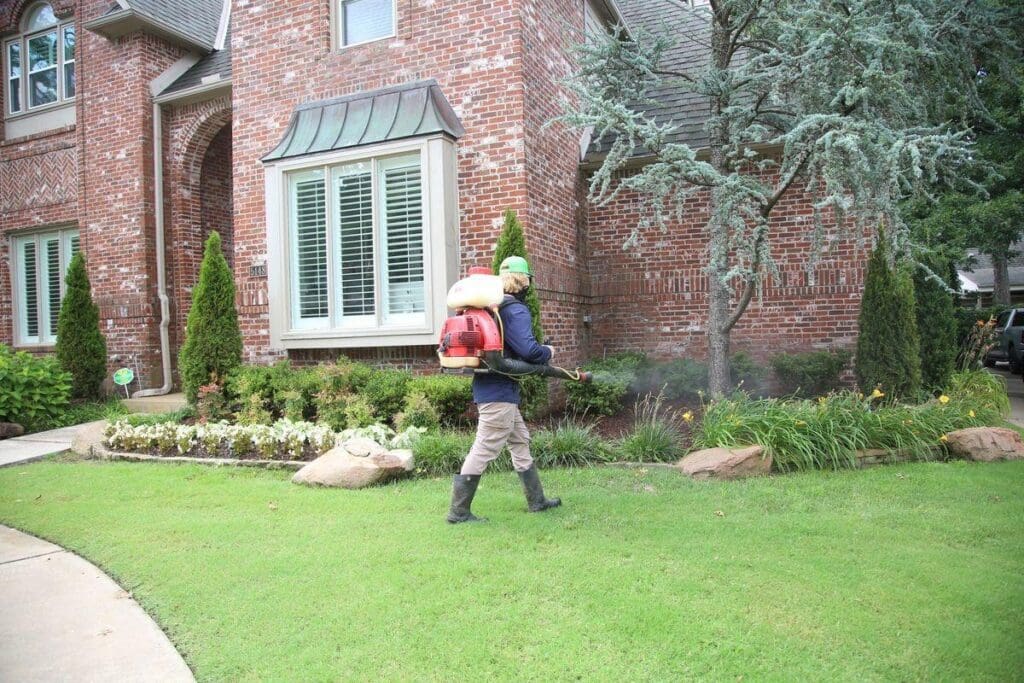
Image: A Complete Lawn Care mosquito control technician treating landscape beds and shrub areas where mosquitoes harbor during the day. Dense, irrigated landscaping attracts mosquitoes by providing both moisture and shade.
Dense Vegetation and Shade: Where Mosquitoes Hide All Day
Most people think of mosquitoes as a nighttime problem, and it is true that they are most active at dusk and dawn. But during the day, mosquitoes are not gone. They are resting in the cool, shaded areas of your yard, waiting for the temperature to drop and the sun to fade so they can emerge and feed.
Overgrown shrubs and hedges. Dense, untrimmed shrubs create the humid, shaded microclimate that mosquitoes seek. The interior of a thick boxwood hedge or an overgrown holly can be 10 to 15 degrees cooler than the surrounding air on a hot summer day. That temperature difference is exactly what mosquitoes are looking for. They tuck into the undersides of leaves and rest there until conditions are favorable for feeding.
Ground cover and dense bed plantings. Hostas, liriope, ivy, pachysandra, and other ground covers that create a thick, low canopy hold moisture and block airflow at ground level. These areas stay cooler and damper than open lawn, making them preferred resting spots. If you have extensive ground cover beds, particularly in shaded areas or along the north side of your house, those are prime mosquito harborage zones.
Tall, unmowed grass. Grass that is allowed to grow too tall holds more moisture and provides more cover for resting mosquitoes. This is one of the many reasons consistent mowing at the proper height matters for more than just appearance. A well-mowed lawn dries faster after rain, allows more airflow at the soil level, and provides fewer hiding spots. At Complete Lawn Care, our weekly mowing service maintains Bermuda at 1.5 to 2.5 inches and Fescue at 3 to 3.5 inches, both of which help reduce the kind of dense, moist conditions mosquitoes prefer.
Mature tree canopy. Large trees provide shade that keeps the ground and vegetation beneath them cool and moist for much of the day. While you are not going to remove your mature trees to reduce mosquitoes (nor should you), understanding that tree canopy creates mosquito-friendly conditions helps explain why heavily treed properties tend to have worse mosquito problems. It also explains why professional barrier treatments focus heavily on treating the vegetation under and around tree canopies.
Leaf litter and mulch beds. Decomposing leaves and thick mulch retain moisture and create cool, humid conditions at ground level. Keeping leaves cleared from beds during the growing season and maintaining mulch at a reasonable depth (2 to 3 inches rather than 6 inches) helps reduce the moisture that attracts resting mosquitoes.
The common thread is moisture and shade. Anything on your property that stays cool, damp, and protected from direct sun during the hottest part of the day is attractive to mosquitoes. You do not need to eliminate your landscaping. But keeping it maintained, trimmed, and open to airflow makes a meaningful difference.
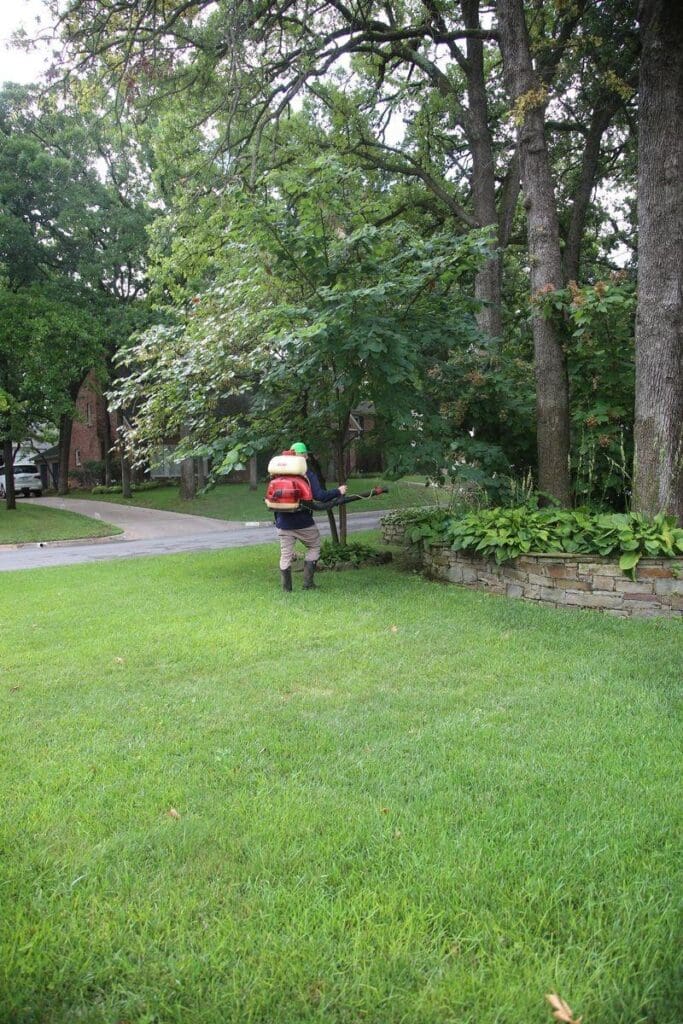
Image: A Complete Lawn Care technician treating mature tree canopy, ground cover, and stone landscape beds. Shaded, densely vegetated areas are prime mosquito resting habitat and the primary target of barrier treatments.
What Attracts Mosquitoes to You Personally
In addition to the property-level attractants, individual factors determine why mosquitoes seem to prefer some people over others. You cannot change most of these, but understanding them helps explain why you might feel like mosquitoes target you specifically.
Carbon dioxide. Mosquitoes can detect the carbon dioxide you exhale from more than 150 feet away. It is their primary long-range signal for finding a host. People who are physically larger or who are exercising (breathing harder) produce more CO2 and attract mosquitoes from a greater distance. This is also why outdoor gatherings attract more mosquitoes. A group of people on a patio produces a concentrated CO2 plume that mosquitoes can track from across the yard.
Body heat. At closer range, mosquitoes home in on body heat. They have heat-sensing organs that help them locate exposed skin where blood is close to the surface. This is why they tend to bite ankles, wrists, and the back of the neck, areas where blood vessels are near the skin and heat radiates easily.
Skin bacteria and body odor. The specific bacteria on your skin produce chemical compounds that mosquitoes find more or less attractive. Research has shown that people with a higher diversity of skin bacteria tend to be less attractive to mosquitoes, while people with high concentrations of certain types are more attractive. This is largely genetic and not something you can easily change, which is why some people genuinely do get bitten more than others.
Sweat and lactic acid. Physical activity produces lactic acid and other compounds in your sweat that attract mosquitoes. If you are exercising, mowing your lawn, gardening, or playing with your kids in the yard, you are producing the exact chemical signals that mosquitoes are designed to detect. This is one reason mosquitoes seem to appear the moment you start doing yard work.
Dark clothing. Mosquitoes are visually attracted to darker colors. Dark blue, black, and red clothing stands out against the lighter background of a yard and helps mosquitoes locate you visually. Wearing lighter-colored clothing during peak mosquito activity can make you slightly less visible to them.
Alcohol consumption. Studies have shown that drinking beer or other alcohol increases your attractiveness to mosquitoes. The exact mechanism is not fully understood, but it may relate to changes in skin temperature, CO2 output, or chemical compounds in sweat after drinking. If you are hosting a backyard barbecue with cold beverages on a warm Oklahoma evening, you and your guests are creating ideal conditions for mosquito attention.
Why Tulsa-Area Properties Are Especially Attractive to Mosquitoes
Oklahoma’s climate and the way most Tulsa-area residential properties are designed create a nearly perfect combination of mosquito attractants.
Oklahoma’s clay soil creates drainage problems. Heavy clay soil does not absorb water quickly. After a storm, water sits on the surface and in low spots longer than it would in sandier soils. This creates extended breeding windows after every significant rain event. Many Tulsa-area neighborhoods, particularly those in south Tulsa, Broken Arrow, Bixby, and Jenks built on heavy clay, deal with standing water issues that directly fuel mosquito populations.
Mature neighborhoods have ideal vegetation. Established neighborhoods throughout Tulsa, Midtown, south Tulsa, parts of Broken Arrow and Owasso, have large trees, mature landscaping, and dense shrub beds that provide exactly the shaded, humid resting habitat mosquitoes need. These neighborhoods are beautiful, but from a mosquito’s perspective, they are also paradise.
Spring and summer storms are frequent and intense. Oklahoma does not get gentle, steady rain. We get heavy downpours that dump an inch or more in a short period, filling every low spot, container, and drainage area on your property. These storms happen regularly from April through September, providing a continuous supply of fresh breeding water throughout the entire mosquito season.
Warm temperatures persist for seven months. Mosquitoes need sustained warmth to complete their life cycle. With temperatures above 50 degrees from roughly March through October in the Tulsa area, mosquitoes have an exceptionally long active season compared to many parts of the country. During peak summer months (June through August), the heat accelerates their development from egg to adult to as little as 7 to 10 days.
Irrigation systems create artificial moisture. Well-irrigated lawns and landscapes are healthier, but they also maintain the moisture conditions that mosquitoes seek. If irrigation is running too frequently, creating runoff, or producing standing water anywhere on the property, it is contributing to the mosquito problem. This is one reason Complete Lawn Care’s approach of managing irrigation, mowing, and mosquito control together produces better results. We can identify and correct irrigation issues that are inadvertently making your mosquito situation worse.
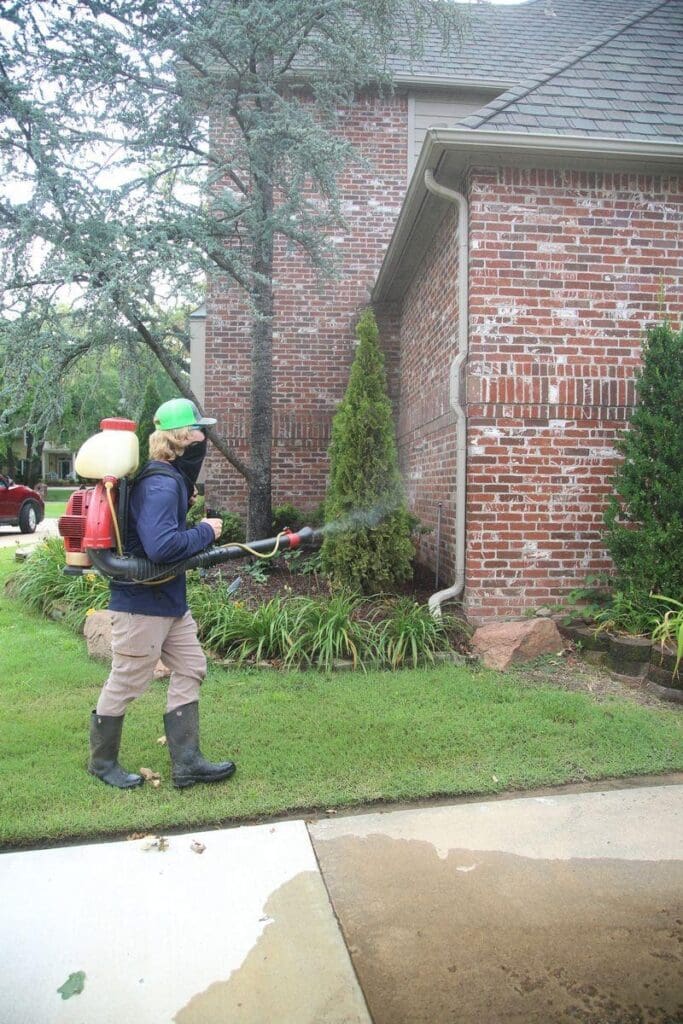
Image: A Complete Lawn Care technician applying a barrier treatment to a foundation corner and landscape bed. Professional mosquito control targets the specific areas on your property where mosquitoes are attracted to rest.
How to Make Your Yard Less Attractive to Mosquitoes
You cannot make your property completely invisible to mosquitoes, but you can significantly reduce its appeal by addressing the two attractants you can control: standing water and vegetation conditions.
Do a standing water audit after every rain. Walk your entire property within 24 hours of a rain event and dump, drain, or correct anything holding water. Check gutters, flower pot saucers, toys, grill covers, low spots, and anywhere else water collects. Make this a routine, not a one-time event. New breeding sites appear after every storm.
Keep your lawn mowed consistently. A well-maintained lawn at the proper height dries faster, provides fewer hiding spots, and reduces the ground-level humidity that mosquitoes seek. This is one of the most straightforward things you can do. Weekly mowing throughout the growing season makes a measurable difference.
Trim shrubs and thin dense vegetation. You do not need to remove your landscaping. But keeping shrubs trimmed so air can circulate, thinning out overly dense ground cover, and removing lower branches that create dark, sheltered pockets all help reduce harborage. The goal is to open things up so more sunlight and airflow reach the areas where mosquitoes like to rest.
Fix drainage issues. If you have areas of your yard that consistently hold water for more than 48 hours after rain, that is a mosquito factory. Addressing drainage through grading, French drains, dry creek beds, or other solutions eliminates a permanent breeding source. This is an investment, but it pays off in both mosquito reduction and overall property health.
Check your irrigation system. Make sure your system is not overwatering, creating runoff, or producing standing water. Broken heads that spray onto hardscape and pool, zones that run too long, and poor drainage around spray patterns all contribute to standing water. Our irrigation team can identify and correct these issues.
Use mosquito dunks in water you cannot eliminate. For standing water sources you cannot drain, like drainage ditches, retention features, or low spots that take days to dry, Bti mosquito dunks kill larvae without harming pets, fish, birds, or other wildlife. They are available at any garden center and are an effective homeowner tool.
Add professional barrier treatments. After you have addressed standing water and vegetation conditions, professional mosquito control treatments every three to four weeks provide the additional layer of protection that eliminates the adult mosquitoes resting on your property. Homeowner source reduction and professional barrier treatments work together. One without the other produces lesser results. Together, they produce the dramatic reduction that makes your backyard comfortable again.
With over 25 years of experience serving the Tulsa area, Complete Lawn Care understands what attracts mosquitoes to Oklahoma properties because we see it every day. Our approach goes beyond just spraying: we manage the mowing, landscaping, irrigation, and turf care that directly affect mosquito conditions on your property, along with targeted barrier treatments that address the adult population. Our agronomy support allows us to make smarter corrections, faster, and our programs are continually refined based on real-world results and the specific conditions we see each season.
Make Your Yard Less Attractive to Mosquitoes
Complete Lawn Care’s mosquito control program combines targeted barrier treatments with the full-service property management that reduces mosquito habitat in the first place. Our 7-step lawn care program, weekly mowing, landscape maintenance, and irrigation service all work together to make your yard less inviting to mosquitoes and more enjoyable for your family. No contracts. No subscriptions. Serving Tulsa, Broken Arrow, Bixby, Jenks, Owasso, and Sand Springs.
Call us today: (918) 605-4646
Get a Free Quote at completelawncaretulsa.com
Experience. Science. Intentional Lawn Care. That’s the Complete Lawn Care Difference.