
Complete Lawn Care • April 2026 • Tulsa, OK
Short Answer: The clearest signs that your Tulsa lawn needs professional help are: weeds that keep coming back no matter what you do, thin or bare areas that never fill in, recurring brown patches or circles, yellowing that does not respond to watering, and soil so compacted that water pools on the surface instead of soaking in. Each of these signs points to a specific underlying issue that generic DIY approaches rarely fix. If your lawn has shown any of these problems for more than one season, a professional diagnosis and targeted program will almost certainly produce better results than continuing the current approach. Here is what each sign means and what to do about it.
If you are reading this, chances are you are looking at your lawn and something is not right. Maybe the weeds came back worse than last year. Maybe there are patches that never seem to recover. Maybe the neighbors’ lawns look noticeably better and you cannot figure out why.
We see the same five patterns on Tulsa metro lawns repeatedly, and each one tells us something specific about what is going wrong. Here are the signs that usually mean a lawn is past the point where a bag of fertilizer from the store is going to solve the problem.
1. Weeds Keep Coming Back No Matter What You Do
If you spent last summer spraying weeds and this spring they are back in full force, the issue is almost never the product you used. It is the timing and the lack of a pre-emergent foundation.
Here is what is actually happening: most weeds that plague Tulsa lawns are annuals that grow from seed each year. Spraying the visible plants kills the current generation but does nothing about the seeds already in the soil waiting to germinate. Without a pre-emergent barrier applied at the right time (late winter through early spring), you spend the entire year chasing weeds that keep coming back.
A professional program prevents weed pressure rather than just reacting to it. Pre-emergent in February and March stops most of the weeds before they germinate, and targeted post-emergent treatments handle the few that break through. The difference in weed pressure between a well-managed program and a reactive approach is dramatic.
2. Thin or Bare Areas That Never Fill In
Thin or bare spots in your lawn mean something is preventing the grass from establishing or recovering in that area. The causes vary:
Compacted soil in high-traffic zones. The grass literally cannot push roots into the compacted area.
Irrigation coverage gaps. If one part of the lawn consistently gets less water than the rest, it stays thin year after year.
Insect damage, especially chinch bugs and grubs. These pests kill grass faster than it can regrow, leaving persistent thin areas.
Shade stress. Warm-season grasses like Bermuda will thin out in areas that receive too little sun, and no amount of fertilizer will fix it.
Fungal disease. Certain fungi create persistent thin or dead zones that require specific treatment to resolve.
A professional assessment identifies which of these is affecting your lawn and targets the actual cause. Throwing grass seed on thin areas without addressing the underlying issue just wastes seed.
3. Recurring Brown Patches or Circles
Brown patches that appear in the same general areas year after year usually indicate fungal disease, typically brown patch fungus in cooler months and other diseases during summer. These fungi overwinter in the soil and re-emerge when conditions favor them.
Brown spots can also indicate insect damage, especially if they expand over a few weeks during summer. Chinch bug damage looks almost identical to drought stress, which leads many homeowners to water more when the actual fix is insect control.
Professional diagnosis matters here because the treatment is completely different for disease versus insects versus drought. Treating the wrong cause wastes time and money while the actual problem continues spreading.
4. Yellowing That Does Not Respond to Watering
If your lawn is yellow and watering does not green it up, the problem is probably not water. Common causes of yellowing in Tulsa lawns include iron deficiency caused by alkaline soil pH, nitrogen deficiency from missed or inadequate fertilization, disease, and excessive soil compaction limiting nutrient access.
The color of yellowing often tells you what is happening. Uniform pale yellow across the whole lawn usually means nitrogen deficiency. Yellow with green veins points to iron chlorosis. Yellow patches in specific areas often indicate localized problems like poor drainage or disease.
A soil test and a professional visual assessment quickly identify which is the likely cause, and the treatment follows from there. Adding more water or more nitrogen to a lawn that needs iron just does not work.
5. Water Pools on the Surface Instead of Soaking In
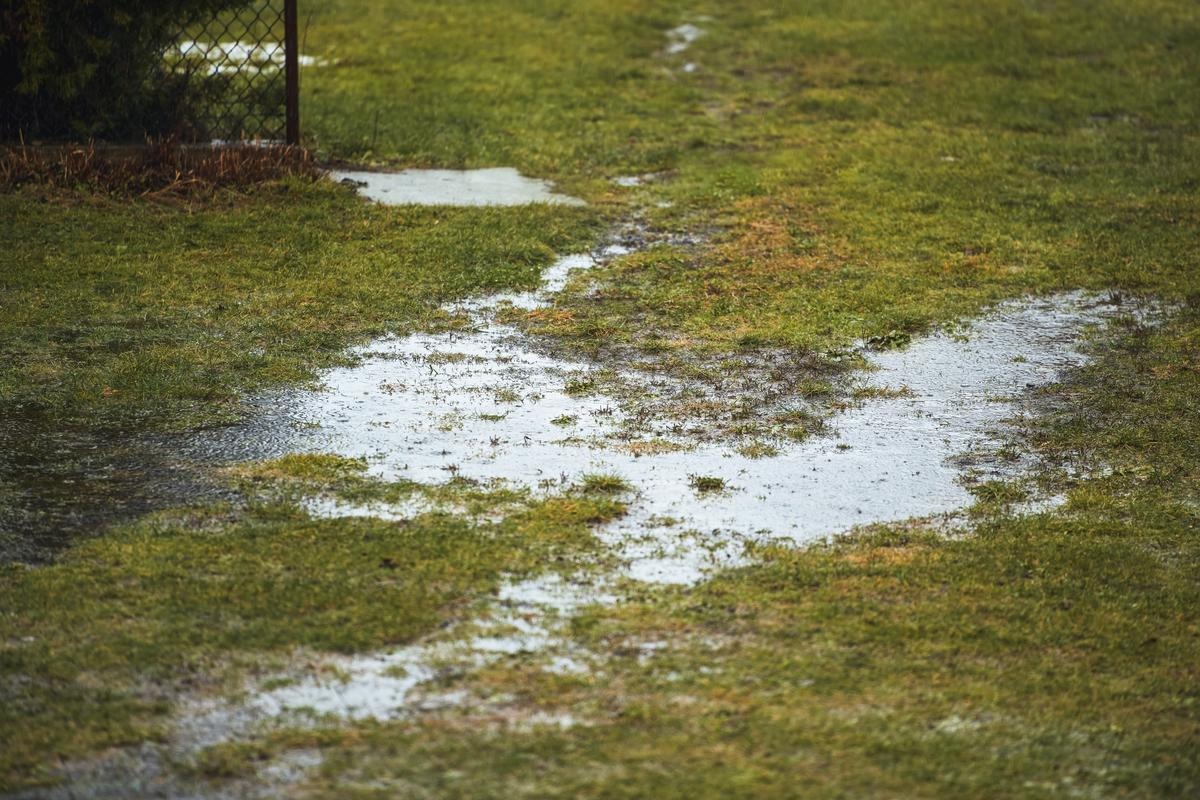
If your sprinkler runs for 15 minutes and you see water pooling on the grass or running off into the driveway, your soil is too compacted to absorb water at the rate it is being applied. This is extremely common in Oklahoma because our clay soil compacts easily.
The consequences compound. Water that runs off does not reach the roots, which means the lawn is chronically under-watered even if you are running the sprinklers as much as your neighbor. Nutrients applied to the surface also run off rather than penetrating to where the grass can use them.
The fix is core aeration combined with soil amendments. Once the compaction is relieved and soil structure starts improving, water absorbs properly, and everything else about lawn care works better.
What These Signs Have in Common
Each of these five signs points to an underlying issue that generic DIY approaches do not address. Buying a different bag of fertilizer or spraying more weed killer does not fix compacted soil, shade stress, alkaline pH, insect pressure, or disease. These are diagnosable, treatable conditions, but only if the diagnosis is accurate.
This is where professional service earns its value. A trained eye can identify most of these issues in a single walk-through of the property, and a targeted program addresses the actual cause rather than treating symptoms.
The pattern we see most often goes like this: a homeowner notices one of these signs in April, tells themselves they will address it when it gets worse, and by July they are dealing with two or three problems stacked on top of each other instead of one. Early is almost always cheaper and faster than waiting.
What to Do Next
If any of these signs sound familiar, do not let your Tulsa lawn struggle through another season of doing the same thing and hoping for different results. Give us a call at (918) 605-4646 or request a quote online. Here is what to expect: we respond the same day, use satellite imaging to measure and assess your property (no walkthrough required, though if you want us on site we can usually be there same day or next), and send you a customized quote within a few days. If it is a fit, your first service is typically within a week. No contracts. Cancel anytime. Your lawn can be better than it is. It just needs the right approach.