Why Does Water Keep Running After My Sprinkler Zone Shuts Off?
Water continuing after a zone shuts off is almost always one of two things: low-head drainage or a stuck-open zone valve. Low-head drainage is not a system failure — it is gravity moving water through the lowest sprinkler heads on a sloped zone circuit after the valve closes, and it stops on its own within 30 to 90 minutes. A stuck-open valve is a mechanical failure that runs until it is repaired or the water supply is manually closed. The key to telling them apart is simple: low-head drainage affects only the lowest heads on a zone and produces a trickle or drip, not full-pressure spray. A stuck-open valve runs the entire zone at full pressure indefinitely. Confirming which situation you have takes one observation cycle — watch which heads are running, note whether the water is a trickle or full spray, and check whether it eventually stops on its own.
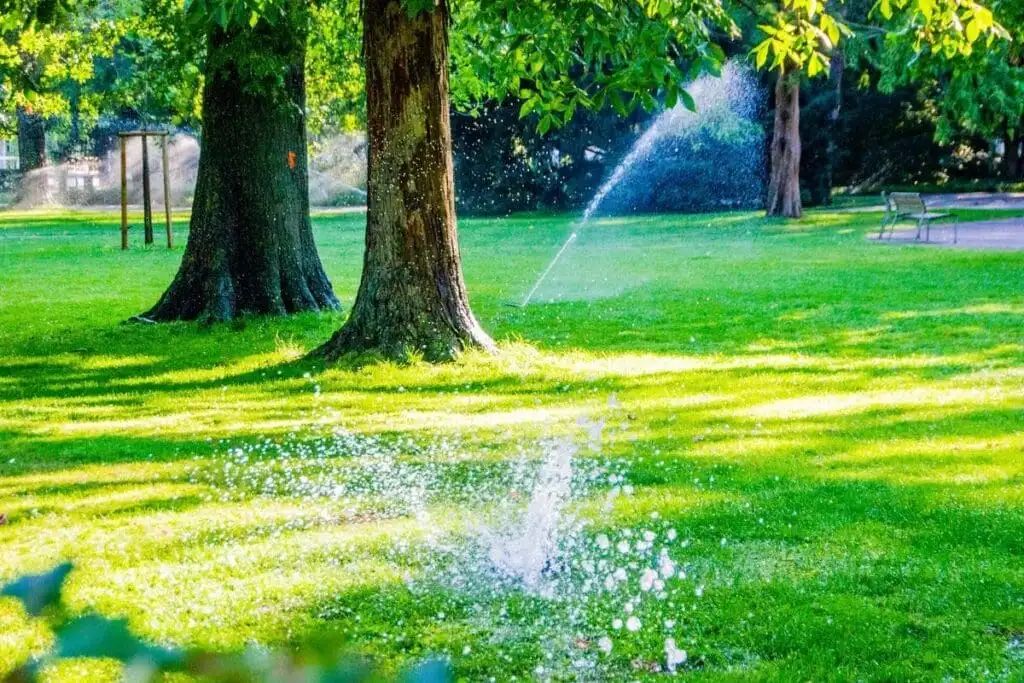
Active sprinkler operation in an open turf area — when water continues at this pressure level after the zone controller has shut off, the zone valve has failed to close. A stuck-open valve runs the zone continuously at full operating pressure until the valve is manually shut down by closing the main irrigation supply. Low-head drainage — the other common cause of post-cycle water — looks completely different: a slow trickle from one or two heads at the lowest point of the zone, draining down to nothing over 30-90 minutes.
Cause 1: Low-Head Drainage (The Most Common Cause)
Low-head drainage is the most frequent explanation for water appearing after a zone shuts off, and it is frequently mistaken for a valve failure. Understanding what it is and why it happens makes the diagnosis clear:
When a zone valve closes at the end of a cycle, water remains in the supply pipe for that zone — the pipe does not instantly empty. On a flat yard, this water stays in the pipe and gradually dissipates through normal system processes. On a sloped yard — which describes the majority of residential lots in Tulsa, Broken Arrow, Bixby, Jenks, and the surrounding area — gravity pulls this water downhill through the pipe and out through the lowest sprinkler heads on the circuit. The heads at the low end of the zone become a drainage point for the water sitting in the pipe above them.
The tell-tale pattern of low-head drainage: one or two heads at the lowest elevation on a zone seep, trickle, or drain for 30 to 90 minutes after the zone turns off, then stop completely on their own. The water coming out is not under pressure — it is gravity flow, typically a trickle or a slow drip rather than a spray pattern. The other heads on the zone, particularly those at higher elevations, do not drain because water flows downhill and they are above the drainage point.
Low-head drainage creates real problems even though it is not a valve failure:
The fix for low-head drainage is installing check valve heads at the drainage locations. Check valve heads contain a spring-loaded internal check valve that holds water in the line when the zone closes, preventing gravity drainage. The replacement is a direct swap — remove the existing head at the drainage location, install a check valve version of the same head model. No riser or wiring work is required. After replacement, run the zone and confirm the previously draining heads no longer seep after shutoff.
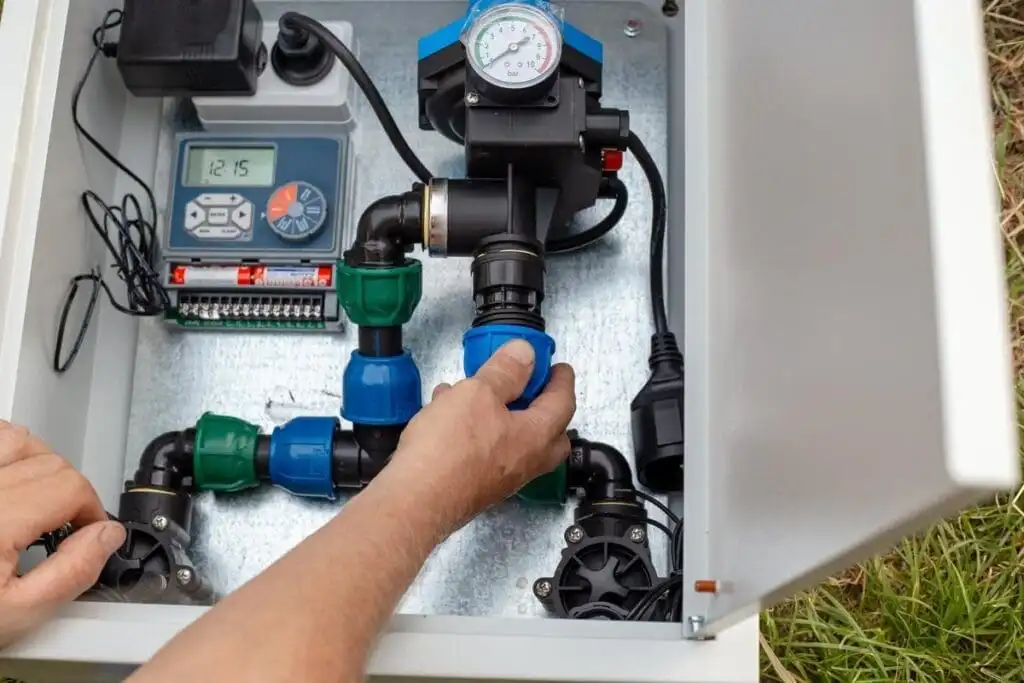
An irrigation controller and valve assembly showing how zone valve function connects to controller output. When a controller sends the shutoff signal and the valve closes normally, water flow stops immediately. When the valve diaphragm fails to seat properly — either from debris, diaphragm wear, or a failed valve body — the valve stays open after receiving the shutoff signal and the zone continues to run. The fix begins at this assembly: manually closing the supply to stop the flow, then replacing the diaphragm or valve.
Cause 2: Stuck-Open Zone Valve
A zone valve that fails to close when the controller sends the shutoff signal runs the zone continuously until the water supply is manually interrupted. This is a genuine mechanical failure, and unlike low-head drainage, it does not resolve on its own. A stuck-open valve left unaddressed runs indefinitely — overnight, through weekends, or as long as the water supply is on.
How to confirm it is a stuck-open valve rather than low-head drainage:
Immediate action when you confirm a stuck-open valve: close the main irrigation supply valve (located at the backflow preventer or the irrigation supply shutoff near the meter) to stop water flow. Do not rely on the controller to resolve it — if the valve has failed mechanically, the controller cannot close it. Shutting the main supply is the only way to stop a stuck-open valve without replacing it.
What Causes a Valve to Stick Open?
Debris under the diaphragm seat. The most common cause of a valve stuck open is a small piece of debris — sand, grit, mineral scale from Tulsa-area hard water, or a fragment of pipe material from a recent repair — caught between the valve diaphragm and its seat. When debris prevents the diaphragm from seating fully, water bypasses the closed diaphragm and the zone runs even with the solenoid off. This is also the most fixable cause: flushing the valve by opening the manual bleed at full system pressure for three to five seconds often clears the debris and restores normal valve function. If the valve closes normally after a flush, no replacement is needed — but if the debris problem recurs, a valve body inspection or replacement is appropriate.
Failed or hardened diaphragm. The rubber diaphragm inside the valve body flexes thousands of times over a system's life and eventually hardens, tears, or loses its ability to seat properly. A diaphragm that does not fully seat allows water to pass even when the solenoid is de-energized. On Tulsa-area systems installed in the late 1990s through mid-2000s, diaphragm failures from age are increasingly common. Diaphragm replacement is a serviceable repair — most residential irrigation valve diaphragms are available for $5 to $15 at irrigation supply stores in the area and are replaced by unscrewing the valve top cap and swapping the diaphragm.
Freeze-damaged valve body. Oklahoma's winter freeze events damage valve diaphragms and valve bodies in systems that were not properly winterized. Ice forming inside the valve housing cracks the diaphragm or distorts the valve seat, preventing a clean close. Freeze damage to a valve often does not produce a stuck-open condition until the following spring when the system is pressurized and the damaged diaphragm is asked to close under pressure for the first time. Spring startup is the most common time for freeze-related valve failures to appear in Tulsa, Broken Arrow, and the surrounding area.
Solenoid failure in the open position. Less commonly, the solenoid itself can fail in the energized (open) position — mechanically holding the valve pilot port open even though the controller has sent the shutoff signal. This is distinguishable from a diaphragm failure by testing: if manually closing the bleed screw stops the flow, the solenoid is the culprit, not the diaphragm. A solenoid replacement resolves this without requiring diaphragm or valve body work.
Cause 3: Controller Programming Running Zone Twice
A less obvious cause of water appearing after a zone "shuts off" is the controller running the same zone a second time due to overlapping program settings. Many residential controllers allow multiple programs (Program A, Program B, Program C) and multiple daily start times within each program. If the same zone is programmed in more than one program, or if two start times are set so close together that the second cycle begins while the first is still draining, the zone appears to continue running after shutoff — because it has restarted on a different program or start time.
This is easy to check: open the controller and review all programs and start times for the zone in question. Confirm there is only one program with one start time assigned to each zone. Delete any duplicate programs or extra start times. On controllers with a "seasonal adjust" feature, confirm the adjustment is not extending run times enough to overlap.
Controller programming issues are more common after power outages, battery replacement, or when a previous homeowner or landscaper set up multiple programs and those settings were inherited by the current homeowner without review.
Cause 4: Rain Sensor Bypassed During a Zone
Rain sensors are wired into the irrigation controller to prevent zones from running during or after rainfall. When functioning correctly, a triggered rain sensor overrides the controller and prevents all zones from activating. But a rain sensor that is wired incorrectly, malfunctioning, or installed on a zone circuit that bypasses the sensor can create unexpected behavior — including zones that appear to continue running when the controller has signaled them to stop, because the sensor signal is interfering with normal shutoff logic.
If water continuing after shutoff began shortly after a rain sensor was installed or replaced, inspect the sensor wiring at the controller. The sensor should be wired to the designated sensor terminals (labeled "SEN," "SENSOR," or "RAIN" depending on the controller brand), not to zone terminals. A sensor wired to a zone terminal can interfere with that zone's normal operation in ways that are difficult to diagnose without checking the wiring directly.
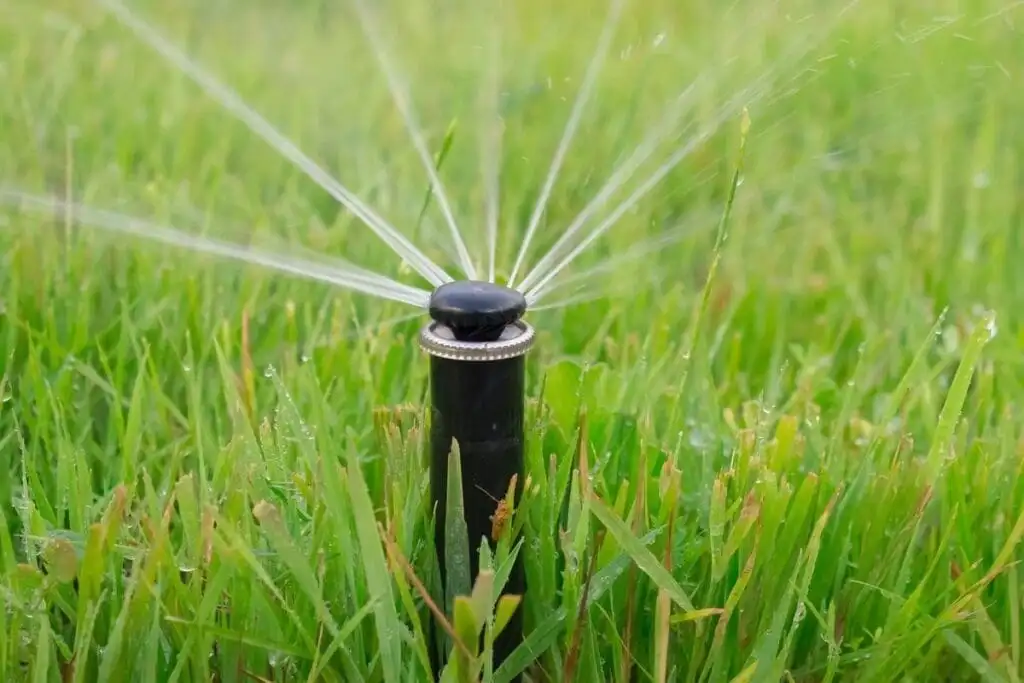
A fixed-spray pop-up head at full rise during normal operation — when a zone is supposed to be off but this head continues to run at full pressure, the zone valve has failed to close. When the same head type produces only a slow trickle after the zone shuts off, low-head drainage is the cause. The pressure and volume of the post-shutoff water is the fastest visual distinction between these two very different problems with very different solutions.
The Damage a Stuck-Open Valve Causes to Your Lawn
A zone valve that sticks open for extended periods does more than waste water — it creates chronic overwatering conditions that damage lawn health in ways that are not immediately obvious but accumulate across a season. This is especially relevant for Bermuda and Zoysia lawns in the Tulsa area, where overwatering is just as damaging as drought stress.
On Tulsa-area clay soil, a zone that runs continuously saturates the soil well beyond the grass root zone. Saturated clay soil loses oxygen — anaerobic conditions develop in the root zone that promote fungal disease, shallow rooting, and turf decline. Crown rot, pythium blight, and dollar spot all thrive in overwatered conditions and are common consequences of irrigation system failures that go undetected.
Overwatered lawns also develop moss, algae, and weed pressure in the affected zones. Pre-emergent effectiveness is reduced in chronically wet areas because the application washes off or breaks down faster than it would in properly watered conditions. Post-emergent applications are diluted and less effective. Fertilizer applications wash past the root zone in saturated soil rather than being absorbed. A stuck-open valve that runs undetected for even a week or two creates lawn health problems that take weeks to recover from.
This is why Complete Lawn Care recommends annual spring startup inspections for every irrigation system in our service area. Running each zone systematically and observing shutoff behavior catches stuck-open valves and persistent low-head drainage before they damage the lawn or inflate the water bill across an entire season. Our science-based, agronomy-supported approach to lawn care relies on irrigation performing correctly — because even the best fertilization and treatment program produces inconsistent results on a lawn that is being chronically over- or under-watered.
When to Repair It Yourself vs. Call a Professional
Both low-head drainage and stuck-open valve repairs are within DIY capability for most homeowners:
Call for professional irrigation service when:
Post-Shutoff Water Behavior: Quick Diagnosis Reference
Matching what you observe to the most likely cause:
Irrigation Service and Lawn Care in Tulsa and the Surrounding Area
For more than 25 years, Complete Lawn Care has been a trusted lawn care and irrigation service provider throughout Tulsa, Broken Arrow, Bixby, Jenks, Owasso, and Sand Springs. We believe great results come from experience, science, and continual improvement — and that includes irrigation, because a system that is overwatering, underwatering, or running when it should not be directly limits the effectiveness of every lawn care application we make.
We invest in leadership training, research and development, and product testing to ensure our team stays current on the latest turf and irrigation service methods. Our agronomy-supported program guides timing and decision-making based on proven science, not guesswork. When irrigation is not performing correctly, we identify the actual cause and fix it — because patching symptoms without addressing causes is not how we operate.
Our programs are continually refined based on real-world results. We adjust throughout the season because turf conditions, weather, and soil biology are always changing. Experience tells us what to do. Science tells us when and why.
Water running after shutoff: common questions
Why is my sprinkler system off but water is still running?
How do I tell low-head drainage from a stuck valve?
What causes a sprinkler valve to stick open?
How do I stop my sprinklers when they will not shut off?
Can a stuck-open valve damage my lawn?
Water Running After Your Zone Shuts Off?
Contact Complete Lawn Care at completelawncaretulsa.com or call (918) 605-4646. We serve Tulsa, Broken Arrow, Bixby, Jenks, Owasso, and Sand Springs and will diagnose what is happening and fix it correctly.
Experience. Science. Intentional Lawn Care — That’s the Complete Lawn Care Difference.