Does Aeration Fix Drainage Problems? The Honest Answer for Tulsa Yards
Core aeration solves compaction-driven drainage issues on Tulsa's heavy clay soils — but it won't fix grade problems, incoming surface water, or subsurface failures. Knowing which situation you have determines whether aeration is your answer.
Core Aeration in Action on Tulsa Clay
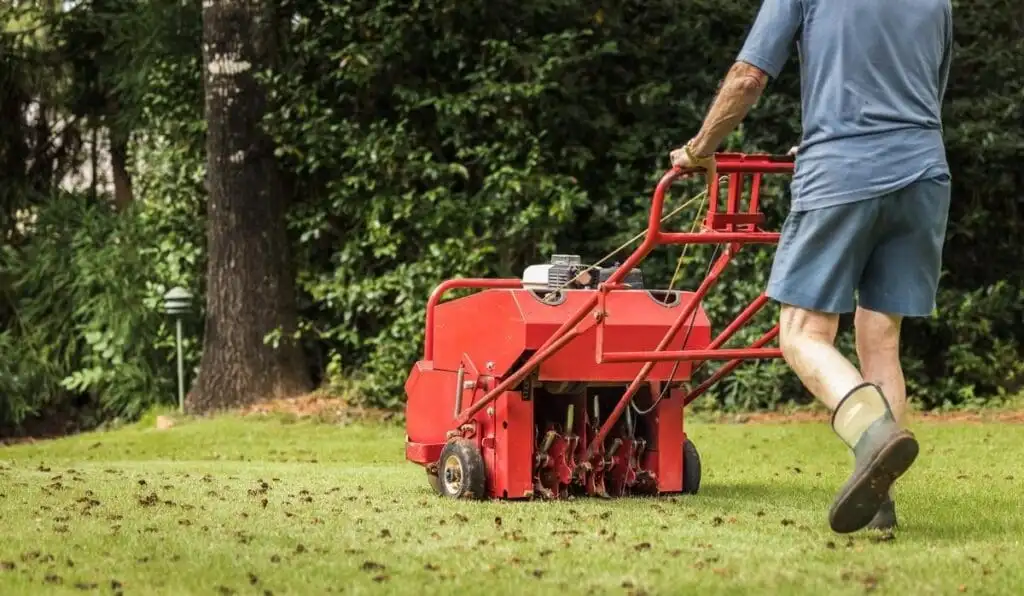
Core aeration in progress — a walk-behind aerator pulling soil plugs from a lawn. The hollow tines penetrate 2–3 inches into the soil and eject cylindrical cores onto the surface, leaving channels that allow water, oxygen, and nutrients to reach the root zone. On Tulsa's clay-heavy soils, this process significantly improves water infiltration in compacted areas, often reducing post-rain standing water time by 30–50 percent in affected zones.
Why Tulsa Yards Compact So Easily
The Tulsa metropolitan area sits primarily on expansive clay soils — the reddish clay found throughout the region. Clay soil particles are extremely small and pack tightly together, leaving very little pore space for air and water movement when compressed. A compacted clay soil can have infiltration rates close to zero, meaning water has virtually nowhere to go after falling on the surface.
Heavy Construction Equipment
New construction lots are graded with heavy equipment that compacts the soil profile to depths of 12 inches or more before the lawn is ever established.
Repeated Mowing Traffic
Repeated mowing with heavy commercial equipment adds compaction pressure in the same wheel tracks week after week, creating dense compacted lanes.
Foot Traffic Patterns
Children playing, dogs running fence lines, and entertaining on lawn areas concentrate compaction in predictable paths over three to five years.
What Core Aeration Actually Does to Soil
Core aeration uses hollow tines that extract a cylinder of soil and deposit it on the surface, physically removing material and creating genuine open channels. After a professional aeration pass, there are 20 to 40 holes per square foot — several thousand channels per thousand square feet of lawn.
Water Infiltration
Rain and irrigation water enter through channels rather than running off a sealed clay surface. Infiltration rate improves 30–50 percent after a single professional aeration on compacted clay.
Oxygen Delivery to Roots
Grass roots require oxygen, and compacted clay soil is oxygen-deficient. Aeration channels restore gas exchange between soil and atmosphere, supporting deeper root growth.
Fertilizer Pathway
Aeration channels allow fertilizer, lime, and soil amendments to reach root depth rather than washing away or sitting in the thatch layer.
Thatch Disruption
Soil cores on the surface contain beneficial microorganisms that accelerate thatch decomposition, further improving water infiltration over the weeks following aeration.
Commercial Equipment Makes the Difference
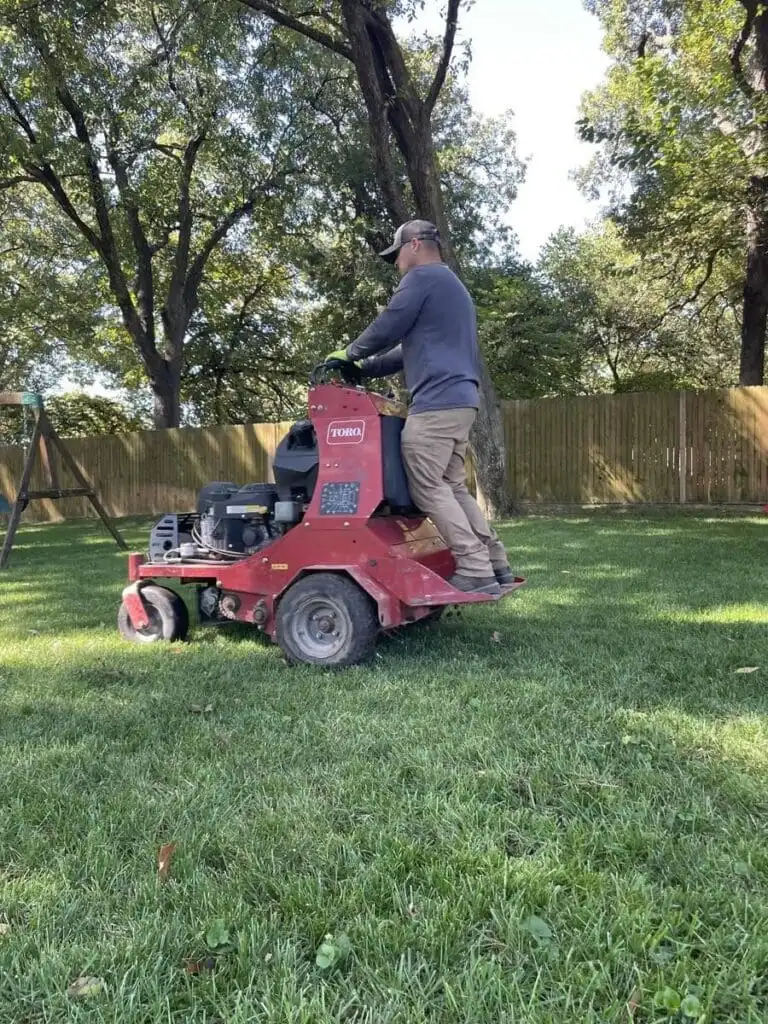
A Complete Lawn Care crew member operating a commercial Toro stand-on aerator in a Tulsa-area backyard. Commercial stand-on aerators penetrate more deeply and pull more cores per square foot than rental walk-behind units, producing better results on dense Oklahoma clay. The larger working width also completes the job more efficiently on typical residential lots.
When Aeration Will — and Will Not — Fix Drainage
There are four distinct causes of yard drainage problems, and aeration addresses only one of them directly.
✅ Compaction-Driven Standing Water
Water pools on flat or well-graded areas, drains within 24–48 hours, and occurs in high-traffic zones. Aeration produces the most dramatic improvement here — often significantly after a single treatment.
⚠️ Grade-Driven Drainage Issues
Water collects in a genuine topographic low point. Aeration helps reduce pooling duration but cannot change the grade. Top dressing, regrading, or drainage infrastructure may be needed.
❌ Flow-Driven Drainage Issues
Water arrives from a driveway, sloped area, neighbor's yard, or downspouts. Aeration cannot redirect arriving water. Channel drains, French drains, or regrading upslope are required.
❌ Subsurface Drainage Failure
Buried infrastructure failure, impermeable hardpan below the lawn, or subsurface decomposition. Aeration improves surface-layer conditions but cannot reach where these problems exist.
Aeration Timing for Oklahoma Lawns
Bermuda & Zoysia (Dominant Tulsa Lawns)
Optimal window: May through August — peak active growth phase. Aerating too late (September or October) can leave unhealed core holes entering dormancy, increasing winter weed pressure and slowing spring green-up. For drainage improvement, aerating in late spring puts the improvement in place before the peak Oklahoma summer rain season.
Tall Fescue (Shaded or Cooler Areas)
Aerate in fall — September through mid-October — when cool-season grass is in active growth and temperatures have dropped. Fall aeration on fescue is often combined with overseeding, with core holes providing ideal seed-to-soil contact for germination.
Soil Moisture at Time of Aeration
Aerating very dry, hard clay produces shallow core penetration. The ideal condition is moist but not saturated soil — typically one to two days after rain or irrigation. On very dry Tulsa clay in late summer, watering 24 hours before aeration improves penetration depth significantly.
Maximizing Aeration Results on Tulsa Clay
💧 Water the lawn 24 hours before aeration if soil is dry — this dramatically improves core depth.
🚩 Flag irrigation heads, valve boxes, and buried utilities before the aerator arrives.
🌱 Leave the cores on the surface — they break down in 2–3 weeks and return organic matter to the soil.
🪱 Apply compost top dressing immediately after aeration — the open channels carry it directly to root depth.
🌿 Fertilize within a week of aeration — nutrient uptake is significantly better through open channels.
📅 Annual aeration on Tulsa clay produces compounding improvement — results are noticeably better by year 3.
Professional Aeration in Tulsa's Classic Backyard Environment
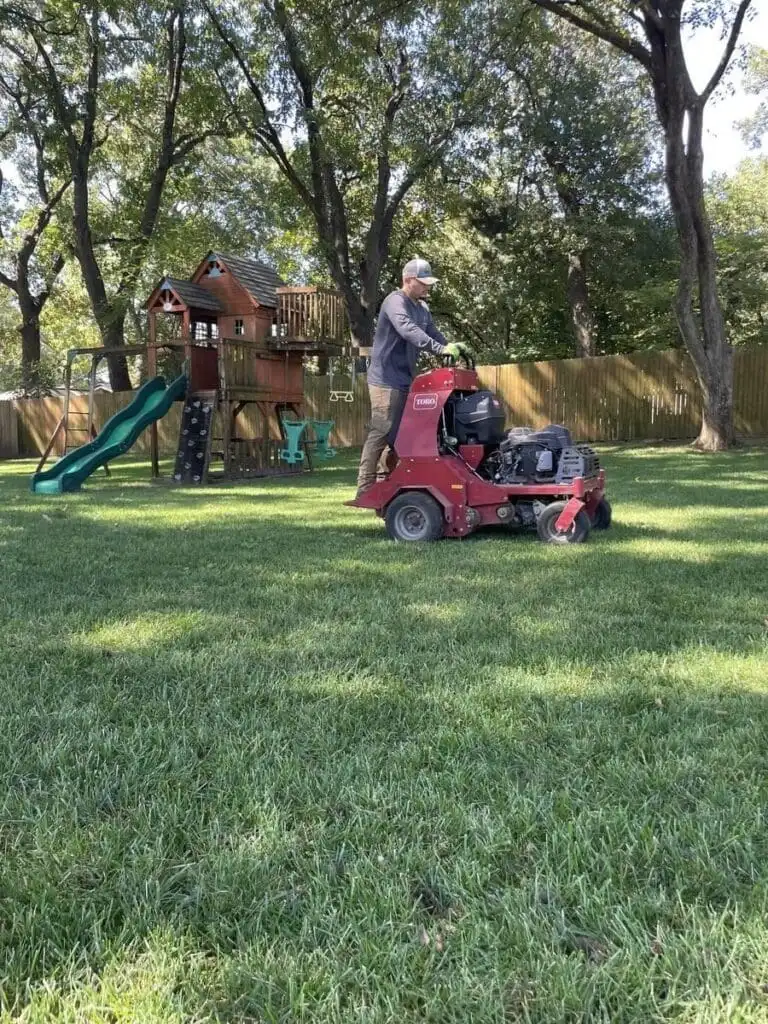
A Complete Lawn Care crew member aerating a Tulsa-area backyard with a commercial stand-on Toro aerator in fall — visible post oak and pecan trees overhead indicate the classic Tulsa backyard environment where clay soil, tree root competition, and seasonal rainfall extremes combine to create ongoing compaction challenges. Annual professional aeration is one of the most effective tools for managing long-term turf health in these conditions.
What to Do After Aeration for Best Drainage Results
The window immediately after aeration — when channels are open and the soil profile is temporarily more receptive — is the best opportunity for several complementary treatments.
Compost Top Dressing
Applying a quarter to half inch of quality compost immediately after aeration introduces organic matter into the channels. Clay amended with organic matter over multiple seasons develops measurably better drainage characteristics than unamended clay. Top dressing after annual aeration is the most practical way to introduce organic matter at depth.
Fertilization
Nutrients applied to a compacted lawn sit on the surface and are vulnerable to runoff. Fertilizing within a week of aeration, while channels are open, dramatically improves nutrient uptake and delivers amendments directly to root depth where they are most effective.
Ready to Improve Drainage on Your Tulsa Lawn?
Complete Lawn Care uses commercial stand-on Toro aerators that penetrate deeper and pull more cores than rental equipment — producing better results on dense Oklahoma clay. Annual aeration produces compounding improvement, with results noticeably better by year three.