Mulch Volcanoes Are Killing Your Trees
By the landscape experts at Complete Lawn Care | Serving Tulsa, Broken Arrow, Bixby, Jenks, Owasso, and Sand Springs
A mulch volcano is one of the most widespread and damaging landscape mistakes in residential yards across the Tulsa area. It looks intentional, it looks tidy — and it is slowly harming your trees. Here's what you need to know.
The Correct Approach vs. The Mulch Volcano
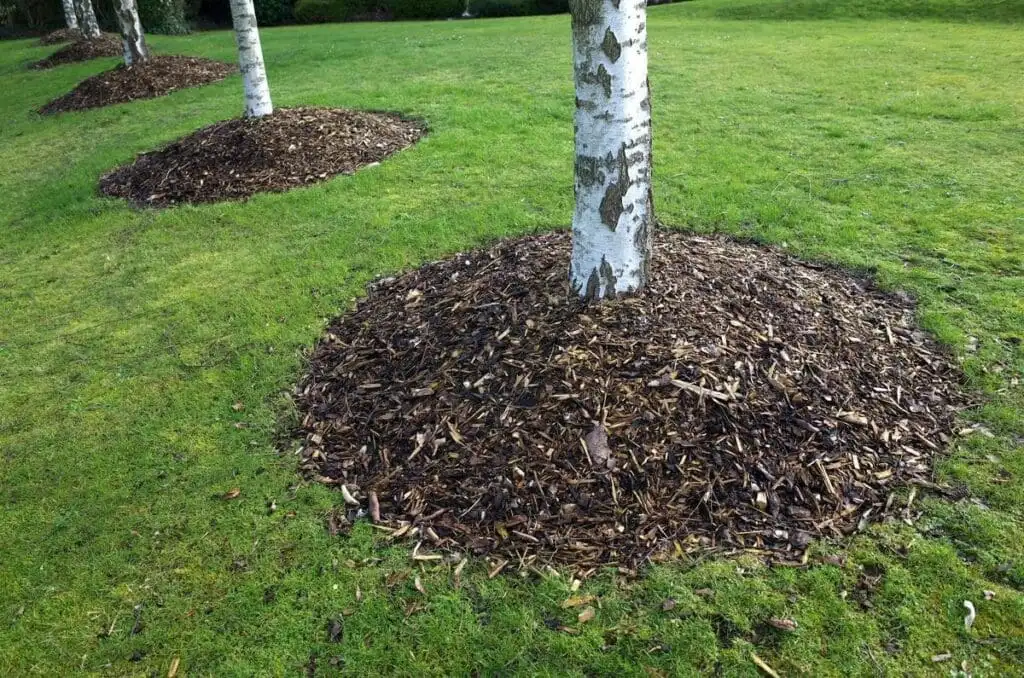
This is the correct approach: mulch applied in a flat, even ring with a clear gap kept around the trunk. The mulch extends outward to protect the feeder root zone without touching the bark.
What Does a Mulch Volcano Look Like?
The name is descriptive. A mulch volcano is a cone or mound of mulch — sometimes six, eight, or even twelve inches deep at the center — piled directly against the trunk of a tree and sloping outward from there. The trunk disappears into the mulch like a telephone pole buried in the ground. In some cases, years of successive spring mulching have built the mound up so gradually that the homeowner has no idea the original root flare of the tree is now buried under half a foot of decomposing material.
The root flare — also called the root collar — is the visible widening at the base of a tree where the trunk transitions into the root system. In a healthy, properly planted tree, the root flare is at or just slightly above the soil surface and visible from several feet away. When you approach a tree and the trunk appears to go straight into the ground like a fence post with no visible flare, you are either looking at a tree that was planted too deep or one that has been volcano-mulched for years. Neither is good for the tree's long-term health.
Why a Mulch Volcano Is Harmful — What Is Actually Happening Underground
The damage from volcano mulching is not immediately obvious because most of it happens at and below the soil surface, out of sight. Understanding the mechanisms makes it clear why the harm accumulates even when the tree looks fine from a distance.
Persistent Bark Moisture & Decay
Tree bark is not designed to stay wet indefinitely. When mulch is packed against the trunk, it holds moisture in constant contact with the outer bark. Over time, that sustained dampness softens and breaks down bark tissue, creating openings for fungal pathogens and bacteria. Cankers, lesions, and bark decay often begin at the mulch line before spreading upward.
Root Collar Rot & Girdling Roots
Excess mulch over the root collar keeps this critical zone in anaerobic, perpetually moist conditions. Disease-causing organisms move in, root collar tissue deteriorates, and secondary roots may circle back toward the trunk — eventually girdling it and cutting off the flow of water and nutrients as the tree grows.
Insect & Rodent Habitat
A deep mulch volcano creates ideal shelter for bark beetles, borers, and carpenter ants. The mound also provides winter cover for voles and field mice, which gnaw on bark and cambium tissue during cold months. In Oklahoma winters, rodent damage under mulch to young trees is a real and recurring problem.
Oxygen Deprivation at the Root Zone
A thick, compacted mulch volcano eventually blocks oxygen exchange at the soil surface. Roots become less efficient, more prone to disease, and less able to support the tree during drought or heat stress. For Tulsa-area trees navigating summers above 100°F, compromised root function is a meaningful factor in heat-related decline.
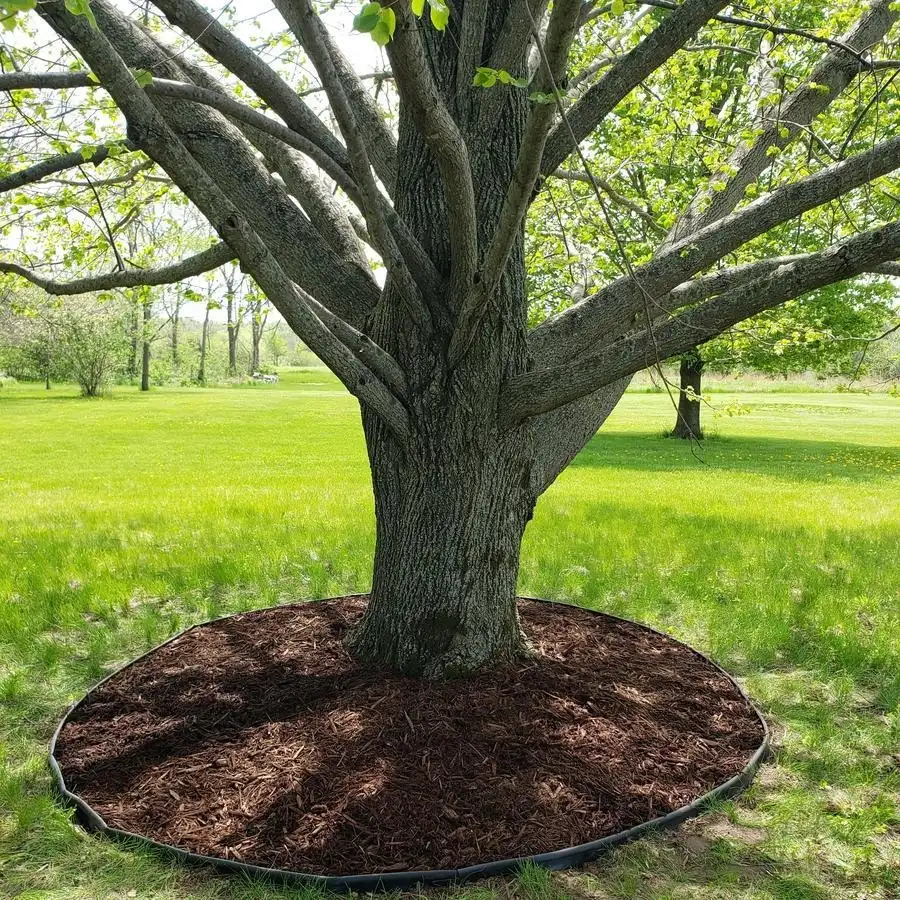
Mulch piled directly against tree trunks — a classic example of volcano mulching. The mulch contacts the bark rather than maintaining the recommended two-to-three-inch gap. This pattern, repeated season after season, causes cumulative damage that often isn't visible until the tree is already in serious decline.
Why Volcano Mulching Is So Common If It Is This Harmful
The Damage Is Slow & Invisible
A healthy, established tree can tolerate years of poor mulching before showing visible symptoms. By the time the canopy starts thinning or bark damage becomes noticeable, the underlying problem may have been developing for five or ten years.
It Looks Deliberate & Maintained
A neat cone of fresh dark mulch has the appearance of intentional landscaping. Homeowners copy it from commercial properties and neighbors without questioning whether it is actually correct. Landscaping crews who do it quickly reinforce the pattern at scale across neighborhoods.
The Correct Alternative Looks Less Dramatic
A flat mulch ring that stops short of the trunk quietly does its job without calling attention to itself. It does not photograph as impressively as a fresh volcano — but it is vastly better for the tree.
How to Fix an Existing Mulch Volcano
Step 1: Pull Back the Excess Mulch
Start by pulling the excess mulch back away from the trunk by hand or with a hard rake, working carefully to avoid damaging surface roots or the root flare area. Your goal is to expose the root flare entirely and leave a clear gap of two to three inches between the nearest mulch and the bark.
Step 2: Inspect the Trunk Base
Once the root flare is exposed, examine the trunk base. Healthy bark should be firm and intact. Soft, discolored, or visibly damaged bark may indicate fungal or bacterial activity. If you find significant damage, consulting a certified arborist is a reasonable next step for large, mature trees.
Step 3: Correct Depth, Keep the Outer Ring
Rake the mulch level at the outer edge to no deeper than two to three inches. Do not remove mulch from the outer edge of the ring — the feeder roots benefit from mulch cover there. The correction is only about trunk contact and excessive depth at the center.
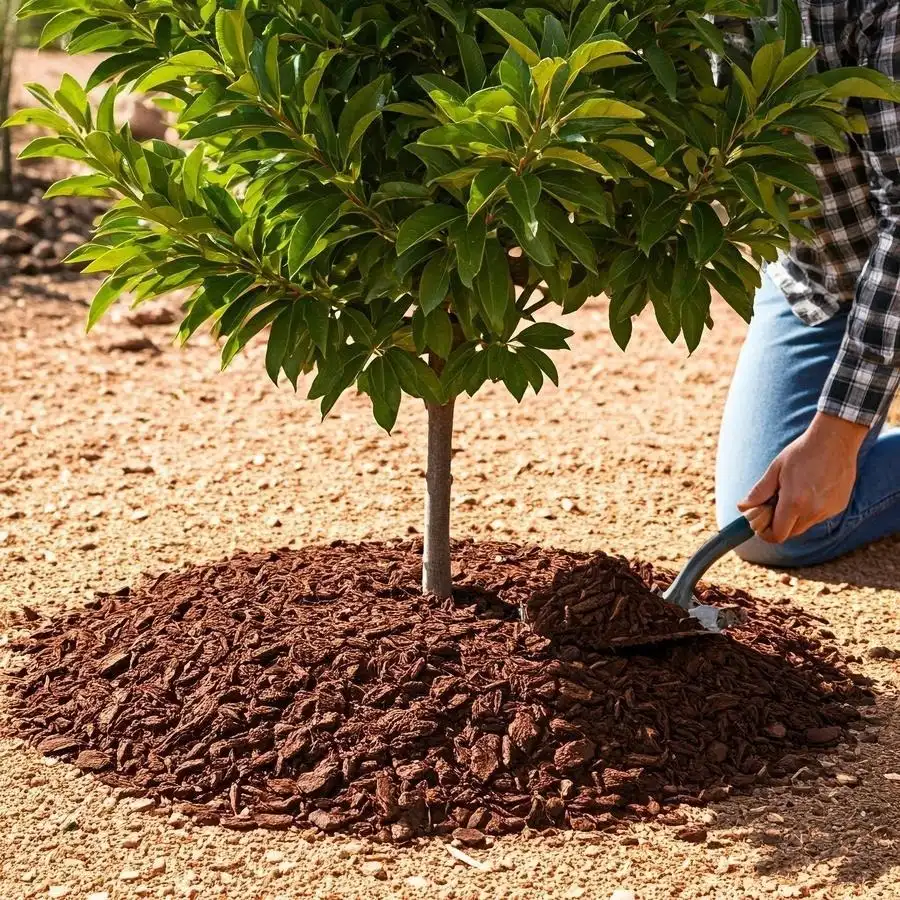
Mulch being raked directly against a young tree trunk — this is the moment the mistake is made. Keeping a two-to-three-inch gap between mulch and bark is the single most important rule in tree mulching.
The Right Way to Mulch Around Trees in Tulsa
Correct tree mulching is sometimes called the mulch donut or mulch ring. Think of a flat donut with the hole at the trunk — the center gap is the trunk clearance zone, the donut itself is the mulch ring extending outward from there.
Trunk Clearance
Keep mulch two to three inches away from the bark in all directions. The root flare should be visible. If you cannot see the point where the trunk begins to widen at the base, pull mulch back until you can.
Mulch Depth
Two to three inches throughout the ring, kept flat and even. Do not taper it up toward the trunk — keep the surface level and stop short of the bark.
Ring Diameter
Extend the ring four to six feet outward from the trunk in all directions at minimum. The ideal outer boundary is the tree's drip line. More feeder roots are protected, more soil moisture is retained, and the tree benefits significantly.
Mulch Material
Shredded hardwood is the best general-purpose choice for Oklahoma trees. It resists wind and rain displacement, contributes organic matter, and doesn't absorb and radiate heat like rubber or rock mulch. Cedar mulch is a reasonable alternative with a longer lifespan and natural pest-deterrent properties.
Does This Apply to Newly Planted Trees Too?
Yes — and for newly planted trees, getting this right from the start matters even more. A newly transplanted tree has a compromised root system, reduced capacity to tolerate stress, and limited ability to fight off diseases and insects that trunk contact and excess moisture invite. The first two or three years after planting are when mulch placement has the greatest potential to either support establishment or contribute to failure.
When planting a new tree in the Tulsa area, set the root flare at or just slightly above grade before backfilling. Then apply the mulch ring immediately after planting: two to three inches deep, starting with a trunk clearance gap, extending outward three to four feet in all directions. Water the entire mulch ring thoroughly to settle it, and check the trunk gap each spring when you refresh the mulch to make sure accumulation has not gradually filled it back in.
Quick Answers: Mulch Volcano FAQs
My trees have been mulch-volcanoed for years and look fine. Should I still fix it?
Yes. Visible decline often lags years behind the actual damage. A tree that looks healthy may already have compromised bark, deteriorating root collar tissue, or early girdling root development that has not yet expressed itself in the canopy. Correcting the mulch now stops ongoing damage and gives the tree the best chance for long-term health.
How far back from the trunk should I keep the mulch?
Two to three inches of clear gap between the mulch and the bark in all directions. The root flare should be clearly visible. This gap is the single most important element of correct tree mulching and the one most commonly violated.
Protect Your Trees With Proper Mulching
Complete Lawn Care serves Tulsa, Broken Arrow, Bixby, Jenks, Owasso, and Sand Springs. Our landscape professionals apply mulch correctly — protecting your trees, not harming them. Contact us today for a free consultation.