What Is the Difference Between Program A, B, and C on My Sprinkler Timer?
By the irrigation experts at Complete Lawn Care | Serving Tulsa, Broken Arrow, Bixby, Jenks, Owasso, and Sand Springs
Programs A, B, and C on your sprinkler timer are three separate, independent watering schedules that can each run different zones on different days at different times. They do not communicate with each other — they simply take turns running in sequence on any given day if more than one is scheduled. Most homeowners only need Program A and leave B and C unused, but understanding what all three do — and when using more than one actually makes sense — can help you water your lawn more efficiently and avoid the most common irrigation programming mistakes.

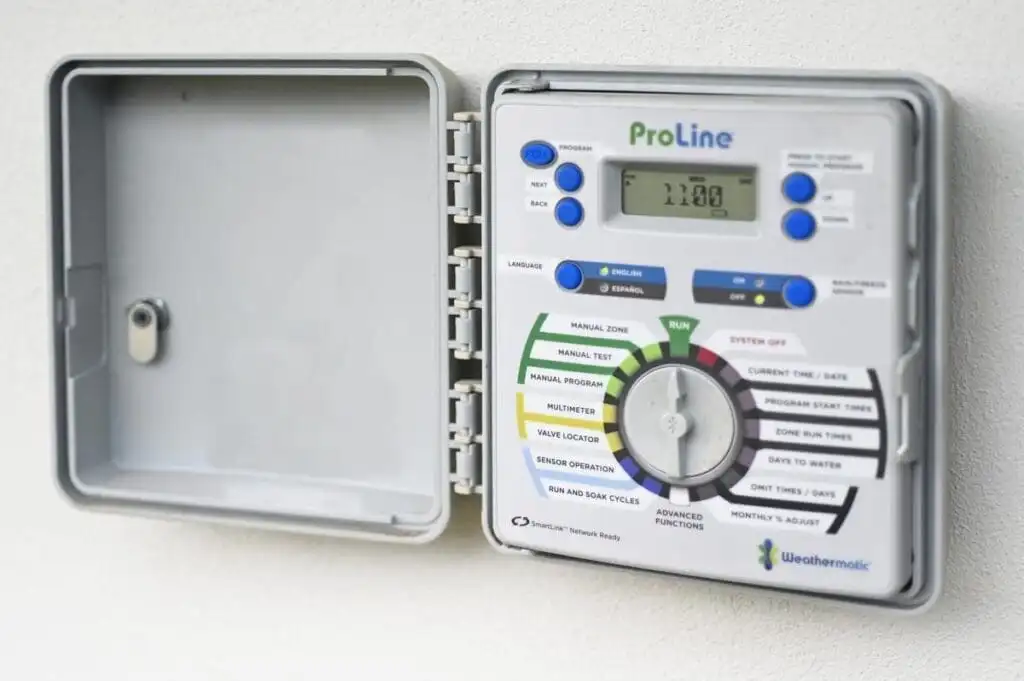
A Weathermatic ProLine irrigation controller — most residential timers use the same A, B, C program structure regardless of brand. Understanding what each program does helps you water smarter and avoid overwatering.
What Exactly Is a Program on a Sprinkler Timer?
On most residential irrigation controllers — whether you have a Rain Bird, Hunter, Toro, Weathermatic, or another brand — a program is a complete set of watering instructions that includes three things: which zones run, how long each zone runs, and when the whole cycle starts.
Every program contains those same three elements. Program A has its own start time, its own zone run times, and its own schedule for which days it waters. Program B has its own completely separate version of all three. Program C does the same. They are essentially three independent timers living inside the same box.
When a day arrives where both Program A and Program B are scheduled to run, the controller runs A first from start to finish, then runs B from start to finish. They do not overlap — they queue up and run back to back. This means stacking multiple programs on the same days can result in much longer total run times than you intended, and in some cases it can cause overwatering or contribute to runoff and pooling problems that are common in Tulsa-area clay soils.
Why Do Sprinkler Timers Have Three Programs at All?
The multi-program design exists because different areas of a lawn or landscape often have legitimately different watering needs that cannot be served well by a single schedule.
Turf vs. Drip Zones
Grass and ornamental plants need water at different frequencies and durations. Turf may need to run twice a week for 10–15 minutes per zone, while drip zones for established shrubs may only need to run once a week for 30–45 minutes. Two separate programs solves that cleanly.
Sun vs. Shade Zones
A shaded back yard zone loses far less moisture to evaporation than a south-facing front yard zone baking in direct sun. Separate programs let you run sunny zones more frequently without running shaded zones at the same rate — which would push them toward fungal disease territory.
Cycle-and-Soak for Clay Soil
Oklahoma clay absorbs water slowly. Running a zone for 15 straight minutes often results in more runoff than infiltration. Use Programs A, B, and C to run each zone for 5 minutes with 30-minute soak gaps in between — delivering the same total water with dramatically better absorption.
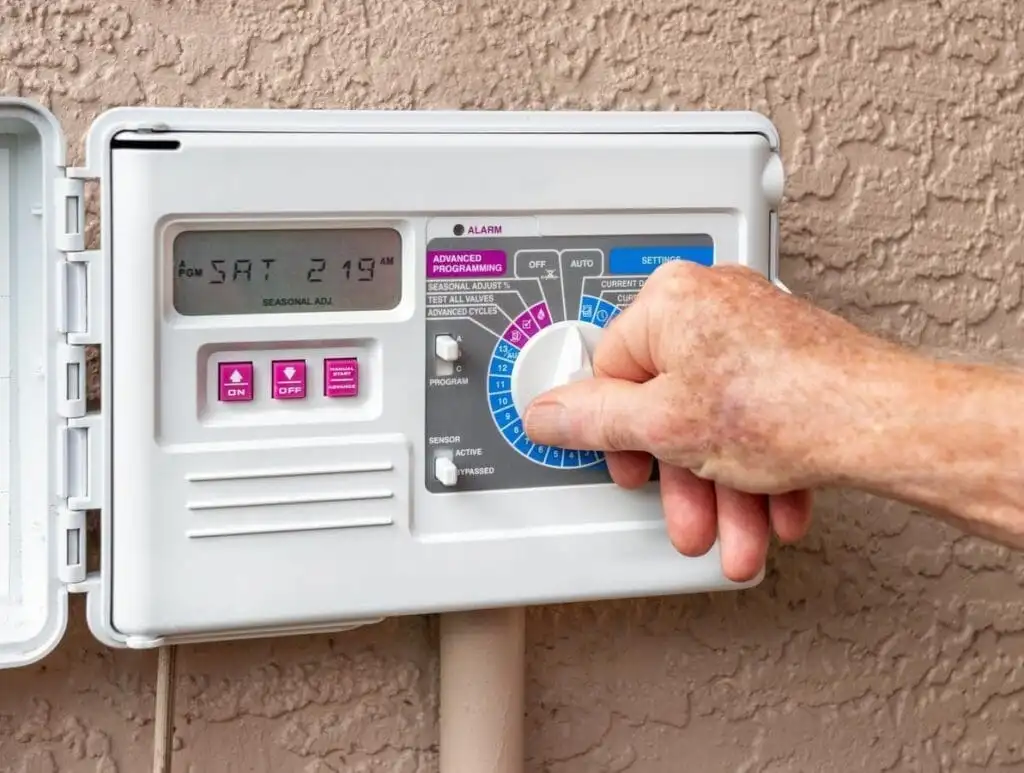
Adjusting a residential irrigation controller — the program dial controls which independent schedule you are editing. Most homeowners set Program A and never return to the controller until something stops working.
How Should I Set Up Programs A, B, and C for a Tulsa-Area Lawn?
For a typical Bermuda grass lawn in Tulsa, Broken Arrow, Bixby, or the surrounding area, here is a practical starting framework — though the right settings for your specific yard depend on your soil, sun exposure, sprinkler head type, and system flow rate.
Program A — Turf Zones
In peak summer (June–August), most Bermuda lawns need water 2–3 times per week. Run times per zone range from 10–20 minutes depending on head type. Schedule start times between 4:00 and 6:00 AM to minimize evaporation and give foliage time to dry before evening.
Program B — Drip or Bed Zones
If you have drip irrigation for shrubs, flower beds, or trees, give them their own program. Established shrubs typically need water once or twice a week at most during summer. Drip zones run much longer than spray zones because the delivery rate is slower.
Programs A, B, C — Cycle-and-Soak
If clay soil runoff is a consistent problem, divide your total zone run time across three short cycles staggered by 30–60 minutes. For example: Program A at 4:00 AM, Program B at 4:45 AM, Program C at 5:30 AM — each running the same zones for one-third of the total time.
Seasonal Adjustments: Don't Set It and Forget It
One of the most common irrigation mistakes in Oklahoma is setting the controller in May for peak summer conditions and never touching it again. Your lawn's water needs change significantly across the growing season, and a timer that was right in July can easily overwater in September — leading to disease, shallow roots, and wasted water.
As a general guideline for Bermuda grass in the Tulsa area: spring and fall typically require about half the water that peak summer demands. Reduce run times or watering frequency in April, May, September, and October. In October, transition to once-a-week watering or less as the grass begins going dormant. By mid to late October, most Bermuda lawns in the Tulsa metro need little to no supplemental irrigation if rainfall is occurring.
Many modern controllers include a seasonal adjustment percentage feature that lets you reduce all zone run times by a set percentage without reprogramming every zone individually. If your controller has this feature, it is one of the most useful tools available for adapting to changing conditions without starting from scratch.
Signs Your Irrigation Programming Needs Attention
Runoff During Irrigation
Water sheeting off the lawn onto the driveway or sidewalk is a clear sign your zones are running longer than the soil can absorb — especially common on Oklahoma clay. Shorten zone run times and consider a cycle-and-soak approach.
Dry Spots That Don't Respond
Persistent dry areas usually indicate a coverage gap, a clogged or misaligned head, or a zone that is not running at all. Dry spots in a ring pattern may indicate a broken or partially blocked head in the center of a rotary zone.
Mushrooms, Algae, or Moss
Classic signs of overwatering. If you see them consistently in the same areas, reduce run times on the zones covering those spots and check whether multiple programs are running the same zones.
Higher-Than-Expected Water Bills
A significant jump in water usage during the irrigation season sometimes traces back to duplicate programming, a stuck valve that won't close, or a broken head wasting water between scheduled cycles. Manually run each zone and walk the system as a first step.
Quick Answers: Sprinkler Timer Program FAQs
Do Programs A, B, and C run at the same time?
No. They run sequentially, one after another. If A and B are both scheduled for the same day, A runs completely first, then B begins. They never overlap.
What if the same zones are in both A and B?
Those zones will run twice on any day both programs are scheduled. This is one of the most common causes of overwatering and unexpectedly high water bills. Zero out any program you are not intentionally using.
How do I check if B and C are active?
Go through each program on your controller one at a time and look at whether any zones are programmed with run times and active days. Set all zone run times to zero and remove start times for any program you are not intentionally using.
When to Call for Professional Irrigation Help
Programming questions are something most homeowners can work through with the controller manual and a little patience. Where professional help becomes genuinely valuable is when the system itself has problems — broken heads, leaking valves, zones that won't run or won't shut off, wiring faults, or backflow preventer issues — or when the existing system design is not covering the lawn evenly and no amount of programming adjustment will fully compensate for it.
At Complete Lawn Care, our irrigation repair and maintenance service covers the full range of residential system issues across Tulsa, Broken Arrow, Bixby, Jenks, Owasso, and Sand Springs. We can diagnose coverage problems, repair or replace damaged components, service backflow preventers, and help you set up a seasonal programming schedule that actually matches what your lawn needs.