Complete Lawn Care • June 2026 • Tulsa, OK
June Lawn Care in the Tulsa Metro
A Month-by-Month Plan That Avoids Summer Stress
June is the make-or-break month for Tulsa metro lawns. The work you do this month — the right summer fertilizer step, the deep infrequent watering setup, the preventive insect application, the mowing height adjustment, and the irrigation tune-up — decides whether your lawn holds color through July and August or quietly declines into thin patchy turf by Labor Day.
Why June Matters Most
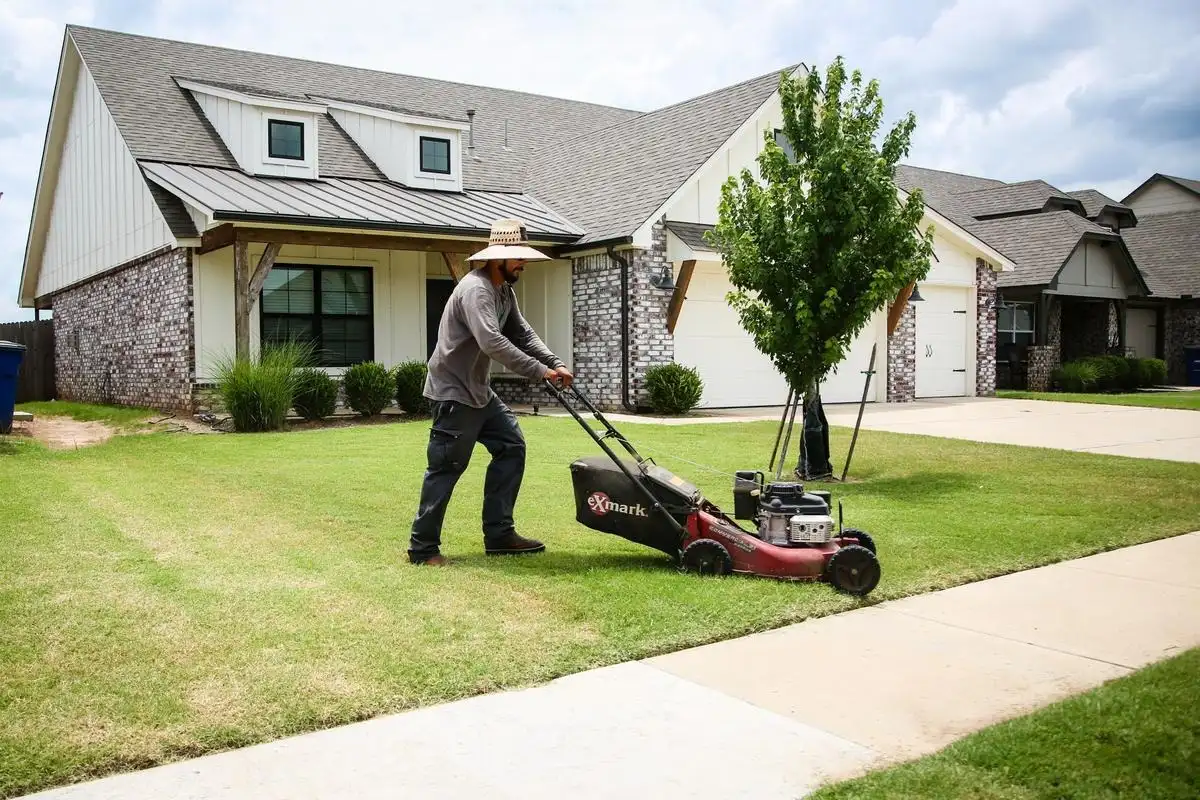
If your lawn made it through May looking good, June is the month to keep it that way. The Tulsa metro climate is unforgiving on lawns that get neglected between Memorial Day and the 4th of July. By the time the heat actually hits in mid July, most of the damage that shows up in August was decided weeks earlier — when the watering was wrong, the fertilizer was wrong, or the insect prevention was missed.
We want to give you the actual June plan we use across Tulsa, Broken Arrow, Bixby, Owasso, and Jenks. Four weekends of work. Most of it homeowner-doable. The parts that require professional treatment are flagged. By the end of the month your lawn is set up for the hardest 60 days of the year.
Weekend One: Watering & Mowing
Watering Setup
Most Tulsa-area sprinklers run daily 15-minute cycles — fine in April, ruinous in July. Daily light watering trains shallow roots that fail when heat sets in. The fix is two cycles per week, early morning between 4 and 8 a.m., delivering about one inch of water total per week.
For rotary heads: 75 minutes per zone twice a week. For spray heads: 35 minutes twice a week. On clay-heavy soil, split runtimes into two shorter cycles spaced an hour apart (cycle and soak). Validate with the screwdriver test — push a screwdriver 6 inches into the lawn the morning after watering. If it stops at 2–3 inches, you're not watering deep enough.
Mowing Height
Raise the mower for summer. Bermuda: 2.5 to 3 inches. Zoysia: 3 to 3.5 inches. Fescue: 3.5 to 4 inches. Taller cuts shade the soil, conserve moisture, encourage deeper rooting, and crowd out weeds.
Sharpen the mower blade if you haven't yet this season. A dull blade tears the leaf tip and gives the lawn a hazy white look two days after mowing — which also opens the door for disease.
Weekend Two: Fertilizer & Insect Prevention
Summer Fertilizer
June is the right month for a moderate summer fertilizer application on warm-season grass. The most common mistake is heavy nitrogen applied right before peak heat, which pushes a flush of soft growth with no root depth behind it — then the lawn collapses when temperatures hit triple digits.
Use a balanced slow-release fertilizer with moderate nitrogen and added potassium for heat and drought tolerance. Apply at the lower end of the label rate. Water in within 24 hours. Skip weed and feed combinations in June — most contain herbicides that damage warm-season grass under heat stress.
Preventive Insect Application
This is the highest-leverage item on the June list. By mid June, grub egg-laying season begins. Adult June beetles, masked chafers, and Japanese beetles lay eggs in healthy irrigated lawns through late June and early July. Grubs hatch in late summer and feed on roots through August and September.
A preventive grub application in late June or the first week of July prevents that damage entirely. One application at the right time handles the entire grub generation. Chinch bug preventive treatments also matter, especially on St. Augustine and Zoysia. Skipping this step is the most common cause of August lawn rescue calls.
Weekend Three: Diagnose & Inspect
Diagnose Thin Spots
Walk every part of the lawn with fresh eyes. Look for thin areas, browning patches, or spots where grass isn't filling in. Note the location, shape, and pattern.
Brown patch disease: circular patches with smoky edges on dewy mornings. Take-all root rot: irregular patches where grass pulls up easily. Chinch bug damage: starts in the sunniest, hottest part of the yard. Drought stress: browns evenly across exposed areas. Sprinkler coverage gaps: predictable shapes matching gaps in spray patterns. Diagnosing the cause correctly the first time saves weeks of wrong treatments.
Tree & Shrub Check
While walking the property, check your trees and major shrubs. Bagworms, scale, aphids, and webworm activity all ramp up in June. Caught early, these are 30-minute treatments. Left until August, they can damage canopies of trees that take years and serious money to replace.
Mature trees also need supplemental deep watering in June, July, and August. A soaker hose laid in a spiral at the dripline, run 60 to 90 minutes once a week, delivers what no lawn sprinkler can. This is one of the most overlooked maintenance items on residential properties in our area.
Weekend Four: Irrigation Tune-Up & Finishing Touches
Irrigation Tune-Up
Run each irrigation zone for 2 to 3 minutes and walk it. Look for misaligned heads spraying the driveway or fence, sunken rotors with blocked spray patterns, broken nozzles, or coverage gaps between heads. Small adjustments take 5 to 15 minutes each. Make sure the rain sensor is functional — if you don't have one, install one. Confirm the controller is set to skip cycles after rainfall.
Holiday Quick Wins
If you have guests coming for July 4, the last weekend of June is the time for cosmetic fixes. Edge driveways, sidewalks, and beds. Refresh mulch in front beds. Spot-treat any visible weeds in the most prominent turf. Trim back any encroaching branches. These are not lawn care fundamentals, but they read as well-kept to visitors.
What to Avoid in June
Heavy Nitrogen Fertilization
Pushes growth the lawn cannot support through July heat.
Daily Watering
Trains shallow roots and creates disease pressure.
Evening Watering
Keeps the canopy wet overnight and invites disease.
Mowing Too Short
Removes shade from the soil and accelerates moisture loss.
Aerating a Stressed Lawn
Wait for fall unless compaction is severe.
Frequently Asked Questions
Is it too late to start a program in June?
Not at all. June is actually one of the better entry points because we can address the highest-priority items immediately and set the lawn up for the second half of the season. Most new June customers are noticeably better off by August.
What if I missed the spring pre-emergent?
You will likely see some crabgrass break through in June and July. Spot treatment now and a properly timed pre-emergent next spring usually resolves the issue within a season. We will assess what you are dealing with and recommend the right approach.
Can I do watering and mowing myself and hire out the treatments?
Absolutely, and many of our customers do exactly that. The cultural practices — watering, mowing height, mowing frequency — are homeowner-doable and matter as much as anything we apply. We will gladly tell you what to do and let you handle it.
What about lawns already showing damage?
The June plan still applies, but we add diagnostic and recovery steps for damaged areas. Sometimes that means sodding the worst patches, sometimes overseeding, sometimes just aggressive fertility and watering to push recovery. We will tell you what is realistic for your situation.
Get Your Custom June Lawn Plan
We are glad to walk your property and put together a custom June plan for your lawn. We serve Tulsa, Broken Arrow, Bixby, Owasso, Jenks, and surrounding communities, and we will give you a straight assessment of where your lawn stands and what it needs for the rest of the season.