Gopher Control in Broken Arrow, Oklahoma
Keeping gophers out of your yard in Broken Arrow requires a two-part approach: eliminating the gophers currently active in your lawn through trapping, and then preventing new gophers from moving in by reducing the food sources and habitat conditions that attract them.
Know Your Enemy: The Plains Pocket Gopher
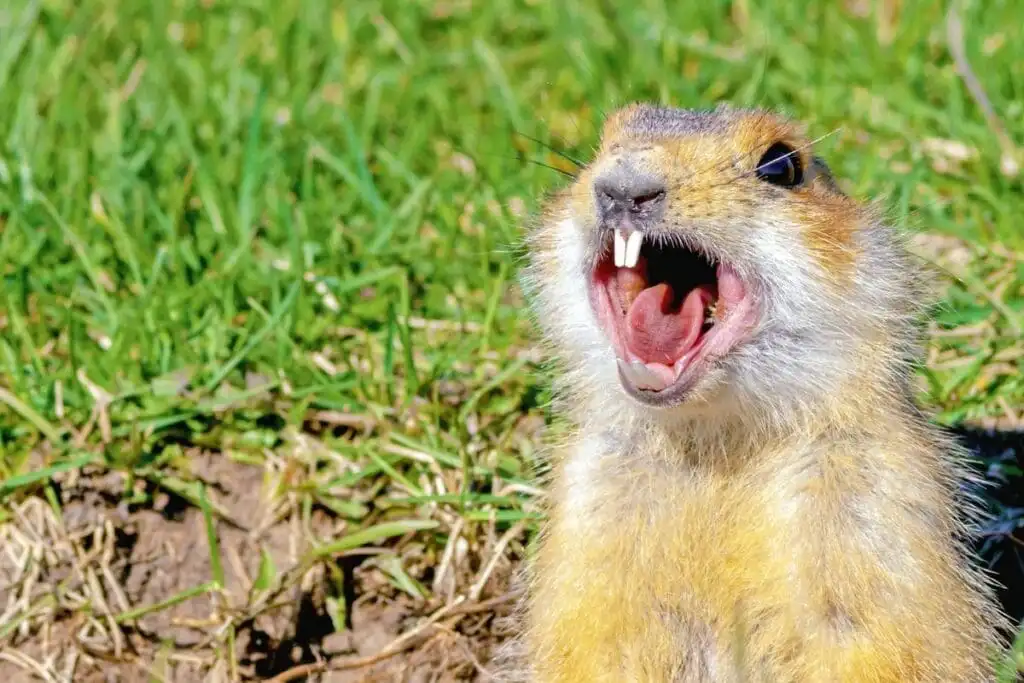
The plains pocket gopher (Geomys bursarius) is the primary gopher species found in eastern Oklahoma including Broken Arrow, Bixby, Jenks, and the greater Tulsa metro. The large, protruding incisors and external fur-lined cheek pouches are characteristic of this species. Plains pocket gophers are solitary, highly territorial animals — each individual maintains and defends its own burrow system. You are typically dealing with one to three individuals per property, not a large colony. Removing the active individuals resolves the damage rather than requiring a broad population reduction effort.
First: Make Sure You Actually Have Gophers (Not Moles)
Gophers and moles are frequently confused in Broken Arrow and throughout the Tulsa metro. Identifying which animal is present before spending money on control products saves significant time and frustration.
Gopher Mounds
Fan-shaped or horseshoe-shaped piles of loose soil pushed to one side, with a visible plug hole sealed with loose soil on the edge of the fan. Gopher mounds are asymmetric. On Broken Arrow's sandy-clay transition soils, gopher mounds tend to be crumbly and loose. Deep tunnels run 6 to 18 inches below the soil surface.
Mole Mounds
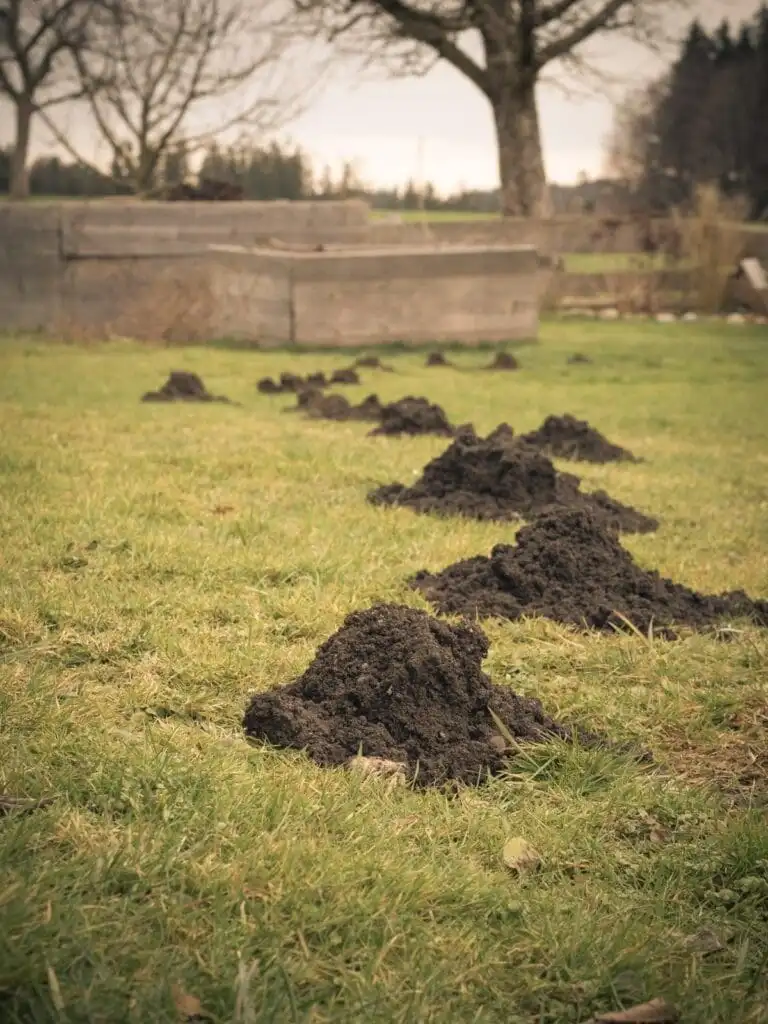
Symmetrical, volcano-shaped piles of soil pushed up from directly below, with no visible hole on the surface. Moles also create raised ridge tunnels just below the surface — visible as a linear raised seam across the lawn. Shallow tunnels 2 to 6 inches deep. Peak activity spring and fall.
Armadillo Damage
Open excavated holes, lifted turf sections, soil pushed aside. No mounds. Nocturnal. Almost exclusively eats grubs. Increasingly common in Broken Arrow. Does not create tunnel systems like gophers or moles.
Recognizing Active Gopher Activity
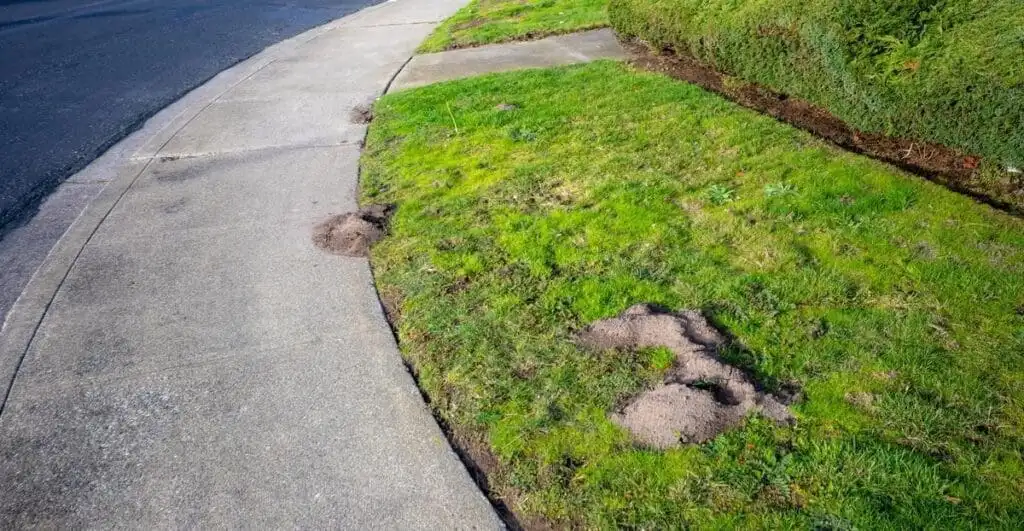
Gopher mounds along a lawn edge adjacent to a sidewalk — note the fan-shaped soil deposits pushed to one side, which distinguishes gopher mounds from the symmetric volcano-shaped mounds left by moles. The location near the sidewalk edge is typical: gophers follow the soil transition zones along hardscape edges where root systems concentrate and food is accessible. Fresh mounds appearing overnight indicate active tunnel use; mounds that have crusted over and do not expand indicate the gopher has moved its activity to another section of the tunnel system.
Why Broken Arrow Properties Are Particularly Attractive to Gophers
Sandy-Clay Soil Transition
Broken Arrow sits at a soil transition zone. Sandy loam soils in neighborhoods north and east of the BA Expressway (74012 and 74014 zip codes) are significantly easier for gophers to tunnel through than the heavier clay soils further west toward Tulsa.
Year-Round Activity
Unlike northern states where frozen soil limits winter tunneling, gophers in eastern Oklahoma remain active through winter and can increase tunneling activity during warm winter spells. There is no seasonal window when gopher pressure naturally stops.
New Construction Soil
New construction across eastern Broken Arrow and the 74014 zip code has brought gopher pressure into previously unaffected neighborhoods. The disturbed soil from foundation and utility work creates ideal tunneling conditions that persist for several years while the soil settles and recompacts.
The Most Effective Method: Trapping
Trapping is the single most effective control method for active gopher infestations in Broken Arrow residential properties. It works quickly when done correctly — most active infestations show results within three to five days. The two trap types most effective for plains pocket gophers in eastern Oklahoma are the Macabee trap (scissor-jaw design) and the Cinch trap (pincer design). Both are widely available and neither requires bait.
Step 1: Locate an Active Tunnel
Look for fresh mounds with loose, crumbly soil that has not crusted over, or areas where the soil surface feels soft underfoot. Use a metal rod or stiff screwdriver to probe 8 to 12 inches from the edge of a fresh mound in the direction the fan shape points. When the probe drops into an open space, you've found the main lateral tunnel.
Step 2: Expose and Set Two Traps
Use a hand trowel to open the tunnel at the probe point. Set two traps facing opposite directions — gophers can approach from either side. Wire or stake the traps to prevent dragging. Cover the opening loosely to block light from entering the tunnel, as gophers are sensitive to light and may avoid a brightly lit opening.
Step 3: Check and Confirm Resolution
Check traps every 24 to 48 hours. If no activity within 48 hours, relocate to a fresh mound. After catching, if no new mounds appear within 5 to 7 days, the infestation is resolved. If new mounds appear, a second individual may be present or a neighboring gopher has moved into the vacated territory.
A common trapping mistake is placing traps in old, crusted mounds rather than fresh ones. Crusted mounds indicate the gopher has moved its primary activity elsewhere. Always target fresh mounds with soft, loose soil for best results.
Prevention: Underground Wire Mesh Barriers
The Barrier That Works
Use 3/4-inch galvanized hardware cloth — not chicken wire, which degrades quickly in Oklahoma soil conditions and has gaps large enough for juvenile gophers to pass through. Bury the barrier 18 to 24 inches deep to go below the primary gopher tunnel zone, with a 6-inch outward bend at the bottom directed away from the protected area. This bend prevents gophers from tunneling under the bottom edge. Extend hardware cloth 6 inches above grade around bed borders.
New Sod and Lawn Installations
For new sod or lawn installations in areas with a history of gopher activity, hardware cloth laid flat below the sod installation at 4 to 6 inches depth provides root zone protection for the new turf while allowing root development above the barrier. This approach is used in golf course construction and is increasingly practical for residential installations in high-pressure Broken Arrow neighborhoods.
What About Repellents, Vibration Stakes, and Castor Oil Products?
The honest answer: most of these products produce inconsistent results in Oklahoma conditions, and the marketing claims for some of them significantly outpace the scientific evidence for their effectiveness. Repellents, vibration stakes, and castor oil products are heavily marketed but produce inconsistent results in Oklahoma clay soil conditions. Trapping is far more reliable — it works quickly, it does not rely on the gopher choosing to interact with a bait or repellent, and it directly resolves the active infestation. Gopher control is one of those yard problems where the methods that look easiest rarely work, and the method that actually works — trapping — requires a little patience and the willingness to identify and work in active tunnels.